

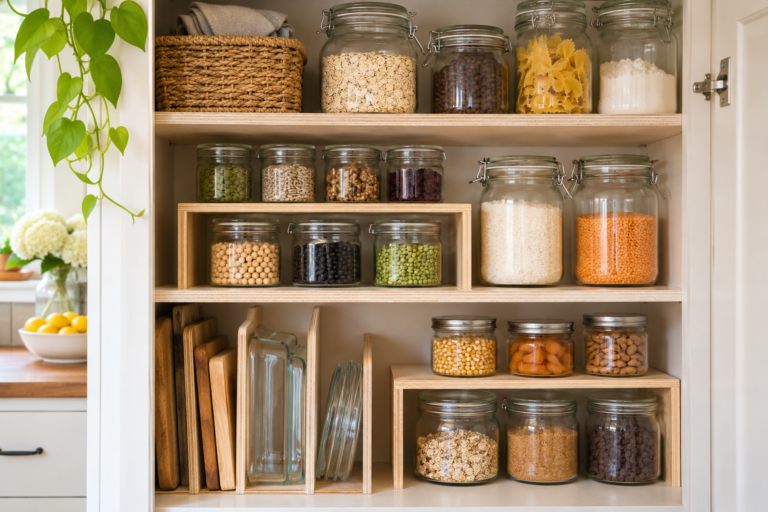
Useful diy pantry organizers solve small storage problems without requiring a complete pantry makeover. A removable divider can keep packets upright, while a shallow tray can stop small jars disappearing behind larger packages. The best project improves a task you repeat every day.
Start with the groceries you already buy. Measure their packaging, check the available shelf space, and decide what currently makes the pantry difficult to use. Building around those details is more helpful than copying an attractive organizer that does not fit.
This guide covers affordable inserts, simple dividers, stable risers, and practical ways to test each project.
Choose DIY Pantry Organizers by the Problem
Look at one shelf at a time. Are snack packets collapsing into a pile? Are small cans hidden behind taller containers? Do baking trays fall sideways when you remove one?
Choose diy pantry organizers that address one clear difficulty. A divider separates categories, a tray groups movable items, and a riser improves visibility. None of these automatically increases the shelf’s safe load capacity.
For a wider category system, review these pantry organization ideas. Decide where foods belong before building containers for them.
Begin With One Shelf
A small trial prevents wasted materials. Choose the shelf that causes the most frustration and photograph it before making changes.
Remove unrelated items, wipe the surface, and return only the groceries that belong there. You may discover that grouping products solves part of the problem without construction.
Make the first organizer removable. After a week of normal use, adjust its size or layout before repeating the design elsewhere.
Measure the Usable Opening
Successful diy pantry organizers fit through the pantry opening as well as onto the shelf. Check door hinges, handles, shelf supports, and anything that narrows the route.
Measure width, depth, and clear height. Allow enough space to lift a loaded tray, grasp a packet, or remove a jar without scraping the shelf above.
Record the outside dimensions of your largest normal packages. Do not design around nearly empty bags that will become much larger after your next grocery trip.
Build a Cardboard Mockup
Before cutting permanent materials, create a simple size mockup from clean cardboard. Use it only to test dimensions, hand clearance, and compartment spacing.
Place actual packages inside and move the mockup through the doorway. Check whether the door closes and whether you can reach the rear section comfortably.
Cardboard mockups help refine diy pantry organizers, but cardboard is not automatically suitable for permanent food storage. Choose finished materials according to cleanliness, moisture exposure, and intended use.
Compare Four Practical Projects
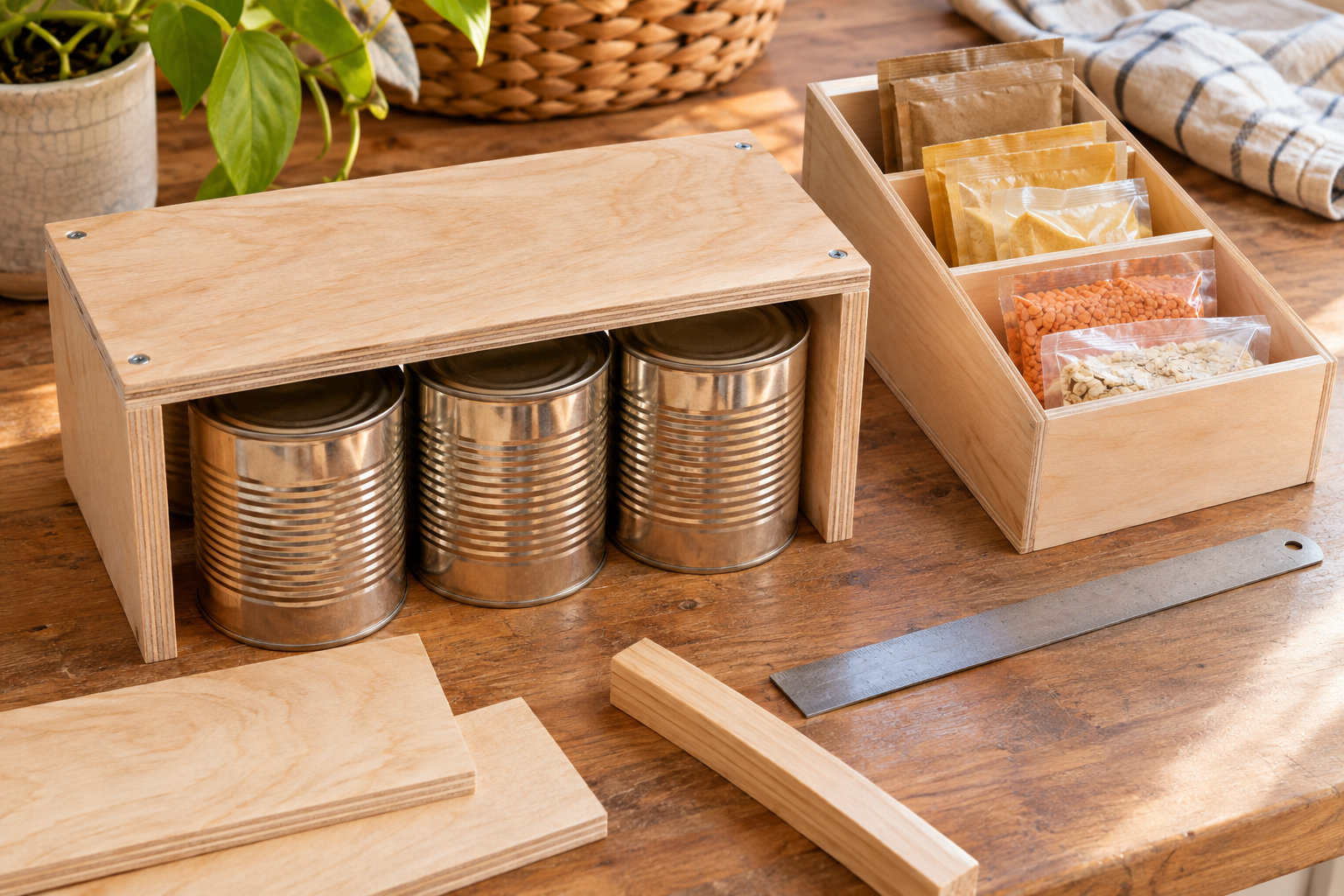
These diy pantry organizers serve different purposes. Example costs are deliberately omitted because materials, tools, and local prices vary. Compare the complete project with a suitable ready-made alternative before buying supplies.
| Project | Best for | Useful materials | Main limitation |
|---|---|---|---|
| Removable packet insert | Sachets and snack packets | Smooth rigid panels and suitable connectors | Compartments must fit normal packages |
| Category tray | Small packaged foods | Clean wipeable tray or suitable shallow box | Loaded tray must remain easy to lift |
| Shelf riser | Short cans and jars | Stable supported board or rated components | Capacity depends on the complete construction |
| Vertical divider | Trays and flat packages | Smooth panels with secure supports | Must resist sideways movement |
Project One: A Removable Packet Insert
Packet inserts are among the simplest diy pantry organizers because their job is separation rather than carrying a large structural load.
For an illustrative insert, start with a suitable shallow tray measuring twelve inches wide and ten inches deep internally. Divide its width into three compartments, adjusting the spaces around your actual packets.
Remember that divider thickness reduces usable compartment width. Three equal compartments will each be slightly narrower than four inches once the panels are installed.
Assemble and Test the Dividers
Use smooth, cleanable panels with finished edges. Select connections appropriate for the materials and follow product instructions for any adhesive, including curing time.
Keep fixings and rough edges away from packaging. Do not allow a screw point, splinter, or sharp corner to catch a food bag.
Test diy pantry organizers like this with normal quantities. Packets should stand neatly without becoming so tightly compressed that people cannot remove or replace them.
Simple Compartment Plan
| Left compartment | Middle compartment | Right compartment |
|---|---|---|
| Snack bars | Sauce packets | Small sealed snacks |
| Size to actual packages | Size to actual packages | Size to actual packages |
Keep the tray removable so you can wipe beneath it. A successful insert should simplify cleaning as well as sorting.
Project Two: A Category Tray
Category trays make practical diy pantry organizers for breakfast extras, baking decorations, or foods used for one regular meal.
Reuse a suitable clean tray before building anything new. It needs a stable base, manageable dimensions, and surfaces that can be cleaned appropriately. Keep food in intact original packaging unless it belongs in a suitable food-storage container.
Choose one clear category. A large tray holding unrelated items can become another cluttered drawer, even when the shelf initially looks tidy.
Check the Loaded Weight
Fill the tray with its normal contents and test the lift. Handles must suit the load and provide enough room for your fingers.
Keep heavier supplies low and within the shelf’s verified capacity. A tray does not make an overloaded shelf stronger.
For narrow shelves and awkward openings, these small pantry organization ideas can help you choose categories that fit the available space.
Project Three: A Stable Shelf Riser
Risers are useful diy pantry organizers when a row of short jars hides behind taller items. Raising the rear row can improve visibility, provided you can still lift each container comfortably.
Measure the tallest item first. Include the riser height, the item height, and clearance for your hand and lid.
Do not assume a homemade riser has a particular weight rating. Capacity depends on its material, span, supports, joints, construction quality, and load distribution.
Keep the Build Simple
Use an appropriate board supported securely at the ends, adding suitable intermediate support where the design requires it. Avoid balancing loose boards on stacks of tins or improvised unstable blocks.
Finish exposed edges and check that the riser does not rock. Follow the finish manufacturer’s instructions and allow full curing before use.
Test diy pantry organizers gradually with the intended items. Stop using a riser if it bends, shifts, separates at a joint, or makes jars difficult to retrieve.
Project Four: Vertical Dividers
Vertical dividers can separate baking sheets, chopping boards, or suitable flat packages. Measure the actual items and leave enough clearance to remove one without lifting the entire group.
These diy pantry organizers need secure support against sideways movement. A panel leaning loosely between heavy trays may fall when one item is removed.
Choose removable divider systems where permanent fixing is unsuitable. If drilling is involved, check the shelf construction, fixing requirements, and permission for alterations before starting.
Keep Food Storage Appropriate
An organizer is not a food container simply because it sits in a pantry. Avoid direct food contact with materials that are not suitable for that purpose.
The FDA’s food storage guidance advises keeping nonperishable foods away from household chemicals and cleaning products. Store project supplies, adhesives, and cleaners separately from groceries while working.
Keep ingredient names, allergens, storage directions, and relevant date information when transferring food into appropriate containers.
Maintain the Organizers
The easiest diy pantry organizers to maintain have simple surfaces and removable sections. Avoid adding unnecessary grooves, decorative fabric, or inaccessible corners where crumbs collect.
Wipe spills promptly and check beneath trays during regular pantry resets. Inspect dividers, handles, joints, and any protective finish.
If the same compartment repeatedly overflows, reconsider the quantity stored or the category itself. Building another insert is not always the most useful answer.
Keep a short project record with the finished dimensions and materials used. Photograph the empty insert before loading it, then photograph the shelf after a week of use. Compare how easily groceries return to their places. If an organizer needs repeated rearranging, simplify its compartments before building another version. A useful project should reduce the number of movements needed to retrieve and replace ordinary pantry items.
Choose manageable compartments before decorating.
Frequently Asked Questions
Which project should a beginner try first?
Start with a removable category tray or packet divider. These projects let you test dimensions and routines before attempting more demanding construction.
Are diy pantry organizers always cheaper?
No. Include materials, hardware, tools, finishing supplies, and your time. A suitable ready-made organizer may cost less than a project requiring tools you do not own.
Can I use old household containers?
Only when they are suitable, clean, and appropriate for the intended use. Never reuse chemical containers for food. Keep packaged foods separate from rough edges or unsuitable surfaces.
Conclusion
The best diy pantry organizers make groceries easier to find, remove, and return. Measure first, build a removable trial, and choose materials for their intended purpose. Simple dividers, manageable trays, and properly supported risers can improve everyday storage without turning a small pantry project into a complete renovation.
