


Budget pantry organization begins with using the storage and food you have more effectively. A useful makeover can improve visibility and access without replacing every container or installing custom shelves.
Budget pantry organization should reduce everyday frustration. You should be able to find ingredients, check what is running low, and put groceries away without rebuilding the whole arrangement. Matching jars are optional.
This guide explains a low-cost reset using reused containers, simple zones, an itemized sample budget, and a short shopping checklist. Start with free changes, then buy only the items that solve a clear problem.
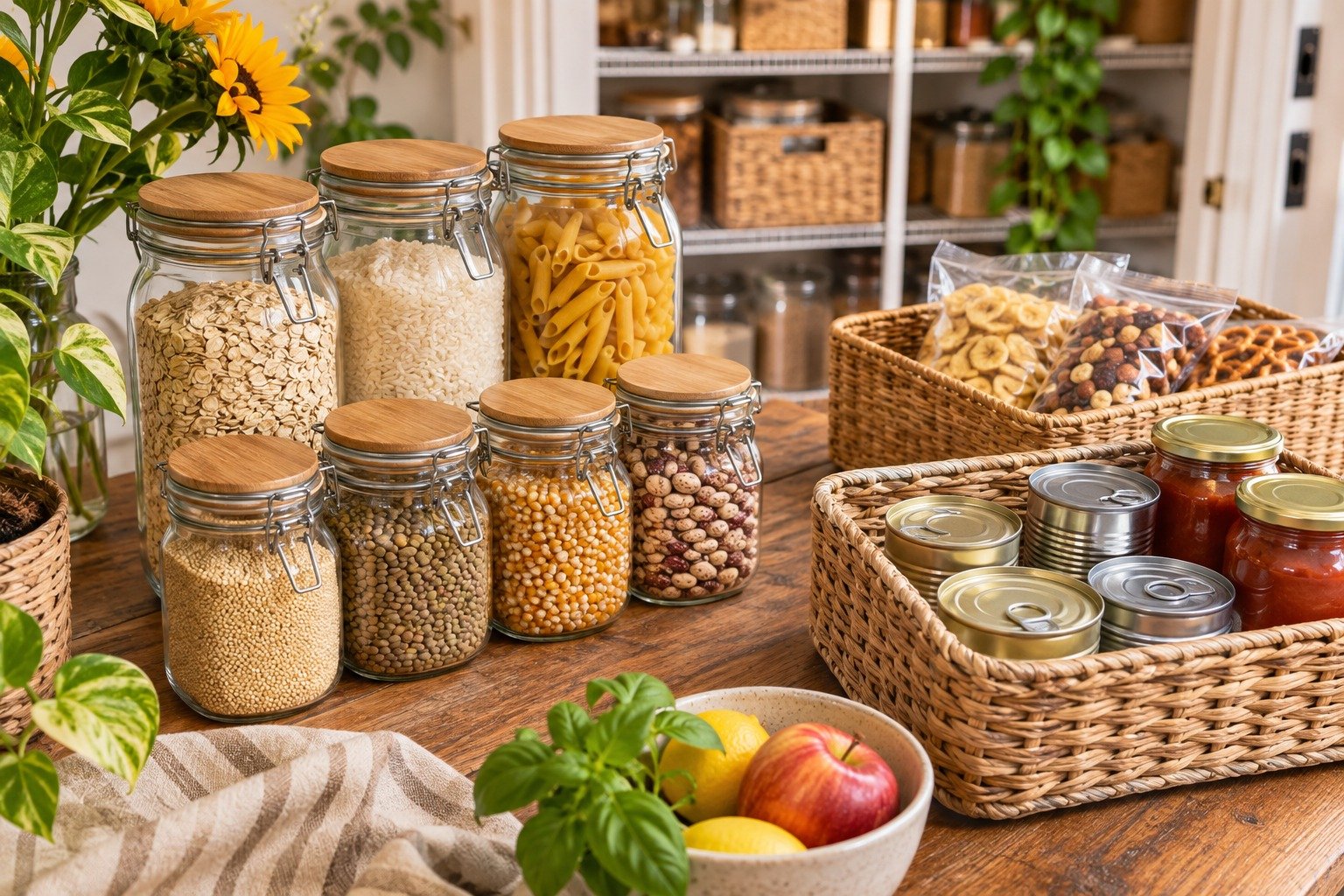
Start Budget Pantry Organization With a Free Inventory
Remove food from one shelf at a time and group similar products. Separate opened packages from unopened backups. This immediately shows whether you have duplicates, forgotten ingredients, or more stock than the shelves can comfortably hold.
Clean the empty shelf and let it dry. Check packaging and follow storage directions. Remove damaged or questionable items appropriately rather than assuming that moving them into a new container makes them usable.
Practical budget pantry organization starts before the first purchase. Photograph the sorted groceries and write down the categories you actually need, such as breakfast, baking, snacks, and dinner staples.
Keep a Small “Use Next” Group
Gather suitable foods that should be used soon and plan meals around them. This can help reduce forgotten stock without buying another organizer.
Do not treat every date label as the same instruction. Follow the product’s storage directions and relevant use-by requirements. If you are unsure about an item, check reliable guidance rather than relying on appearance alone.
Reuse Containers for the Right Purpose
Affordable budget pantry organization often uses clean containers already in the home. A sturdy basket can group sealed snack packets, while a suitable food-safe container may hold an ingredient used frequently.
Keep direct food contact limited to containers intended for that purpose and suitable for the food. Never reuse a chemical container for food, even after washing it.
The FDA food storage guidance explains the importance of storage instructions and keeping food away from household chemicals. Safety should guide reuse rather than appearance or the desire to avoid every purchase.
Separate Packaging Storage From Food Storage
A reused box can hold intact packages if it is clean, dry, sturdy, and suitable for the location. It does not automatically become appropriate for loose flour, cereal, or rice.
Discard containers with damage, lingering odors, or surfaces that cannot be cleaned appropriately. Keep product information when decanting food, including allergens, storage directions, and relevant dates or lot details.
Measure Before Buying Any Organizer
Successful budget pantry organization prevents purchases that do not fit. Measure shelf width, depth, clear opening, and the space available through the pantry door.
Then measure the food packages. Check that a container holds your normal purchase quantity and that a loaded bin can be lifted comfortably. Buying a cheap container that needs replacing is not a saving.
For tight layouts, these small pantry organization ideas can help identify whether a bin, riser, or simple category change would improve access most.
Make a Problem List, Not a Product List
Instead of writing “Buy six jars,” write “Flour bags spill” or “Snack packets fall behind cans.” Then choose the least expensive suitable response to each problem.
You may find that one appropriate food container and two reused bins solve the issue. Budget pantry organization simplifies everyday use without filling every shelf with new accessories.
Create Zones With Labels You Already Own
Simple budget pantry organization groups foods by how they are used. Breakfast items can share one area, dinner ingredients another, and baking supplies a third.
Use removable labels or suitable tape on bins and shelf edges. Keep category names broad enough for everyone to understand. Complicated micro-categories create extra decisions when groceries are unpacked.
Put frequently used foods at comfortable reach. Store heavier supplies lower within the shelf system’s rating, and reserve less accessible places for lightweight, clearly identified backups.
Keep Labels Away From Product Information
Do not cover cooking directions, allergen details, or storage instructions with a decorative label. Place category labels on the storage container or shelf edge instead.
If you decant, keep the important information with the ingredient. A simple system that preserves useful details is better than an attractive jar with an unknown product or refill date.
Use an Itemized Sample Makeover Budget
The following budget pantry organization example is a planning exercise, not a retailer price list. It assumes the shelves are sound and no structural repairs or installation work is required.
| Item | Quantity or approach | Illustrative allowance |
|---|---|---|
| Existing bins | Reuse suitable clean containers | $0 |
| Category labels | Use supplies already owned | $0 |
| Small wipeable bins | Two for loose packaged foods | $12 |
| Suitable food container | One for a frequent dry ingredient | $10 |
| Stable shelf riser | One, only if needed | $12 |
| Compatible liner | Selected shelf area | $6 |
| Contingency | Adjust for local prices | $10 |
| Total | Example spending limit | $50 |
Actual prices vary by store, product, and location. The example excludes tax and delivery. Check current totals before buying and remove any item that does not solve a real problem.
Buy in Stages Instead of Buying a Full Set
Effective budget pantry organization can begin with no purchases at all. Sort, label, and reuse first, then live with the arrangement for a week.
Notice the remaining difficulty. A bin that is too heavy, a hidden corner, or a container that does not hold a full package needs a specific solution. Buy for that issue only.
Avoid buying matching container sets just because the unit price looks lower. Unused sizes, unsuitable lids, and leftover food packets can make a set less economical than one correctly chosen item.
Compare Cost Against Daily Use
Cheap pantry organization should still be durable and convenient. A flimsy bin that bends under its normal contents may waste both money and time.
Check material suitability, dimensions, cleaning requirements, and comfortable handling. Spend more selectively on the item used every day rather than spreading the same budget across several unnecessary decorative products.
Improve Existing Shelves Before Replacing Them
Resourceful budget pantry organization makes better use of sound shelves. Move items into a visible row, use a suitable riser for short packages, or place small packets in a removable bin.
If shelves are adjustable, reposition them according to the manufacturer’s instructions to match actual package heights. Leave enough space to remove items comfortably.
Do not hide sagging, damaged supports, or damp surfaces behind new liners. Repair the underlying problem appropriately before loading the shelf again. Cosmetic improvements cannot establish safe load capacity.
Keep Grocery Spending Connected to Storage
Lasting budget pantry organization includes buying quantities that fit. A bulk discount may be poor value if the extra food cannot be stored properly or used within an appropriate period.
Keep a separate place for unopened backups and check it before shopping. When the category is full, avoid buying another package unless there is a clear reason and suitable storage.
These broader pantry organization ideas can help connect the pantry with cupboards and other kitchen storage, reducing the tendency to buy an organizer for every location separately.
Use a Focused Shopping Checklist
Before buying, confirm the exact problem, the available dimensions, the required capacity, and whether something you already own could work. Check the complete cost, including delivery or accessories.
For anyone considering building a pantry on a budget, separate the organization allowance from construction costs. Creating a new enclosure or adding structural shelving is a different project from resetting existing storage.
Maintain the Makeover With a Weekly Check
The most sustainable budget pantry organization routine is short. Before shopping, face packages forward, check the backup area, and wipe crumbs or spills.
Move older suitable stock forward and identify ingredients for upcoming meals. Return stray packets to their categories. If a zone keeps overflowing, reduce stock or simplify the category before buying another container.
These practical pantry organization hacks work because they reduce repeated decisions. Everyone should know where groceries belong and how to see whether another package is actually needed.
Frequently Asked Questions
How can I start budget pantry organization with no money?
Sort the food, clean the shelves, group similar items, and reuse suitable containers. Label shelf edges with supplies you own and keep unopened backups together before considering purchases.
Do I need matching containers?
No. Choose containers by suitability and function. Original packaging inside a simple category bin can work well, preserve product information, and avoid the cost of unnecessary decanting.
Which purchase should come first?
Buy the item that solves your biggest remaining problem after a free reset. That may be one food-safe container, a stable riser, or a manageable packet bin rather than a large coordinated set.
Conclusion
Budget pantry organization works when spending follows a clear need. Inventory current food supplies first, reuse safely, measure carefully, and buy in small stages. Simple zones and a weekly stock check keep the pantry useful while protecting both available shelf space and your household budget.
