

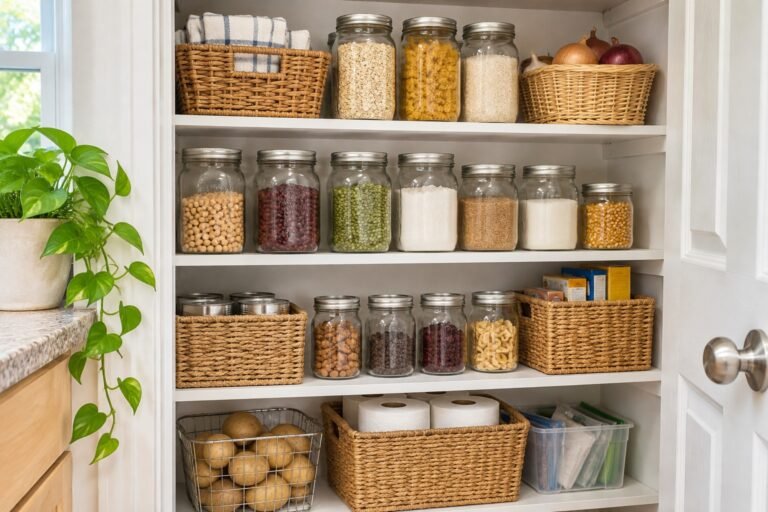
The most useful shelving ideas for a pantry match your groceries, available space, and the weight the complete system can safely support. A shelf that looks attractive may still be too deep, badly spaced, or awkward to reach.
Start by measuring what you store. Tall cereal boxes, small jars, canned foods, and bulky containers need different clearances. Choosing a system around these items helps prevent wasted height and hidden food.
This guide compares fixed, adjustable, wire, and wood shelving, explains how to assess load ratings, and shows how to plan a small pantry without buying unnecessary components.
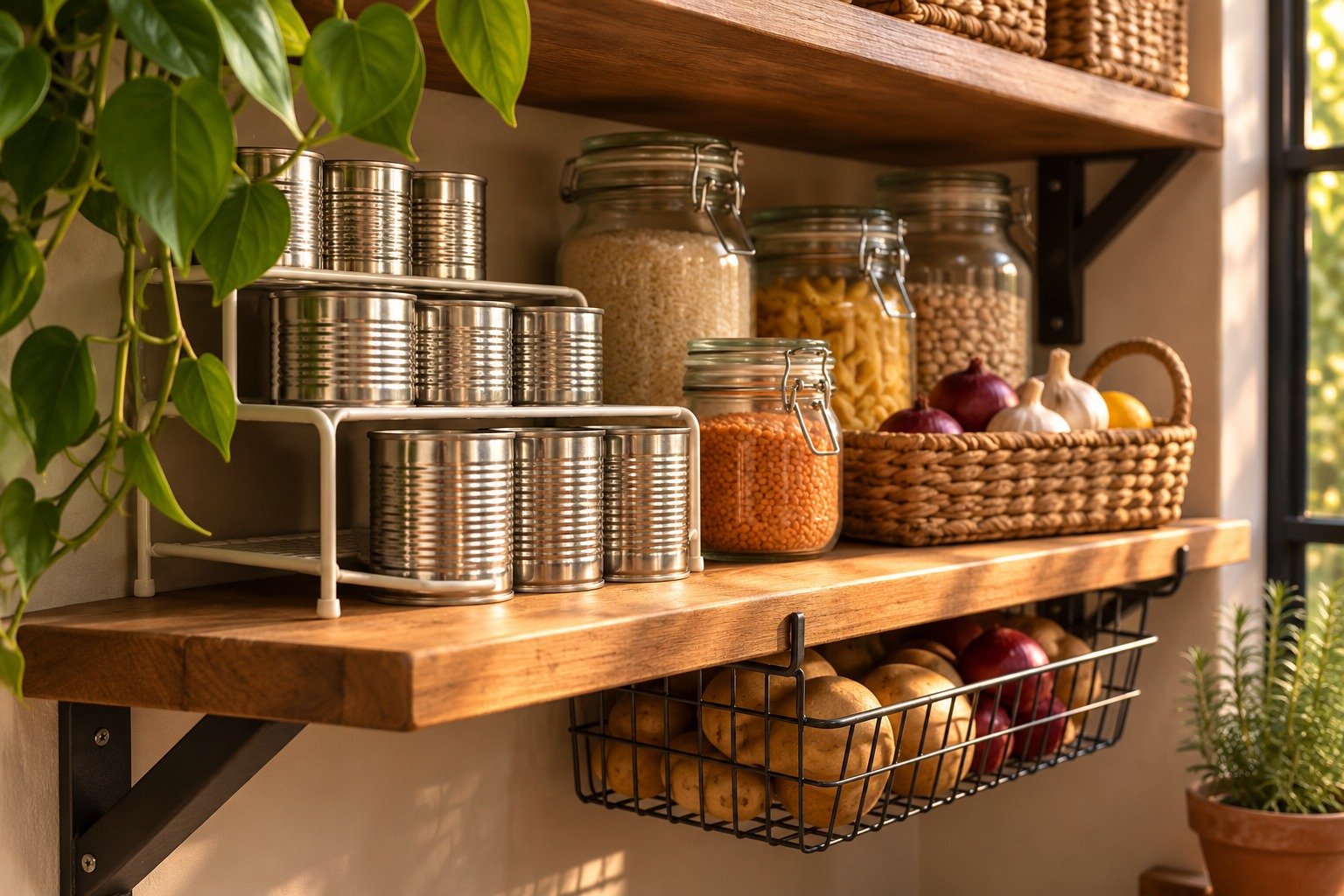
Compare Shelving Ideas For A Pantry by Two Separate Choices
Think about shelf construction and shelf material separately. Fixed and adjustable describe how shelves are supported or repositioned. Wire, solid wood, plywood, and laminate describe the shelf surface.
An adjustable system may use wire or solid boards. A fixed shelf may also use different materials. Keeping those choices separate makes comparisons clearer and prevents assumptions about strength based on appearance.
When reviewing shelving ideas for a pantry, compare complete systems with similar dimensions. Include rails, brackets, clips, fixings, and any accessories needed for your intended storage.
Measure the Pantry Before Comparing Products
Record wall lengths, door opening, usable depth, and the tallest packages you normally buy. Check baseboards, hinges, switches, and anything that reduces the real shelf area.
For tight storage, these small pantry organization ideas can help you decide which items need visible shelves and which work better in removable bins.
Understand Load Ratings Before Choosing Shelves
Reliable shelving ideas for a pantry use the manufacturer’s rating for the exact system and installation. There is no single safe weight limit that applies to every wood or wire shelf.
Capacity depends on shelf dimensions, unsupported span, bracket spacing, wall construction, fixings, and how the load is distributed. A rating for evenly distributed weight does not automatically cover a heavy appliance placed in one small area.
For an example of these conditions, see the ClosetMaid HeavyDuty installation instructions. Use the instructions for your chosen product rather than transferring another system’s rating.
Check the Whole Support Chain
Before installing shelving, identify suitable structural support and the fixings required by the manufacturer. Do not assume a strong board makes weak brackets or unsuitable wall anchors acceptable.
If existing shelves sag, move, or pull away from the wall, unload them and investigate the cause. Adding another support without understanding the installation may not solve the underlying problem.
Fixed Shelves: Simple but Less Flexible
Fixed shelving ideas for a pantry suit a predictable storage arrangement. Shelves installed at planned heights can provide a clean appearance and a straightforward layout.
The main limitation is flexibility. If your grocery packaging changes, a previously useful opening may become too short or leave a large unused gap. Measure normal packages and allow room for hands and lids before choosing positions.
Installation cost depends on materials, support design, wall conditions, and labor. A simple appearance does not guarantee the lowest complete project cost, especially when custom cutting or finishing is required.
Where Fixed Shelves Work Well
Consider fixed shelves when the pantry shape is regular and your storage needs are stable. Repeated rows of similar-height containers may suit the arrangement.
Avoid setting every opening to the same height without checking the contents. Short cans and tall bottles rarely need identical clearances, and wasted vertical space matters in a compact pantry.
Adjustable Shelves: Useful When Needs Change
Adjustable shelving ideas for a pantry let you change openings as your groceries or household routines change. This can be helpful in rentals, family kitchens, or spaces storing a mix of package sizes.
Check how adjustments work. Some systems move along slotted standards, while others require repositioning individual supports. Confirm that components remain securely seated after changes.
Buy compatible parts from the intended system. Similar-looking clips and brackets are not automatically interchangeable. Include the required supports and fixings in the purchase calculation, not just the shelf boards.
Plan Initial Spacing With Real Items
Set a short opening for small cans, a medium opening for jars and bins, and a taller opening for cereal or bottles. Measure actual packages instead of relying on a universal spacing chart.
Leave enough clearance to remove the item you use most awkwardly. A shelf arrangement should work when fully stocked, not only when a single jar sits on it.
Wire Shelves: Open Surfaces With Specific Tradeoffs
Wire shelving ideas for a pantry can offer an open appearance and a range of compatible accessories. They may suit packaged food and bins with stable, flat bases.
Small containers can tip or catch between wires, depending on the design. A compatible liner or suitable bin may help, but check whether accessories add weight or affect the system’s intended use.
Inspect the coating and joints when evaluating existing wire shelves. Damage, corrosion, loose clips, or bent components deserve attention before more weight is added.
Wood and Solid Surfaces: Stable Storage for Small Items
Solid-surface shelving ideas for a pantry give jars and packets a continuous base. Sealed wood, appropriate plywood, and manufactured boards can provide different appearances and price points.
Their performance still depends on thickness, span, support, finish, and product specifications. Avoid assuming every wood shelf is stronger than every wire system. Unsupported boards can sag, and damaged edges may absorb moisture.
Choose a surface you can clean appropriately. Allow finishes to cure according to product instructions before stocking food, and address persistent damp conditions rather than relying on shelving material to hide them.
Compare Options Side by Side
The following shelving ideas for a pantry comparison describes practical tradeoffs. Cost symbols show relative planning categories only; actual pricing depends on the complete product and installation.
| Option | Typical planning cost | Useful feature | Main load or maintenance check |
|---|---|---|---|
| Fixed supported shelves | $–$$$ | Clean, tailored positions | Support design and future flexibility |
| Adjustable rail system | $$–$$$ | Shelf heights can change | Compatible parts and secure installation |
| Coated wire surface | $–$$ | Open construction and accessories | Exact rating, coating, small-item stability |
| Sealed wood or plywood | $$–$$$ | Continuous surface for jars | Span, finish, thickness, and supports |
| Laminated manufactured board | $–$$ | Wipeable finished surface | Edge condition, moisture, and rated span |
Compare installed totals rather than shelf prices alone. These broader pantry organization ideas can help you plan how the chosen shelves will hold everyday categories.
Build a Transparent Sample Budget
Affordable shelving ideas for a pantry begin with a complete parts list. Include shelves, supports, fixings, any compatible liners, and tools you do not already own.
For a hypothetical project allowance, you might reserve $90 for shelf surfaces, $80 for the specified support system, $25 for appropriate fixings, and $35 for finishing materials. A $40 contingency brings that example to $270.
This is an illustrative allocation, not a retailer quote or structural design. It excludes labor, delivery, tax, and repairs. Replace every figure with local prices and the actual quantities your selected system requires.
Decide Whether DIY Fits the Project
DIY shelving for pantry storage can be suitable when you understand the installation and have appropriate tools. Follow the system’s instructions, locate services before drilling, and work within your abilities.
For uncertain wall conditions, heavy loads, or complicated spans, obtain suitable professional advice. The savings from installation are not useful if the finished shelving cannot reliably support its contents.
Make Small Shelves Easier to Use
Practical shelving ideas for small pantry spaces prioritize visibility. Keep frequent foods near the front and use manageable bins for small packets or deep corners.
Store heavier items lower within rated limits, and avoid unstable stacks. Leave room to return groceries without rebuilding the arrangement every time.
Good small pantry shelving ideas also include cleaning access. A shelf packed tightly from wall to wall can make spills and damaged packages harder to notice and remove.
Check a Loaded Shelf
Test shelving ideas for a pantry using actual package dimensions. Compare shelving ideas for a pantry with the door closed, too. Review shelving ideas for a pantry again after stocking, checking visibility, comfortable reach, and whether bins can be removed without disturbing neighboring foods. Keep the result practical.
Frequently Asked Questions
Which shelving ideas for a pantry offer the most flexibility?
An appropriately installed adjustable system lets you change shelf openings as packages and routines change. Check the exact adjustment method, load rating, and compatibility of every component before purchase.
Are wood shelves always stronger than wire?
No. Compare the ratings of complete systems under their stated installation conditions. Material alone does not determine capacity; supports, span, fixings, and load distribution also matter.
How deep should pantry shelves be?
Choose depth around available space and the items stored. Avoid making shelves so deep that daily foods disappear behind several rows. Test reach and bin removal before committing.
Conclusion
The best shelving ideas for a pantry balance access, flexibility, cost, and verified load capacity. Measure your groceries and available space first, compare complete systems, and choose spacing around real groceries. Suitable supports and a practical category layout matter more than following a particular material trend.
