

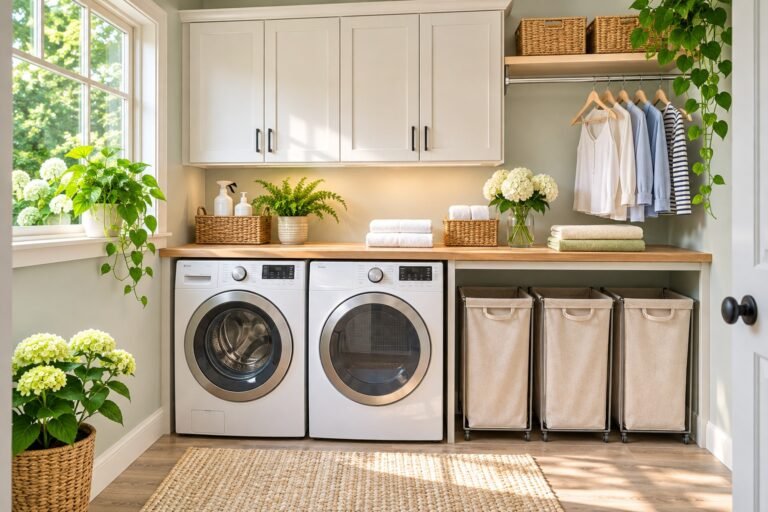
Learning how to organize a laundry room starts with following a load from arrival to return. Clothes enter dirty, move through washing and drying, then need folding, hanging, and putting away. Storage should support that sequence.
When the sequence breaks, clutter grows. Clean clothes stay in baskets, damp garments have nowhere to hang, and detergent disappears behind unrelated supplies. A useful arrangement makes the next step obvious.
This guide explains a repeatable workflow with a simple floorplan, sorting zones, practical storage, and an upkeep routine. Adapt the layout to your appliances, room dimensions, and household needs.
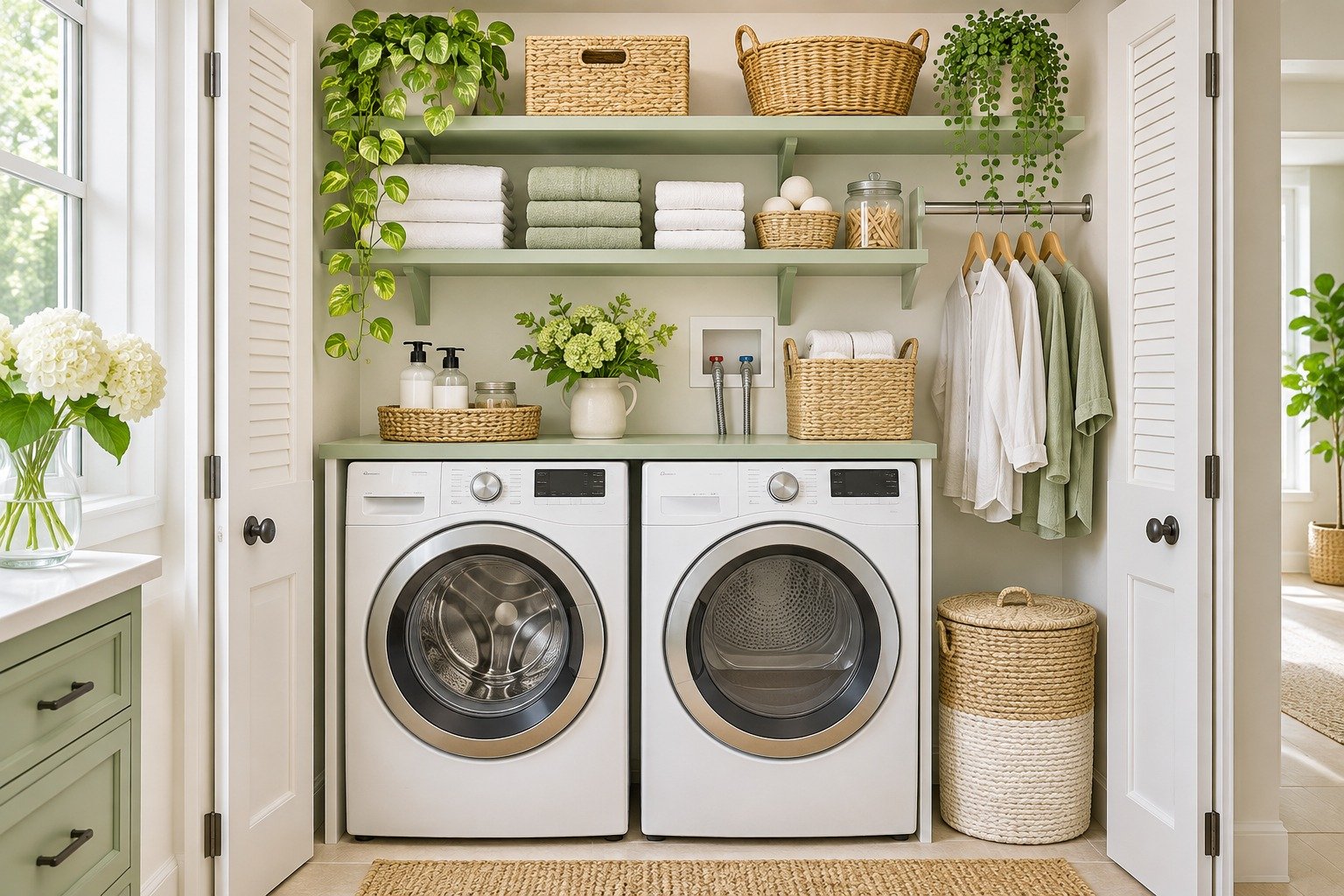
How To Organize A Laundry Room Around the Load Route
Complete one normal laundry cycle and notice where you stop, move objects, or walk elsewhere. These interruptions reveal what the room needs more clearly than a shopping list of organizers.
Write the sequence as collection, sorting, washing, drying, folding, and returning. Decide which tasks happen in the room and which belong elsewhere. A tiny laundry area may only need to support washing and drying.
The most practical answer to how to organize a laundry room begins with removing one repeated interruption. For example, place a suitable empty basket where clean clothes actually leave the dryer.
Identify the Main Bottleneck
If dirty clothes cover the floor, review collection and sorting. If clean clothes pile up, focus on folding and returning. More detergent storage will not solve a missing destination for finished laundry.
Ask everyone who uses the room where the process becomes awkward. A layout should support shared routines rather than depending on one person remembering an elaborate system.
Empty Surfaces and Measure the Room
Before deciding how to organize a laundry room, clear counters and remove items unrelated to laundry. Sort supplies into current products, backups, accessories, cleaning tools, and things that belong elsewhere.
Measure doors, appliances, existing shelves, and the floor area available when doors and lids are open. Record sockets, water connections, drainage, and service access points.
Follow your appliance manuals for installation and operating clearances. Do not turn required ventilation or service space into storage simply because a narrow cart fits inside the gap.
Check What Can Stay Outside the Room
If space is limited, consider collecting laundry in bedrooms or folding on a suitable nearby surface. The washing area does not need to perform every household task.
These small laundry room organization ideas can help you decide which functions genuinely need a place beside the machines.
Draw a Simple Functional Floorplan
A floorplan helps explain how to organize a laundry room without creating extra construction work. Draw the door, appliances, and fixed fittings first, then mark where baskets and people will stand.
For a room with side-by-side machines, keep the approach clear. Place sorting on an accessible edge and folding on a suitable surface that does not block controls, lids, or service needs.
For a stacked setup, consider a reachable adjacent shelf for permitted daily supplies and a separate landing spot for baskets. Do not place a heavy overhead container where lifting it becomes awkward.
Sample Zone Sequence
| Stage | Suggested location | What it needs | Common obstruction |
|---|---|---|---|
| Collect | Entry edge or outside the room | Suitable hamper | Bags scattered on the floor |
| Sort | Reachable basket area | Simple categories | Too many tiny sorting bins |
| Wash | Beside the washer | Securely stored current supplies | Bottles covering controls |
| Dry | Beside the dryer or drying area | Basket or suitable rack | Blocked doors and ventilation |
| Finish | Clear surface or hanging point | Space for clean garments | Permanent counter clutter |
| Return | Exit route | Assigned clean basket | Finished laundry with no destination |
Create a Sorting System You Will Actually Use
Useful guidance on how to organize a laundry room keeps sorting simple. Base categories on garment care instructions and the loads your household regularly washes.
You might separate ordinary everyday loads from delicate items and garments needing special attention. Do not create numerous permanent bins if you cannot keep them clear or identify when a load is ready.
Choose washable or easily cleaned hampers suited to the space. Keep damp textiles from sitting in a tightly packed pile, and address wet items promptly according to their care requirements.
Give Special-Care Items One Temporary Home
Use a small, clearly identified place for items needing inspection, mending, or a different wash method. Check it regularly so it does not become a permanent forgotten pile.
Keep mesh wash bags and other small accessories together. Place them where the person loading the washer can retrieve them without crossing the room or moving several bottles.
Store Products Securely Near Their Task
Understanding how to organize a laundry room includes choosing safe product storage. Keep detergent and other cleaners in their original labeled containers, properly closed and stored according to instructions.
Where children are present, use suitable secured storage out of sight and reach. Do not place detergent packets in open jars or bowls. Decorative storage should never remove important labels or protective packaging.
The American Cleaning Institute’s safety guidance explains the value of original containers and label directions. Keep chemical products separated from food and clean household supplies.
Separate Current Products From Backups
When considering how to organize a small laundry room, keep only normal working quantities near the machines. Store appropriate backups in a designated secured area without blocking service access.
Heavy products need supported shelves and comfortable adult lifting positions. Check the complete shelf system’s rating instead of assuming that a thick board or metal bracket guarantees capacity.
Give Drying and Folding Clear Destinations
A workable plan for how to organize a laundry room accounts for garments that cannot go straight into the dryer. Choose a suitable rack or hanging point based on garment care and available space.
Test a drying rack when fully open. It should not block the exit, press against hot equipment, or interfere with doors and ventilation. Ensure wet garments have appropriate airflow.
Keep the folding area clear enough to use. If a countertop becomes permanent storage, move those items to a defined home or choose a different realistic place to fold.
Work With a Tiny Room
If you are deciding how to organize a tiny laundry room, prioritize the machine approach and one basket landing spot. Move infrequent tasks elsewhere rather than squeezing everything into the doorway.
A wall-mounted folding surface may help if safely installed and suitable for the wall. Check its load, mounting requirements, folded depth, and effect on movement before buying.
Make Returning Clothes Part of the Workflow
The final step in how to organize a laundry room is giving finished laundry a destination. Assign a clean basket or straightforward return routine so folded garments do not remain beside the machines indefinitely.
Use a small basket for items awaiting return rather than filling every available surface. When it becomes full, treat that as a reminder to complete the process instead of adding another container.
These broader laundry room organization ideas can help connect room storage with the wider household routine.
Keep a Short Reset and Maintenance Routine
Lasting advice on how to organize a laundry room includes a reset after use. Return products, clear the folding surface, remove empty packaging, and put clean baskets where the next load needs them.
Follow your dryer manual and the U.S. Fire Administration’s dryer safety guidance. Keep the lint filter and ventilation system maintained as directed, and do not allow clutter to accumulate around equipment.
Review supplies before shopping. Regularly check hoses and nearby surfaces for visible problems, preserving the access needed for appropriate maintenance or professional service.
Run a Complete Trial Load
Test how to organize a laundry room by following one load through every stage. Notice where a basket waits and whether finished clothes have a destination.
Review how to organize a laundry room with another household member afterward. Ask what felt unclear, what required unnecessary movement, and which supplies were difficult to reach. Change one problem at a time, then repeat the trial before buying additional storage. A working routine is easier to maintain when everyone can follow it during busy weeks.
Frequently Asked Questions
What is the first step in how to organize a laundry room?
Follow a normal load and identify the biggest interruption. Then clear unrelated clutter, measure the usable space, and create a destination for each task the room needs to support.
Should sorting happen beside the machines?
Only if space permits. Sorting can happen in another suitable area. Preserve appliance access and a clear route rather than forcing a large hamper system into a narrow laundry closet.
How can I find practical organization ideas without buying everything?
Start with the equipment and containers you own. If you search for how to organize a laundry room ideas, compare each suggestion against your actual bottleneck before purchasing it.
Conclusion
Learning how to organize a laundry room is about completing the laundry sequence with less friction. Map the tasks, preserve appliance clearances, store products securely, and give clean clothes a destination. A small reset after each session keeps the room ready for the next load.
