

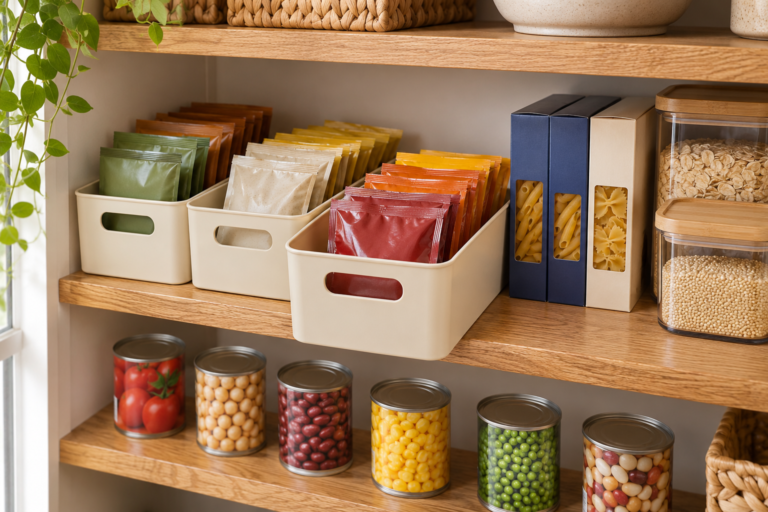
A pantry can look full while making everyday ingredients difficult to find. Open packets disappear behind boxes, cans collect in corners, and deep shelves hide duplicates.
The best pantry shelf organization ideas give every item a clear, reachable home. Instead of buying matching containers first, start with your shelf measurements, cooking habits, and available space.
This guide shares pantry shelf organization ideas for grouping food, choosing bin depth, and placing heavier items safely. You will also find a before-and-after plan that works with existing shelves.
1. Empty and Measure Your Pantry Shelves
Remove everything so you can see the space clearly. Work one shelf at a time if you need to keep your kitchen usable.
Wipe shelves and let them dry before returning food. Check packages for leaks, damage, or signs of pests.
Measure Usable Space
Record each shelf’s width, depth, and clearance above it. Include door hinges, brackets, and anything that reduces usable space.
A container may fit inside the pantry but still be difficult to remove. Allow room to grip handles and lift lids.
Good pantry shelf organization ideas account for these everyday movements.
Sort Before Buying Containers
Group similar items on a counter: breakfast foods, baking ingredients, grains, snacks, and canned goods.
Combine your inventory list rather than mixing food from different packages. Note duplicates and decide what belongs elsewhere.
For a compact cupboard, explore these small pantry organization ideas before planning your shelf layout.
2. Create a Shelf-by-Shelf Pantry Organization System
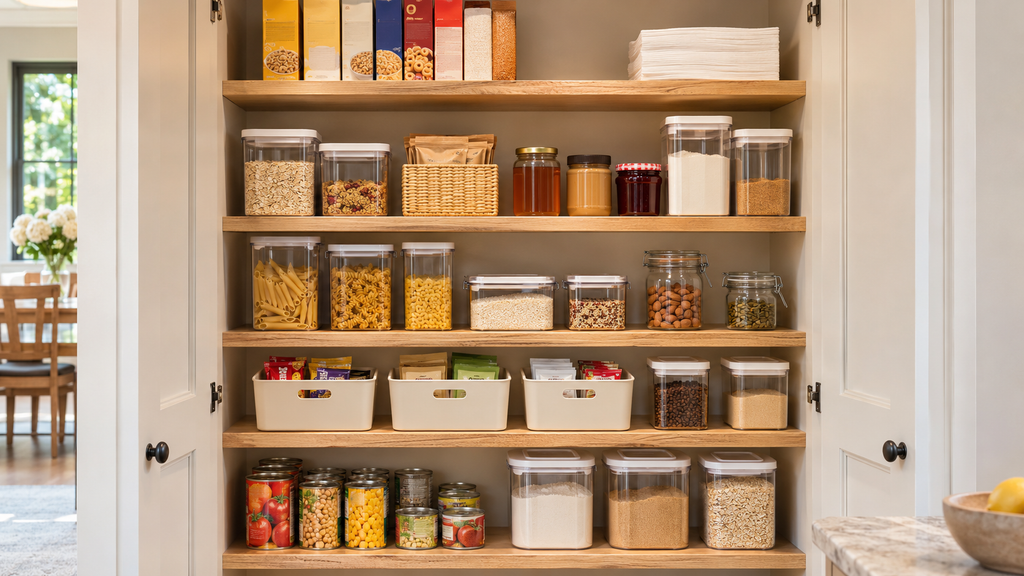
Assign shelves according to how often you use their contents. Keep daily essentials within comfortable reach.
Your pantry shelf organization system should reflect your household. Someone who bakes regularly needs a different arrangement from someone who mainly prepares quick dinners.
Upper Shelves: Lightweight Backstock
Use higher shelves for lightweight, less frequently needed supplies, such as spare paper napkins or unopened cereal.
Avoid placing heavy jars, large appliances, or bulk bags overhead. Keep upper-shelf containers light enough to handle comfortably.
Middle Shelves: Everyday Ingredients
Place frequently used foods where you can see labels easily. Breakfast supplies, pasta, rice, and meal ingredients often work well here.
Keep the most-used items toward the front. Leave enough space to remove one package without moving several others.
Lower Shelves: Heavier Supplies
These pantry shelf organization ideas place heavier supplies on sturdy lower shelves, within a comfortable lifting range.
Check the shelving manufacturer’s load limits. Distribute weight rather than crowding every heavy item onto one section.
A low shelf still needs support; lower placement does not increase its weight capacity.
3. Group Food by Task and Category
Useful pantry shelf organization ideas reduce the number of places you search while cooking.
Start with broad categories. You can divide them later if a group becomes difficult to manage.
Build Simple Meal Zones
Keep pasta near sauces, baking ingredients together, and breakfast supplies in one area.
Avoid placing the same product in several unrelated zones. Choose one main location so everyone knows where to return it.
For ingredients used across several meals, a general cooking zone may work better than separate recipe baskets.
Separate Open Packages From Backstock
Keep opened packages in the active zone and unopened duplicates behind them or on a designated shelf.
Label the reserve area “Backstock.” Check it before shopping.
Leave a little space in each category for groceries. A system that only works when perfectly full will be difficult to maintain.
4. Match Bin Depth to Shelf Depth
Bins help when they make items easier to retrieve. They become obstacles when they are too large, heavy, or tightly packed.
Among pantry shelf organization ideas, choosing the right depth often matters more than choosing matching colors.
Use Shallow Bins for Small Packets
Small packets disappear inside tall containers. Choose shallow bins that let you see and lift individual items.
Group seasoning packets, small snack bags, or baking sachets separately. Keep labels facing the direction you approach the shelf.
Avoid stacking loose packets behind taller boxes.
Make Deep Shelves Accessible
On deep shelves, a removable bin can bring a whole category forward. Choose one you can pull out without striking the door.
Do not fill a deep basket with so many cans that it becomes uncomfortable to lift.
Use front space for active supplies and rear space for clearly identified duplicates. Avoid hiding unrelated items behind everyday food.
5. Use Vertical Space Without Creating Unstable Stacks
Effective pantry shelf organization ideas use shelf height while keeping everything accessible.
If shelves are adjustable, change their spacing around your actual packages. Leave room above containers for easy removal.
Keep Stacks Stable
Stack containers only when they are designed for it. Place larger, stable containers underneath smaller compatible ones.
Avoid balancing jars on boxes or creating towers of cans.
A small riser can improve visibility, but check its dimensions, stability, and load rating before adding weight.
Keep the Look Simple
Modern pantry organization ideas with shelves do not require every ingredient to be transferred into a new container.
Repeat a few bin styles, use clear labels, and leave visible space between categories. Keep original packaging when it already stores the food effectively.
If you decant food, use suitable food-contact containers and retain the product name, allergen information, storage instructions, and date details.
6. Pantry Shelf Organization Ideas: Before-and-After Plan
These pantry shelf organization ideas become easier to apply when each shelf has a specific job.
Use this example as a starting point, then adjust it to your reach and cooking habits.
| Shelf area | Before | After | Everyday benefit |
|---|---|---|---|
| Top shelf | Heavy jars and mixed packets | Lightweight backstock | Easier overhead handling |
| Eye-level shelf | Breakfast foods scattered throughout | One breakfast zone | Faster morning access |
| Middle shelf | Pasta hidden behind cans | Grains and meal ingredients grouped | Easier meal preparation |
| Lower shelf | Snacks mixed with bulk supplies | Heavier items spread across supported space | More manageable lifting |
| Deep rear space | Forgotten duplicates | Labeled reserve stock | Fewer repeat purchases |
| Small-packet area | Loose sachets between boxes | Shallow, labeled bin | Better visibility |
Test the arrangement before adding more accessories. Open the door, remove commonly used items, and put them back.
For broader layout options, see these pantry organization ideas.
7. Make Food Rotation Part of the Routine
Long-lasting pantry shelf organization ideas include a simple restocking habit.
Place newer purchases behind older stock and use older suitable items first. North Carolina A&T Cooperative Extension explains this approach in its food storage guidance.
Keep Storage Conditions Suitable
Follow package instructions, including refrigeration requirements after opening.
Illinois Extension recommends keeping pantry storage dry and separating food from cleaning supplies. Its room-temperature storage guidance also covers stock rotation.
Reset Before Grocery Shopping
Check each category before making your list. Return misplaced items, wipe spills, and bring older stock forward.
If a bin constantly overflows, reduce the quantity you buy or give that category more space.
The most practical pantry shelf organization ideas adapt to your routine instead of requiring a complete rearrangement every week.
Frequently Asked Questions
What are the best pantry shelf organization ideas for small spaces?
Use clear categories, shallow bins for packets, and reachable shelves for daily essentials. Store duplicates in a labeled reserve area.
How do I organize deep pantry shelves?
Use manageable pull-forward bins and keep active supplies at the front. Reserve the rear for clearly identified backstock.
Where should heavy pantry items go?
Place them on sturdy lower shelves within comfortable reach. Follow shelf load limits and distribute weight evenly.
Do I need matching containers?
No. Suitable existing containers and original packaging can work well. Consistent labels matter more than identical jars.
How often should I reorganize pantry shelves?
Do a quick reset before shopping. Reconsider the layout when categories repeatedly overflow or your household’s needs change.
Conclusion
Successful pantry shelf organization ideas make ingredients visible, reachable, and easy to return.
Measure first, assign shelves by use and weight, and choose bins that suit the available depth. Keep everyday supplies accessible and rotate older stock forward.
Start with one shelf, test these pantry shelf organization ideas, and expand the system once it works for your household.
