

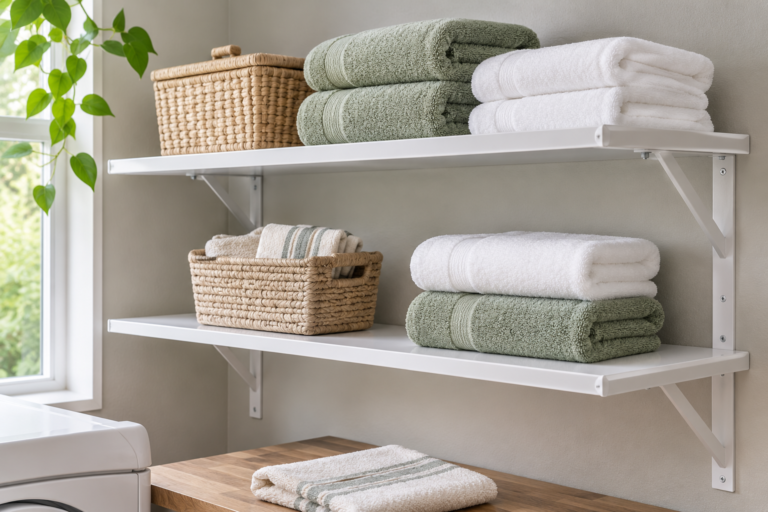
Laundry rooms often become crowded with detergent bottles, baskets, towels, and cleaning tools. When these items cover your appliances or worktop, even a simple load of washing can feel inconvenient.
Open laundry room shelving gives everyday supplies a visible, organized home. It can also make a small room feel less enclosed than a wall filled with cabinets. However, exposed shelves need thoughtful placement because dust, moisture, and clutter remain visible.
This guide explains how to plan open laundry room shelving, choose suitable materials, and arrange supplies within comfortable reach. You will also find practical layouts, installation considerations, and simple cleaning tips.
Is Open Laundry Room Shelving Right for Your Space?
Open shelves work best when you want quick access to a manageable number of items. They suit folded towels, lightweight baskets, and frequently used accessories.
However, open laundry room shelving does not hide untidy packaging or protect everything from dust. If you prefer concealed storage, combine a few shelves with a closed cabinet.
Before choosing a layout, consider:
- What you need to store.
- How often you use each item.
- Whether the room feels damp.
- How much cleaning you can manage.
- Whether children can access stored products.
For compact layouts, explore these small laundry room organization ideas.
Five Open Laundry Room Shelving Layouts
The best open laundry room shelving follows your available wall space and daily routine. Start with one useful storage area rather than covering every wall.
1. Shelves Above Front-Loading Machines
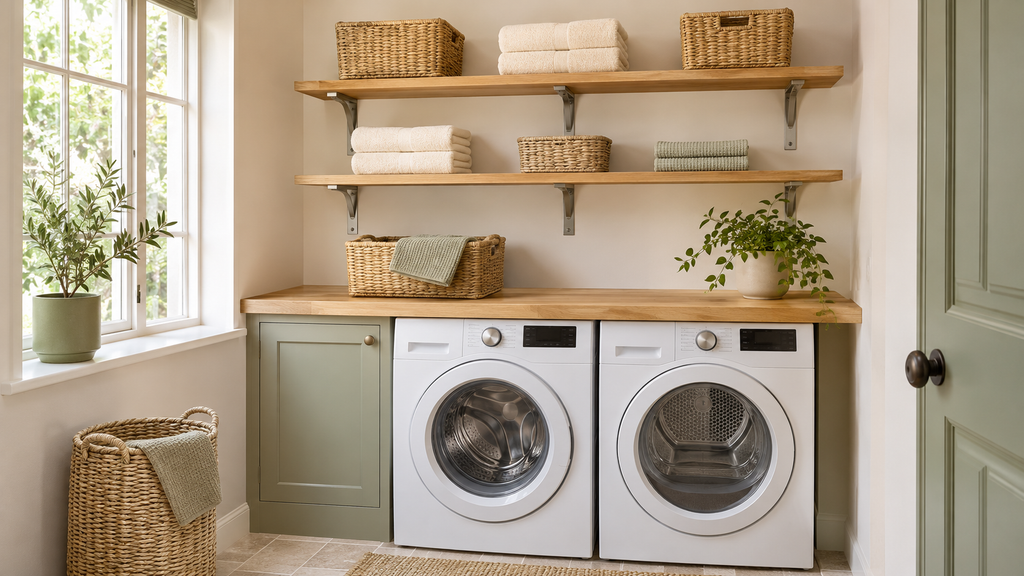
The wall above side-by-side appliances can hold towels, small baskets, and lightweight accessories.
Keep shelves shallow enough that items remain visible. Avoid storing heavy containers where you must lean across a machine to retrieve them.
Check appliance instructions before installation. Leave ventilation, connections, and maintenance access clear.
This open laundry room shelving layout works well when the machines already have a suitable worktop above them.
2. Narrow Shelves Beside the Washer
A side wall may offer easier access than the space directly above your appliances.
Install shelves where you can approach them without stretching. Small bins can hold cloths, garment bags, or laundry accessories.
Make sure shelves do not interfere with appliance doors or the walkway. A narrow shelf is only useful when you can comfortably remove its contents.
3. Open Shelves Above a Folding Counter
Place shelves above a folding surface to keep towels and accessories close to your work area.
Leave sufficient clearance for folding clothes and lifting baskets. Keep the lowest shelf from projecting into your normal working position.
For open laundry room shelving that feels organized, assign one basket to each category. Avoid filling the counter with items that belong above it.
4. Adjustable Shelving on a Spare Wall
Adjustable shelves let you change the gaps as your storage needs develop.
Use shorter spaces for folded cloths and taller spaces for baskets. Keep bulky items on supported shelves within comfortable lifting reach.
Follow the shelving system’s instructions for brackets, wall fixings, and load limits.
This option suits households that want flexible open laundry shelving without rebuilding the whole room.
5. A Cabinet With One Open Shelf
A mixed layout balances convenience with concealed storage.
Use the cabinet for products requiring secure storage and the open shelf for towels or everyday accessories.
These open shelving laundry room ideas help prevent the entire room from becoming a display of bottles and packaging.
For more arrangements, see these laundry room organization ideas.
Compare Shelf Materials and Finishes
Choose open laundry room shelving according to moisture exposure, expected weight, and cleaning needs.
| Material | Main Advantage | What to Check | Everyday Care |
|---|---|---|---|
| Sealed solid wood | Warm appearance | Finish and load rating | Wipe spills promptly |
| Coated metal | Practical, durable surface | Corrosion resistance | Dry wet areas |
| Laminated board | Smooth, easy-clean finish | Protected edges | Avoid standing moisture |
| Wire shelving | Open surface and visibility | Small-item stability | Clean individual wires |
| Moisture-resistant board | Suitable options for humid spaces | Manufacturer’s specifications | Keep surfaces dry |
No material makes leaks or persistent dampness harmless. Inspect surfaces and address moisture problems before installing storage.
For open laundry room shelving, a finish that tolerates routine wiping is usually more useful than a decorative surface requiring delicate care.
Plan Reachable Shelf Heights
There is no single installation height that suits every person and appliance. Shelf depth, your reach, and obstacles beneath the shelf all matter.
Start With Comfortable Everyday Reach
For initial planning, consider approximately 36–48 inches above the floor for frequently handled lightweight items where you can approach the shelf directly.
An upper shelf around 48–60 inches may suit occasional lightweight supplies for some adults. These are starting points, not universal installation requirements.
Test the proposed position with the person who will use it. Adjust lower where needed.
Open laundry room shelving above a machine may be harder to reach than a shelf at the same height on an unobstructed wall.
Test Depth Before Drilling
Mark the proposed shelf outline with painter’s tape. Hold an empty basket at that position and check whether you can remove it comfortably.
Avoid layouts that require standing on appliances, stretching overhead, or climbing for daily supplies.
Keep heavy items at a comfortable lifting height.
Allow Full Appliance Movement
Open a top-loading washer lid completely before marking shelves. Check the model’s required clearances rather than copying another laundry room.
Also account for dryer doors, controls, hoses, and service access. Practical open laundry room shelving must work with the appliance, not restrict it.
Install Shelves With Suitable Support
Detergent bottles and filled baskets can weigh more than they appear to.
Follow the shelf manufacturer’s mounting instructions and use fixings appropriate for the wall construction. Locate suitable structural support where required.
Check for concealed wiring and pipes before drilling. If you cannot confirm safe mounting locations, use a qualified installer.
The capacity of open laundry room shelving depends on the complete installation, including brackets, fixings, and the wall.
Distribute weight across supported areas. Stop using a shelf if it moves, sags, or develops loose fittings.
Style Shelves Without Adding Clutter
Attractive open laundry room shelving begins with useful storage.
Repeat a Few Basket Styles
Choose baskets that fit the available depth and leave room for your hands. Group small accessories so they do not spread across the shelf.
Use simple labels where they help. You do not need identical containers for everything.
Keep Laundry Products in Suitable Packaging
Keep products in their original labeled containers and follow storage instructions. Avoid transferring detergent packets into decorative jars.
Where children may gain access, use suitable secure storage. A high shelf alone should not be treated as childproof.
Keep towels and accessories separate from products that might leak.
Leave Some Space Empty
Avoid placing an object in every gap. Empty space makes supplies easier to remove and surfaces easier to clean.
For open laundry room shelving, a small collection of well-arranged essentials often looks better than extra decorations.
Manage Dust and Moisture
Dust and dampness are the main tradeoffs of exposed storage.
Make Dusting Easy
Keep rarely used textiles in suitable covered storage. Remove baskets occasionally and wipe the shelf beneath them.
Clean spills promptly and allow surfaces to dry. Avoid arrangements that require moving many decorative objects before cleaning.
Address Dampness at Its Source
Do not place damp towels or wet baskets directly on shelves. Check plumbing leaks and maintain appliance ventilation according to the manufacturer’s instructions.
The EPA recommends keeping indoor humidity below 60%, ideally between 30% and 50% where possible. Its moisture-control guidance explains how reducing dampness helps prevent mold.
Open laundry room shelving can remain practical when moisture problems are addressed rather than hidden behind storage.
Frequently Asked Questions
Is open shelving better than cabinets?
Open shelves offer quick access. Cabinets conceal clutter and can provide secure product storage. A combination often works well.
How deep should laundry shelves be?
Choose depth around your items and reach. Measure baskets first and avoid shelves that obstruct movement or hide supplies.
Can shelves go above a top-loading washer?
Sometimes, provided the lid opens fully and all manufacturer-required clearances remain available.
How do I keep open shelves tidy?
Limit categories, use manageable baskets, return items after use, and remove supplies you no longer need.
What should go on the highest shelf?
Lightweight, occasional-use items that you can retrieve safely. Avoid heavy bottles and unstable stacks.
Conclusion
Well-planned open laundry room shelving makes supplies easier to see, reach, and return. Choose a layout around your appliances, check mounting support, and test shelf positions before drilling.
Keep styling simple, store products appropriately, and manage dust and moisture regularly. A few useful shelves can improve the room without making it crowded.
