

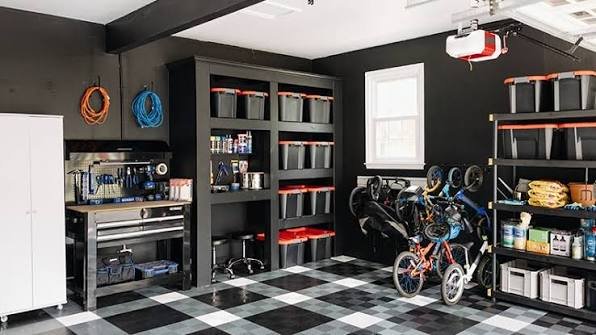
Useful garage organization ideas begin by protecting parking, walking routes and access to equipment. Then divide the remaining space into clear zones for tools, sports gear, garden supplies and seasonal items. Store heavy objects low, daily equipment within easy reach and light occasional items in properly supported reserve storage.
A garage should work with the vehicles and household activities it serves. Before buying a wall system or ceiling rack, park the vehicles, open their doors and trace the route into the house. Those movements define the storage space you actually have.
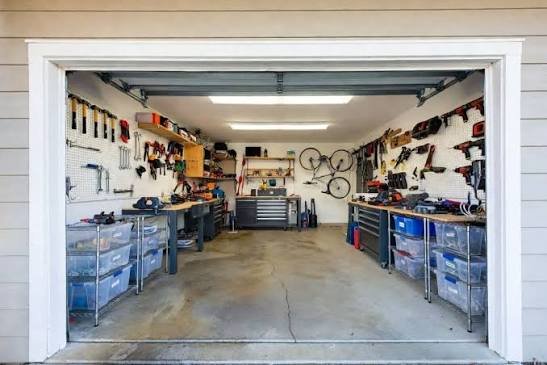
Garage organization ideas: Sort by job and decide what leaves
Make groups for tools and repair supplies, garden equipment, sports items, vehicle accessories, seasonal decorations and items leaving the home. Separate broken or unidentified equipment for a decision rather than putting it into a general-purpose bin.
Check whether each item is suitable for garage conditions. Heat, cold and damp can make the space inappropriate for certain food, medicines, electronics or materials. Follow product storage instructions instead of treating the garage as universal overflow.
For disposal, use local guidance for chemicals, batteries and other restricted waste. Do not pour unknown liquids away or combine partly used products to save shelf space.
Garage organization ideas: Mark parking and access before adding shelves
Park the largest usual vehicle in its normal position. Open the doors and hatch, walk around it with a bag and check any steps into the house. Mark that working envelope on a sketch or with temporary floor tape.
Identify the garage door’s full travel, tracks and operating equipment. Mark utility panels, water heaters, vents, shutoffs and access hatches. Those areas are not spare shelving locations.
Use cardboard to test the projection of a proposed cabinet. Open its doors or drawers within the mock-up footprint. A storage system that fits beside a parked vehicle may still make it impossible to use the vehicle door comfortably.
Garage organization ideas: Assign one zone to each main activity
| Zone | Suitable contents | Useful location |
|---|---|---|
| Household entry | Everyday shoes or bags suitable for the environment | Near the house door without blocking it |
| Tools and repairs | Tools, fasteners and task supplies | Near a usable work surface |
| Sports | Balls, helmets and regularly used equipment | Convenient low or mid-level storage |
| Garden | Hand tools and suitable garden equipment | Near the outdoor route |
| Vehicle care | Suitable labeled vehicle accessories | Accessible but outside parking movement |
| Seasonal reserve | Clearly labeled occasional items | Properly supported shelving |
Keep hazardous products outside child-accessible zones and follow their storage instructions. If an activity needs more space than the garage can offer, reduce its contents or relocate the activity rather than taking over the walking route.
For gear shared with the entryway, the coat and hallway closet guide helps decide what belongs indoors near the daily exit.
A sample two-bay garage map
| Area | Assigned use | Protected movement |
|---|---|---|
| Back wall | Tools and seasonal storage on suitable shelving | Access to utilities and equipment |
| Left wall | Garden gear on rated hooks or shelves | Vehicle door and outdoor route |
| Right wall | Sports equipment and suitable cabinets | Passenger access |
| Center floor | Parking envelope | Door opening, turning and walking |
| House-door approach | Clear entry route | Easy travel into the home |
This map is a conceptual layout, not a structural installation plan. Wall and ceiling storage need suitable support, fixings and ratings for the actual building and loads.
Compare wall, cabinet, ceiling and floor storage
| Storage type | Best use | Limitation to check |
|---|---|---|
| Wall rails or hooks | Frequently used tools and selected sports gear | Mounting surface, load rating and protruding items |
| Cabinets | Defined categories and suitable secured supplies | Door clearance, anchoring and product storage conditions |
| Open shelving | Visible bins and manageable reserves | Rated load, shelf span and installation |
| Ceiling rack | Light occasional items where appropriately engineered | Structure, door travel, lifting and access |
| Floor storage | Heavy or bulky equipment that cannot go higher | Parking and walking obstruction |
Garage storage ideas should match the item and the person retrieving it. A ceiling rack is a poor choice for something used every day or too heavy to lift safely overhead. Open shelving is useful for visible categories but does not provide secure storage for hazardous products.
Put heavy items low and mount storage properly
Use suitable lower shelving or floor positions for heavy equipment. Keep bins small enough to carry safely and label them on the side visible from the aisle. Do not put all heavy items in one oversized container simply because it fits a shelf.
Follow the storage system’s instructions for wall type, fasteners, spacing and rated loads. Do not assign a generic safe weight to a garage wall or ceiling. If structural capacity or the mounting surface is uncertain, get qualified advice before installation.
For ceiling storage, check the complete door movement and operating mechanism, not just the door’s closed position. Preserve access to lights and building services. Avoid positioning loads where retrieval requires climbing over vehicles or stored equipment.
Make tools and sports gear easy to return
Put commonly used tools where their outlines or labels make the home obvious. Keep small parts in a compartmented container with readable categories. A workbench should have a clear working section instead of becoming a permanent storage shelf.
Use a low suitable bin for balls and separate hooks or shelves for equipment whose shape makes a bin impractical. Let children retrieve age-appropriate gear without climbing. Follow the mounting instructions and keep heavy equipment away from unsecured high positions.
Check helmets and other protective gear according to their manufacturers’ care and replacement guidance. Organization is not a substitute for assessing damaged safety equipment.
Adapt the plan for a three-car garage
Three bays do not automatically mean one bay can become full-time storage. Begin by deciding whether all three parking spaces must remain usable. If they do, prioritize wall storage that preserves door movement and the route through the garage.
If one bay is intentionally assigned to a workshop or storage, give it a clear boundary. Keep work surfaces and reserve shelving inside that footprint. Do not let temporary projects expand across the other parking areas.
For 3 car garage organization ideas, consider three functions rather than three piles: parking, active work and reserve storage. The exact allocation depends on the household. Label a project-holding area with a planned completion or review date so it does not silently become permanent overflow.
Treat fire and chemical storage as part of the layout
The U.S. Fire Administration garage safety guidance recommends storing oil, gasoline, paints, propane and varnishes in a shed away from the home. Follow product instructions and local requirements for suitable storage; a general cabinet inside the garage is not automatically appropriate.
Keep access to electrical panels and heat-producing equipment clear. Avoid storing combustibles against appliances. Follow the charging equipment’s instructions and do not improvise extension-cord arrangements. Plan the storage layout around these access and safety needs rather than hiding them behind bins.
A phased setup plan
1. Clear the vehicle and walking routes first.
2. Remove items that do not belong in the garage or require disposal.
3. Group remaining equipment by activity.
4. Test shelf and cabinet footprints before purchasing.
5. Install suitable storage according to its instructions.
6. Label containers and return each category to its assigned zone.
7. Recheck access with vehicles parked and storage loaded.
Start with existing suitable shelves and manageable containers. Add a specialized organizer only when a repeated access problem justifies it.
For indoor reserves that should not live in garage conditions, the pantry guide explains food zones and appropriate storage, while the laundry room guide gives laundry products a defined secure home.
Keep the garage from returning to overflow
Return gear after the activity that uses it, clear the work surface after a project and review seasonal reserves when they are brought down. Keep an outgoing-items category with a specific next step, such as a donation appointment or local disposal collection.
If a zone fills repeatedly, reduce the inventory or revise its boundary. Do not solve every overflow by placing another bin inside the parking envelope.
Test the zones on an ordinary weekend
Park the vehicles, take out a commonly used tool and retrieve sports gear with the storage loaded. Watch for repeated movements across the parking area or a cabinet door that cannot open comfortably. Move the affected category within its designated storage boundary, then repeat the task. Test returning equipment as carefully as retrieving it; a tool is unlikely to stay organized if putting it away requires unpacking a shelf.
Keep a short project list separate from the storage inventory. A partly finished repair can otherwise claim the work surface indefinitely. Give each active project a defined container where appropriate and decide its next action before starting another. Remove completed project materials promptly and review leftover supplies before buying more. This keeps the workshop zone available while preserving the garage’s parking and access functions.
Frequently Asked Questions
What should go in overhead storage
Light, occasional items may suit appropriately supported overhead storage when they can be retrieved safely. Confirm structural support, rated load and garage-door movement before installation.
Are cabinets better than open shelves
Cabinets provide enclosure and may support controlled access, while open shelves improve visibility. Choose by the contents, available door clearance and storage instructions rather than appearance alone.
How do you organize a garage without losing parking
Mark the vehicle’s real working envelope first and keep it clear. Use suitable wall storage around that boundary and check the layout with doors open and shelves loaded.
How should a three-car garage be divided into zones
First decide how many bays must remain available for parking. If a bay is assigned to work or storage, mark that boundary and keep projects inside it. Preserve vehicle-door movement and a clear household route through the remaining bays.
How often should garage organization be reviewed
Reset equipment after each activity and clear the work surface after a project. Review seasonal reserves when you retrieve them, and revisit any zone that repeatedly overflows or obstructs parking and access.
Conclusion
To put garage organization ideas into practice, garage organization should begin with the space needed for parking, vehicle doors, household movement and access to equipment. Protect those areas before assigning storage zones for tools, sports gear, garden supplies and seasonal reserves. Compare wall systems, cabinets, shelves, ceiling racks and floor storage according to the contents and the way they will be retrieved. Keep heavy equipment low, use manageable labeled containers and follow the selected storage system’s installation instructions and rated loads.
Maintain the zones by returning equipment after use, clearing the work surface after projects and reviewing seasonal items when they are retrieved. In a three-car garage, decide explicitly which bays remain available for vehicles and contain workshop or storage activities within their assigned boundary. Follow suitable chemical-storage guidance and preserve utility and maintenance access. If a zone overflows repeatedly, revise its contents or allocation rather than extending into the parking route. A useful garage lets the household park, find equipment and move through the space comfortably with storage fully loaded.
