


Good laundry room closet organization gives utility supplies clear homes without crowding the washing area. The closet beside your machines should help you find detergent, reach cleaning tools, and put supplies away after use.
The challenge is that utility storage often collects unrelated items. Extra towels, cleaning chemicals, spare bulbs, shopping bags, and bulky equipment gradually fill every shelf. A simple category system can recover useful space without adding another cabinet.
This guide focuses on reorganizing the storage closet beside laundry machines, with practical zones, reachable shelves, and separate places for chemicals and clean household items.
Start Laundry Room Closet Organization With an Inventory
Empty the closet onto a protected surface and group its contents. Separate laundry products, household cleaners, tools, linens, paper supplies, and items that belong elsewhere.
Inspect containers for leaks, damage, or missing labels. Follow the product instructions for storage and disposal. Do not mix leftover chemicals or pour different products together to free shelf space.
Effective laundry room closet organization starts by reducing what the closet must hold. Return unrelated items to their proper rooms and remove empty packaging. Keep only the supplies your household uses and reasonable backups.
Check the Closet’s Physical Limits
Measure the shelf openings, floor area, and door swing. Note anything that must remain accessible, including shutoff valves, electrical equipment, machine connections, and ventilation openings.
Read appliance instructions before placing storage nearby. Required clearances vary by model and installation. Treat those clearances as working space, not unused gaps waiting to be filled.
Separate Chemicals From Clean Supplies
Safe laundry room closet organization gives cleaning products their own storage area. Keep them in their original labeled containers, close lids after use, and follow each product’s directions.
The American Cleaning Institute’s product safety guidance explains why original labels and proper storage matter. Do not transfer detergent or cleaners into beverage bottles or decorative food jars.
Where children are present, use suitable secured storage out of their sight and reach. Keep cleaning products away from clean towels, food, pet supplies, and items that could be contaminated by a spill.
Keep Laundry Packets in Their Original Packaging
When planning laundry room closet organization, do not leave colorful detergent packets in an open basket. Keep them in their original closed container and follow the package’s child-resistant closure instructions.
A high shelf alone may be insufficient if a child can climb. Choose a secured location appropriate to your household and avoid placing steps, stools, or easily climbed storage beneath it.
Create Five Practical Storage Zones
Useful laundry room closet organization divides the closet by function. This prevents one large shelf from becoming a mixed pile of products, cloths, and accessories.
| Zone | What belongs there | Suitable position | Main check |
|---|---|---|---|
| Daily laundry | Current detergent and approved wash aids | Secure, comfortable adult reach | Preserve original packaging |
| Cleaning chemicals | Labeled household products | Separate secured section | Follow individual storage instructions |
| Clean supplies | Dry cloths and spare towels | Dry shelf away from chemicals | Protect from leaks and dust |
| Tall tools | Broom, dry mop, or similar tools | Suitable hooks or narrow bay | Keep doors and access clear |
| Backup stock | Unopened replacement supplies | Supported shelf with clear labels | Avoid excessive quantities |
These zones are a starting point. Adjust them to your products, household members, and the closet’s dimensions. Security and safe reach matter more than making every shelf look identical.
Place Shelves Around Reach and Weight
Comfortable laundry room closet organization puts frequently used supplies where adults can lift them safely. Avoid storing a heavy detergent container overhead simply because the top shelf has space.
Check each shelf’s load rating and the condition of brackets and fixings. Distribute weight as instructed by the shelving manufacturer. A broad shelf holding several heavy bottles needs more than a tidy appearance.
For compact room arrangements, these small laundry room organization ideas can help connect the utility closet with the surrounding washing area.
Use Clear Openings Rather Than Equal Gaps
For adjustable shelves, measure the tallest product in each category and include clearance for lifting it out. A container should not need to tilt toward you before it clears the shelf above.
Fixed shelves may work better with a smaller group of supplies or a suitable tray. Avoid stacking chemical bottles or putting heavy items on lightweight decorative risers.
Use Trays and Bins for Specific Jobs
Practical laundry room closet organization uses containers to solve problems. A compatible, wipeable tray may simplify cleaning beneath a group of products, but it does not replace correct chemical storage.
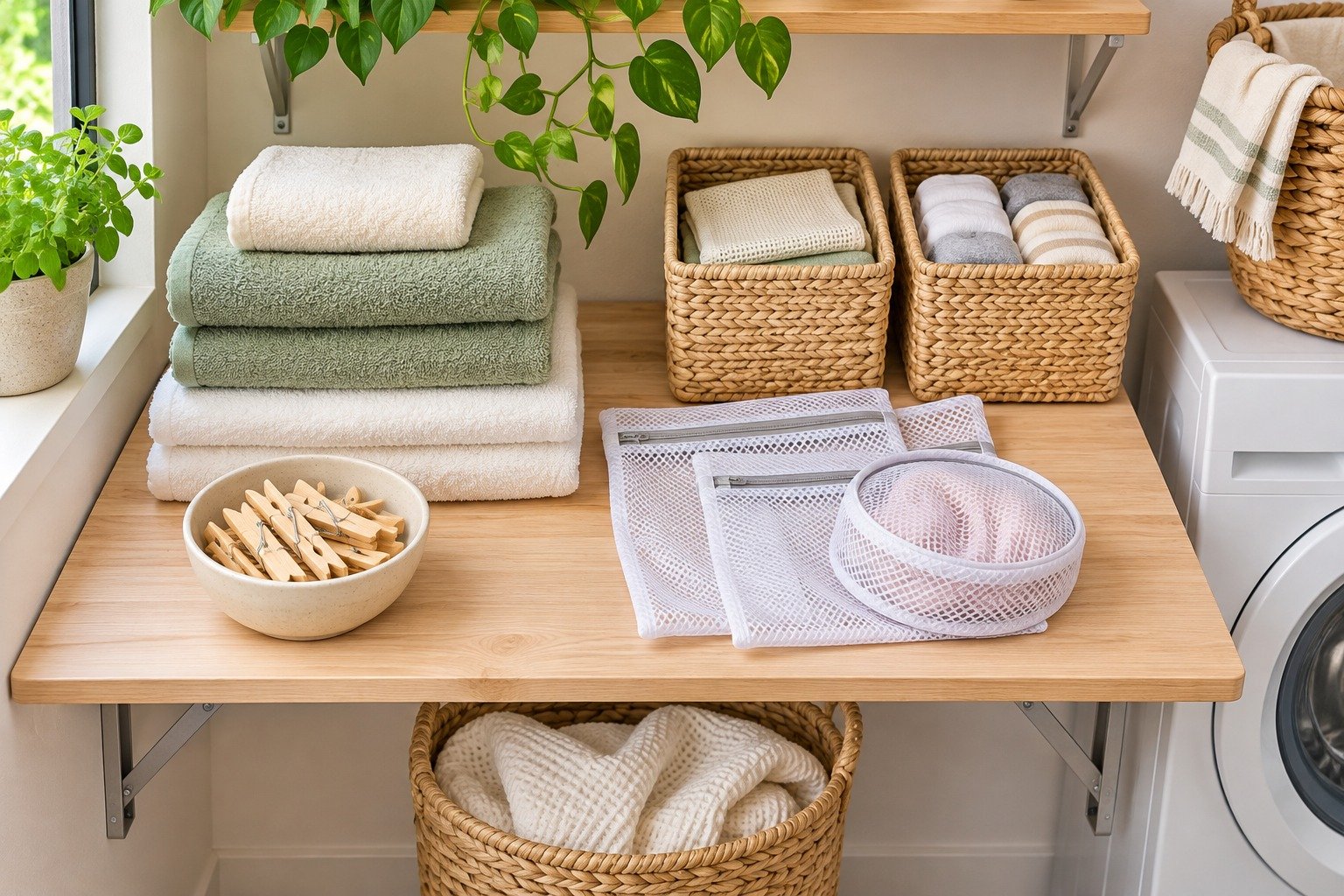
Keep clean cloths in a separate bin. Group small laundry accessories, such as mesh wash bags and spare clothespins, so they are easy to retrieve without searching behind bottles.
Choose bins that fit through the door opening and remain manageable when loaded. Large containers can look organized while hiding too many unrelated supplies.
Label Categories Clearly
Simple labels improve laundry room closet organization when several people share the space. Use familiar names such as “Wash Bags,” “Clean Cloths,” and “Backups.”
Do not cover product labels or safety information. Put category labels on shelf edges or storage bins instead. Keep enough visual space around products to identify the correct bottle without lifting every item.
Give Tall Tools a Separate Bay
A useful laundry room closet organization plan leaves one section for brooms, mops, and similar tools. This prevents handles from falling across shelves or trapping the door.
Use compatible holders installed according to their load and fixing instructions. Check that a hanging tool does not hit nearby machines, scrape the wall, or interfere with ventilation.
Allow cleaning tools to dry appropriately before storage. Placing a wet mop beside dry linens adds moisture and makes the closet harder to keep fresh.
Test Door Storage Before Installing It
Over-door organizers may help with lightweight accessories if the door and hardware can support them. Measure the clearance between the closed door and the shelves first.
Do not hang heavy products from a door simply because the rack fits. Check the organizer’s instructions and avoid changes that damage a rental door or stop it closing securely.
Keep the Laundry Service Area Accessible
Thoughtful laundry room closet organization preserves access beyond the closet itself. A rolling cart should not trap hoses, block a shutoff valve, or prevent machines from being serviced.
Keep the dryer area free of accumulated lint and clutter. Follow the U.S. Fire Administration’s dryer safety guidance and your appliance manual for filter and vent care.
These broader laundry room organization ideas can help you maintain useful washing, drying, and folding areas outside the utility closet.
Plan a Small Closet Reset
For a narrow three-shelf closet, begin with secured daily products at a comfortable adult height. Put clean accessories in a distinct dry section, heavier approved stock lower, and lightweight infrequent items above.
This laundry closet organization example leaves a floor bay for tall tools. Check the door swing with everything in place. Reassign items if a tool blocks another category or prevents easy cleaning.
Maintain the System Each Week
Lasting laundry room closet organization depends on returning supplies after use. Keep one current container of each regular product where possible and place replacements in the backup zone.
Wipe visible drips, inspect packaging, and remove unrelated items during your weekly reset. Review stock before shopping so duplicate products do not gradually consume the closet again.
If a category repeatedly overflows, adjust the quantity stored before buying another organizer. Storage works best when it matches a realistic supply level.
Try the Layout During an Ordinary Wash
Before calling laundry room closet organization complete, run a normal load and return each product to storage. Check whether the shelf height, door position, or tool bay makes that simple task awkward.
Move supplies that require repeated reaching or lifting around other objects. Then ask another adult to find a wash bag, a clean cloth, and the backup detergent. Clear categories should make those tasks straightforward without opening every bin. Make final adjustments based on this trial rather than appearance alone. Keep the useful changes immediately afterward.
Frequently Asked Questions
What are the easiest laundry room closet organization ideas?
Sort by function, separate chemicals from clean supplies, and place daily items within comfortable adult reach. Add only the bins, trays, or tool holders that solve a specific access problem.
Should I buy a laundry room closet organizer first?
No. Measure the closet and sort your supplies first. This helps you choose a unit with suitable dimensions, installation requirements, and load capacity instead of adapting everything around an unsuitable purchase.
Can cleaners share a shelf with towels?
Choose separate storage areas so leaks or product residue cannot reach clean textiles. Follow individual product labels and use secured storage where children or vulnerable household members could access cleaning supplies.
Conclusion
Successful laundry room closet organization creates clear zones, safe product storage, and easy access. Sort the contents, check shelf loads, preserve service clearances, and keep tall tools controlled. A short weekly reset helps the closet remain useful without spreading clutter back into the laundry room.
