

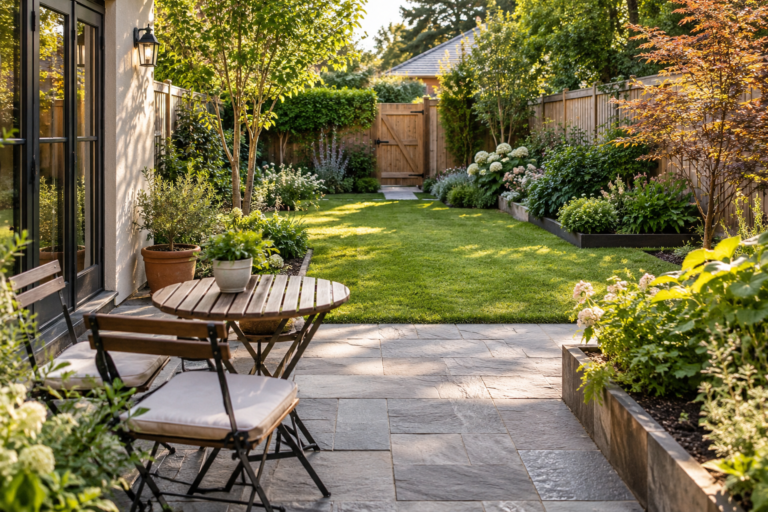
The most effective budget small backyard ideas improve the yard’s main use before adding decoration. Clear the route, repair what is worth keeping, arrange existing furniture and complete one useful planting or seating area. Spend on the problem that repeatedly stops you enjoying the yard, rather than dividing a small budget among many unrelated upgrades.
Affordable does not mean every project should be DIY. Simple organizing, container grouping and routine maintenance may be manageable at home. Electrical work, structural changes, drainage problems and other specialist tasks deserve appropriate professional input. A phased plan can protect the budget by separating straightforward improvements from work that needs assessment before spending begins.
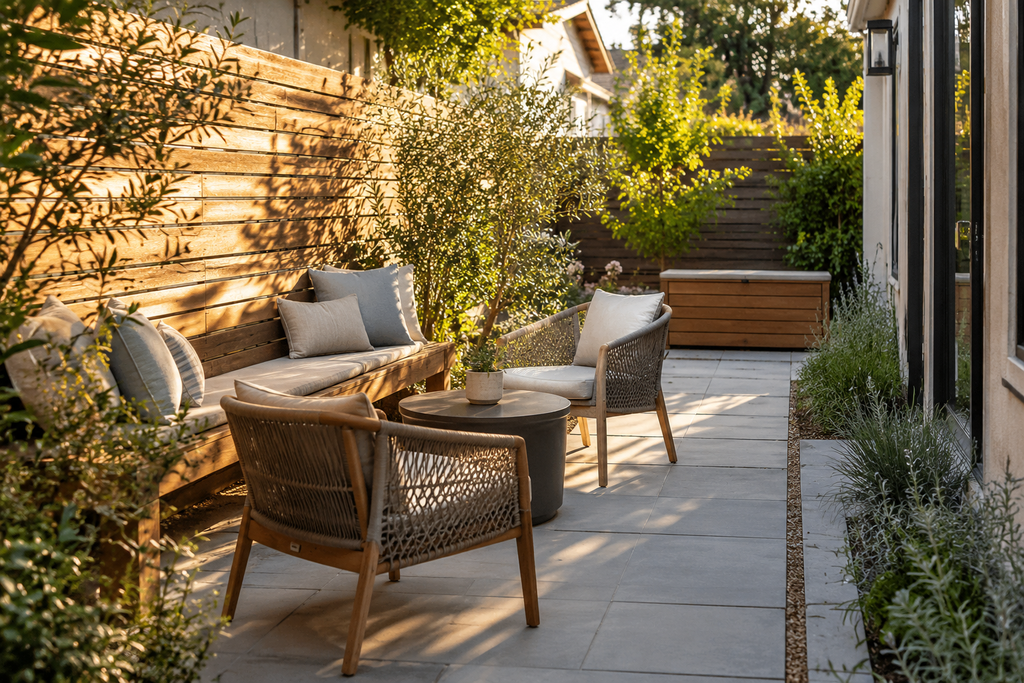
Budget small backyard ideas: set a budget around one outcome
Write a specific result such as “a comfortable place for two people to sit after work” or “a clear path and a manageable garden bed.” List the items already available, the purchases needed and any work that must happen first. A defined outcome makes it easier to reject attractive extras that do not help the first phase.
Use three budget bands: low-cost changes based on reuse and small purchases, medium-cost changes needing more materials, and phased projects involving several linked tasks. These are planning bands, not current price promises. Get local prices for materials, delivery, disposal and labor before deciding what your own budget can cover.
For a complete layout before spending, start with our small backyard design guide. An inexpensive feature can still waste money if it blocks the yard’s route or needs replacing when the main seating area is finally installed.
Build a full-cost worksheet
Include preparation, quantities, tools, fixings, delivery, removal and future care. Compare the total with an alternative that achieves the same result. For example, repairing suitable existing seating may be worthwhile, but extensive refinishing supplies can make a damaged bargain less economical than expected.
| Cost category | What to record | Common omission |
|---|---|---|
| Preparation | Clearing, cleaning, assessment | Disposal or specialist inspection |
| Materials | Complete measured quantity | Bases, connectors and finishing products |
| Tools | Owned, borrowed or rented | Equipment needed for one task |
| Logistics | Delivery and access | Carrying or removal charges |
| Ongoing care | Watering, cleaning and storage | Replacement parts or seasonal upkeep |
Eight low-cost upgrades to do first
1. Clear and reorganize the existing yard
Remove belongings that do not need outdoor storage and group the remaining equipment by use. Keep the gate and main route available. This low-cost step reveals the yard’s actual usable shape and prevents buying furniture or containers to accommodate clutter that could have been reduced.
2. Rearrange furniture before replacing it
Try the existing chairs in the shade and test the view from each seat. Pull chairs back as they would be used and walk through the arrangement. A better position may solve the problem without a purchase, while also showing whether one piece is too large.
3. Clean a sound seating surface
Use a cleaning method suitable for the existing material and its condition. Check product instructions before applying chemicals or pressure. Cleaning can clarify which surfaces remain useful, but it does not repair structural damage or correct drainage. Address those separate problems appropriately before treating appearance as the main issue.
4. Repair appropriate existing furniture
Inspect the piece and identify whether a straightforward repair is practical. Price the parts and finish before starting. Keep sound furniture when the result will suit the yard, but do not put continued effort into a compromised item solely because the purchase was inexpensive.
5. Group the containers you already own
Move suitable pots into one purposeful group instead of spreading them along every path. Match each plant to the new location’s conditions and check that watering remains practical. A coherent group can improve the layout while reducing the feeling of small objects scattered across the yard.
6. Simplify one existing planted area
Remove unwanted growth appropriately and identify which plants are worth retaining. Redraw the bed around those suitable plants before purchasing more. This is a useful starting point for simple small backyard improvements because it works with the site’s established structure rather than requiring an entirely new planting scheme.
7. Add a portable serving setup
Use a suitable tray or movable table for occasional drinks and meals. Test where it sits when guests are seated and keep the walking route open. A portable setup can meet occasional entertaining needs without committing the budget or footprint of a permanent outdoor kitchen.
8. Create one useful visual focal point
Choose a suitable existing planter, a small plant grouping or another outdoor-appropriate feature and place it where it improves the main view. Avoid buying several decorative objects at once. One deliberate focal point can make the yard feel more organized while leaving money for functional improvements.
Eight medium-budget upgrades to compare
9. Add one comfortable seating pair
Choose seating for the people who use the yard most, and test dimensions before purchase. Include weather exposure, cushions and storage in the comparison. Two comfortable chairs can be a better first investment than a large matching set that leaves little space for movement.
10. Complete a compact planted bed
Choose a measured area and a limited palette suited to the site. Price plants, preparation and care together. Use our small backyard landscaping guide to plan mature scale so the first affordable bed does not need costly rearranging later.
11. Improve the main path where necessary
Choose the surface from the route’s users, conditions and installation needs. Compare the full preparation and material bill rather than the visible top layer alone. A short well-planned path can provide more daily value than decorative surfaces in corners rarely visited.
12. Add targeted privacy
Identify the view affecting the main seat and test a limited screen position. Check local requirements, support and weather exposure before installing it. Concentrated privacy may use fewer materials than enclosing every boundary, but the chosen solution still needs to fit the site’s light and access needs.
13. Upgrade outdoor storage for one category
Buy storage for a defined group such as gardening accessories or suitable cushions. Measure doors and lids open, and check the contents’ storage requirements. A large all-purpose box can consume valuable space without solving the problem of unsuitable or mixed belongings.
14. Add suitable route lighting
Focus on entrances, steps and the route used after dark. Choose outdoor-rated products with an appropriate installation method. Compare maintenance and replacement needs, not just appearance. Get qualified electrical input where required instead of turning a modest lighting budget into improvised permanent wiring.
15. Improve shade at the main seat
Observe the location during the hours it will be used. Compare a suitable movable shade product with rearranging seating beneath existing shade. Include bases, fixings, wind-use instructions and storage. The cheapest advertised canopy may not be the cheapest complete arrangement for your yard.
16. Replace several poor containers with a few suitable ones
Choose pots around the plants’ requirements and the yard’s layout. Include the growing medium and ongoing watering effort in the cost. Fewer purposeful containers can simplify maintenance, but a large container filled with inappropriate plants still wastes money and attention.
Eight upgrades best planned in phases
17. Develop the yard one complete zone at a time
Finish a usable seating area or bed rather than starting several incomplete features. Keep later phases on the drawing so routes and materials remain compatible. This approach helps the first investment provide an immediate benefit instead of leaving the yard feeling like an ongoing worksite.
18. Address a drainage problem before decorative spending
Record where water collects and seek appropriate advice before changing levels or installing surfaces. Reserve the assessment and corrective work within the budget. Covering the area with attractive materials may hide the symptom briefly while leaving the cause and future repair cost unresolved.
19. Plan a patio with its preparation included
Compare layout, base, levels, drainage and installation as one project. Local conditions affect the appropriate construction. If the complete patio is beyond the current budget, use a reversible furniture layout while saving rather than installing a partial surface that needs substantial rebuilding.
20. Develop planting over suitable seasons
Plan the complete bed, then purchase in manageable phases appropriate to your climate. Leave each phase maintainable and keep track of what remains. Avoid filling gaps with unsuitable sale plants that will compete with the intended design or require removal later.
21. Establish privacy in stages
Combine immediate needs with a longer-term appropriate planting plan where practical. Verify mature dimensions and local suitability before relying on growth for future screening. A temporary movable arrangement may help while a permanent solution is assessed, provided it meets its own installation and weather-use requirements.
22. Add a fire-pit area only after checking feasibility
Confirm that the yard can meet the selected product’s requirements and local restrictions before buying the pit or seating. Our fire-pit landscaping guide covers that decision. If space is inadequate, choose a comfortable gathering area without a flame feature and use the budget elsewhere.
23. Prepare future services through appropriate professional planning
If later phases need electricity, gas or drainage changes, obtain advice before finishing surfaces. Do not install improvised services to avoid future work. Coordinating qualified work with the landscape sequence may prevent completed paths or planting beds from being disturbed unnecessarily.
24. Keep a reserve for the first season’s adjustments
Leave part of the budget uncommitted until the first phase has been used. You may need a different watering arrangement, a better storage location or one replacement plant. A small reserve lets you solve an observed problem instead of spending every available amount on the initial appearance.
Prioritize by daily value and reversibility
Score proposed purchases against three questions: how often will they help, what problem do they solve, and how difficult are they to change? A movable chair used daily may rank ahead of permanent decoration. A path repair may rank ahead of both when poor access is the main frustration.
| Priority | Example | Reason to place it here |
|---|---|---|
| First | Clear access and usable existing furniture | Provides immediate function and informs the layout |
| Next | Main seating, one coherent bed or essential path | Supports the yard’s principal activity |
| Later | Additional privacy, shade or storage | Refines problems observed during use |
| Optional | Decorative extras and secondary features | Adds interest after the core plan works |
Before digging for planting, posts or other work in the United States, use the 811 before-you-dig service and follow your state’s process. Ask whether private lines need separate locating. The need to check utilities does not disappear because a project is small or inexpensive; outside the United States, use the relevant local process.
Decide what to do yourself and what to quote
DIY is most useful when the task matches your skills, equipment and available time. Organizing, reversible layouts and some routine care can be straightforward. Structural, electrical, gas and significant drainage work require a different assessment. Compare a professional quote with the complete DIY cost, including tools and the consequences of needing to redo the work.
Get the scope in writing for quoted work and clarify preparation, disposal and finishing. This makes competing prices easier to compare. Keep the project sequence visible so the budget covers a complete usable outcome rather than a low initial quote followed by essential omissions.
Frequently Asked Questions
What is the cheapest way to improve a small backyard?
Clear the yard, rearrange existing furniture and simplify a suitable planted area first. These steps reveal the usable space and identify the main problem. Spend next on one change that improves everyday use rather than several decorative purchases without a shared purpose.
How should I divide a small backyard budget?
Start with preparation and the main functional outcome, then price materials, logistics and ongoing care. Keep later features separate and leave a reserve for adjustments. Use local quotes; broad budget bands cannot predict what installation or delivery costs in your area.
Is DIY landscaping always cheaper?
No. Tools, delivery, waste removal, time and potential rework can make DIY more expensive than expected. It works best for tasks within your abilities. Obtain appropriate professional input for specialist work rather than treating the lowest upfront material price as the full cost.
Can I landscape a backyard gradually?
Yes. Draw the complete plan and finish one useful zone at a time. Keep each phase maintainable and coordinate paths, services and planting. This approach reduces disconnected purchases and allows later work to respond to what you learn from the first completed area.
Should I buy plants when they are on sale?
Only when the plant’s condition, local suitability, mature size and care needs match the plan. A discount does not make an unsuitable plant economical. Check the bed’s required quantities before shopping so sales do not turn a simple scheme into a crowded collection.
Conclusion
Good budget small backyard ideas concentrate spending on a clear result. Organize the existing space, reuse suitable furniture and complete one meaningful seating, planting or access improvement before adding secondary features. Compare the full cost of materials, preparation, delivery, tools and care, and distinguish manageable DIY tasks from work needing qualified input. The 24 upgrades can be combined into low-cost, medium-budget and phased plans without assuming one price range suits every location.
Use the first phase, record the problems that remain and keep a reserve for practical adjustments. Coordinate later construction with the overall layout so completed work does not need unnecessary removal. An affordable yard can still feel comfortable and intentional when its purchases serve everyday activities. The lasting savings come from choosing suitable features, maintaining them and avoiding repeated replacements—not simply from selecting the lowest-priced item at each stage.
