

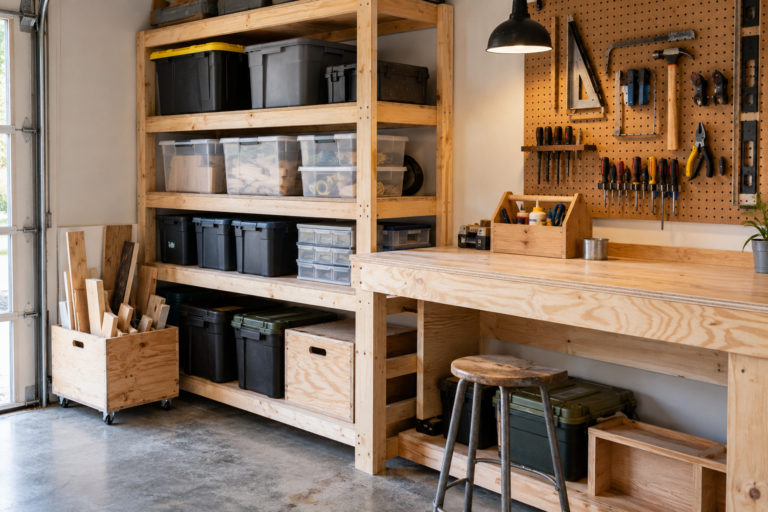
The best DIY garage storage ideas solve one specific problem at a time: tools without a home, bins that hide one another, or equipment blocking the route to the car. Begin with inexpensive dividers, labels and freestanding organizers. Move on to mounted storage only after checking the wall construction, hardware instructions and space needed to retrieve each item.
You do not need to build every project below. Choose the three that remove your biggest daily frustrations, measure their locations and collect materials before cutting. The difficulty ratings describe the construction work, not a promise that every installation is suitable for your garage. Structural mounting requires a separate assessment.
Diy garage storage ideas: plan the storage before buying materials
Sort your belongings into daily tools, garden equipment, sports gear, household reserves and seasonal items. Remove broken equipment and identify supplies needing appropriate disposal. Keep current projects separate from long-term storage; otherwise an unfinished repair can quietly occupy the workbench for months.
Measure the wall width, usable depth and tallest object in each group. Open the car doors, walk through the garage carrying a basket and operate the garage door before marking storage positions. A shelf that fits the wall can still make parking awkward. Outline its proposed footprint with removable tape and use the space normally for a day.
For the larger zoning plan, start with our garage organization guide. Use the projects here to furnish those zones rather than filling every available surface. A clear floor route and a usable workbench are better measures of success than the number of organizers installed.
A materials list that prevents repeat shopping trips
Write down the project dimensions, panel thickness, fixing method, finish and containers before visiting the store. Count handles, hinges and dividers individually. Reused timber should be clean, sound and suitable for its intended purpose; reject pieces with uncertain contamination or damage. Borrow specialist tools when possible instead of buying them for one small organizer.
| Project group | Materials to price | Space to measure | Starting difficulty |
|---|---|---|---|
| Drawer and shelf inserts | Thin plywood, adhesive, dividers | Inside dimensions | Beginner |
| Portable organizers | Plywood, handles, containers | Carrying and parking space | Beginner to intermediate |
| Wall accessories | Backing, compatible hooks, specified fixings | Wall and retrieval area | Intermediate |
| Furniture builds | Lumber, panels, joints, suitable hardware | Full operating footprint | Intermediate |
These are planning categories, not current prices or engineered construction specifications. Compare the total material bill with a ready-made alternative before committing.
20 practical projects for a more usable garage
1. Make adjustable drawer dividers
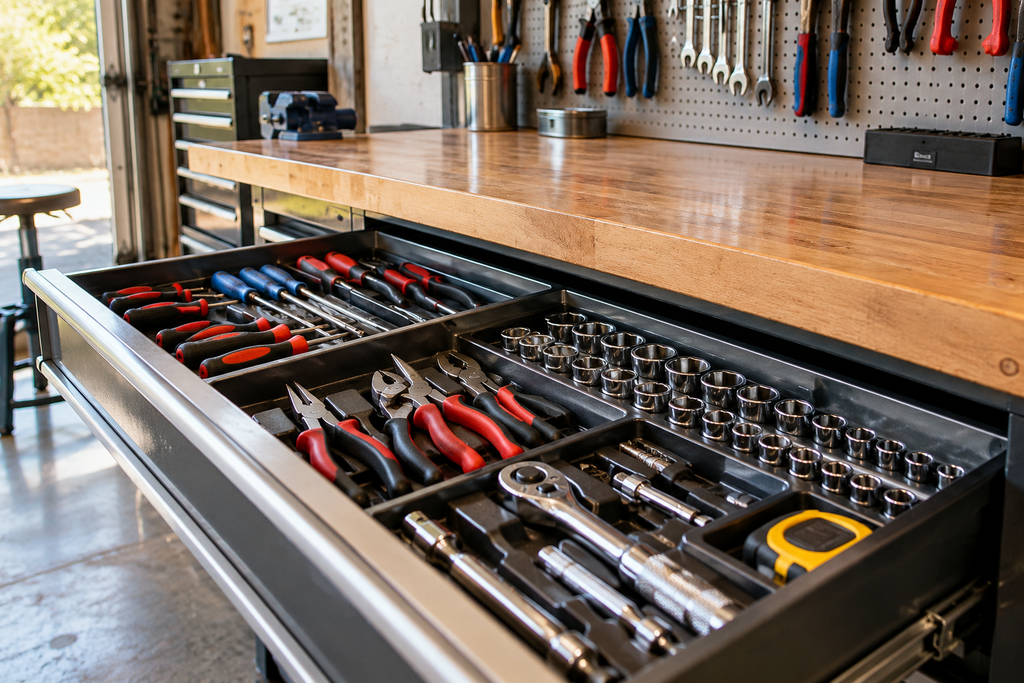
Cut thin plywood strips to the drawer’s inside depth and dry-fit them before fastening. Use removable crosspieces to separate screwdrivers, pliers and measuring tools. This beginner project needs only the drawer footprint. Leave enough clearance for the drawer to close without scraping, and reserve one wider compartment for tools that do not fit standard slots.
2. Build a portable repair caddy
Use a plywood base, short sides and a comfortable handle to carry the tools used for common household repairs. Measure the longest tool first and arrange the contents before choosing the handle position. Difficulty is beginner to intermediate. Park the caddy on an accessible shelf so a quick repair does not require searching several cabinets.
3. Add a removable shelf divider
Fit vertical dividers between sports supplies, cleaning accessories and garden gloves on an existing shelf. Plywood inserts or compatible shelf dividers can stop categories drifting together. This beginner project uses the shelf’s existing footprint. Keep the dividers removable so the layout can change when a bin is replaced or a seasonal category grows.
4. Create a labeled bin station
Make reusable label holders from card sleeves or suitable clips and attach them consistently to existing bins. Include the category and a short contents list rather than a vague label such as “miscellaneous.” Difficulty is beginner, with no extra floor space. Position labels on the side visible during storage, not automatically on the lid.
5. Assemble a small-parts tray
Place matching lidded containers inside a shallow tray built from offcuts. Group fasteners by type and size, leaving one compartment for unidentified pieces awaiting sorting. This beginner project needs a shelf or drawer only slightly larger than the tray. Closed containers are preferable to open jars that can spill when the tray is moved.
6. Make a scrap-wood sorting box
Build a freestanding box with compartments for short, medium and reusable specialty offcuts. Use sound panels and a stable footprint; do not create a tall narrow tower. Difficulty is intermediate. Position it beside the work area without blocking the bench. Mark a maximum collection line so leftover wood does not become unlimited storage.
7. Add a shallow pegboard panel
Mount a compatible pegboard system according to its instructions and arrange a small group of frequently used hand tools. Account for the backing space needed by the hooks and the projection of the tools. Difficulty is intermediate because installation matters. Outline tool positions after testing the arrangement, and keep spare hooks for future adjustments.
8. Build a removable drill-bit insert
Create a labeled insert for an existing drill-bit case or drawer rather than building an entire cabinet. Measure the bits and protect their cutting ends within suitable compartments. Difficulty is beginner to intermediate. Leave space for the sizes used most often and keep replacement bits separate so duplicates do not hide a missing working piece.
9. Make a sanding-supply file
Use a shallow box with upright separators for sanding sheets, discs and blocks. Label each section by grit and format. This beginner project occupies a small shelf area and keeps supplies visible without a pile collapsing. Store packaged discs flat where required and retain any product information needed to match them to the correct tool.
10. Create a clamp parking board
Design a holder around the actual clamp sizes, using a reliable plan or compatible mounting hardware. Lay the clamps out first so handles can be reached without removing their neighbors. Difficulty is intermediate. Allow wall projection and operating space beside the bench. Do not assume a decorative board or improvised fixing can support every clamp collection.
11. Sew or assemble a garden-accessory pouch
Use durable fabric, a reusable tote or a compartmented pouch for gloves, ties and hand-sized accessories. Keep sharp tools in suitable protective compartments rather than loose fabric pockets. This beginner project needs a hook or shelf. Separate muddy items from clean supplies, and choose a pouch that can be emptied and cleaned easily.
12. Fit a long-handle tool rail
Choose compatible clips or hooks and mount them on a suitable backing following their instructions. Space the actual rake and shovel heads before fixing the clips. Difficulty is intermediate. Measure both the wall length and the depth of the hanging tools. Keep the route beside them clear enough to remove a wide rake without hitting the car.
13. Build a ball corral
Create a low freestanding enclosure with smooth panels and an accessible front opening. Size it around the household’s actual balls and avoid an enclosure so deep that children must climb inside. Difficulty is intermediate. It needs a small floor corner near the sports zone. Use simple containment instead of improvised tension cords that can catch hands or snap back.
14. Make an equipment return tray
Add a washable shallow tray for wet shoes, helmets or recently used outdoor accessories. Repurpose a suitable tray or build a frame around a removable liner. Difficulty is beginner. Reserve a small shelf or floor location away from the walking route. This is temporary landing space; empty it after items are ready for their permanent homes.
15. Assemble a recycling separator
Build a simple frame or dividers around the bins accepted by your local collection service. Allow room to remove a full container without dragging out the entire station. Difficulty is beginner to intermediate. Locate it near the exit used on collection day. Measure lids in their open position and keep the area easy to sweep.
16. Add a packing-supply organizer
Make a shallow divider box for tape, scissors, labels and flattened packaging. Use a separate upright section for reusable boxes so they cannot slide into the car route. Difficulty is beginner to intermediate. A short shelf section is usually enough. Limit the box collection to sizes you actually reuse rather than storing every delivery carton.
17. Build a benchtop organizer
Use small offcuts to create a freestanding rack for pencils, measuring tapes and a few active-project accessories. Round or sand exposed edges and keep the organizer shallow. Difficulty is beginner. It should occupy a defined bench corner rather than spread across the work surface. Move tools back to their main storage when the project ends.
18. Make a project-specific tote insert
Add dividers to a sturdy existing tote for bike maintenance, furniture assembly or another recurring task. Include a small labeled pouch for the project’s loose parts. Difficulty is beginner. This occupies the tote’s existing footprint and makes unfinished work portable. Record the next action on a card so restarting the job does not require rediscovering everything.
19. Assemble a compact freestanding shelf
Follow a suitable furniture plan and size the shelves around your containers. Price lumber, panels and joints before starting; a commercial unit may be cheaper once materials are counted. Difficulty is intermediate. Check the floor footprint, stability and any anchoring instructions. Do not publish or guess a load rating for a homemade shelf without an appropriate design basis.
20. Create a maintenance clipboard station
Make a small document pocket for manuals, rack instructions and a maintenance checklist. Add a pencil holder and a list of the garage’s storage categories. Difficulty is beginner, requiring minimal wall or shelf space. Keep original installation instructions accessible, and record changes to mounted storage so future users do not assume every hook has the same capacity.
Put the projects into a realistic layout
In an example single-car garage, a repair caddy and divided drawer can share the workbench end. Garden pouches and long-handle clips belong near the yard exit. Recycling and the equipment return tray can occupy separate landing spots near the main door. Seasonal bins stay away from the daily work area.
| Zone | First project | Add only if needed | Keep available |
|---|---|---|---|
| Workbench | Drawer dividers | Clamp holder | Main working surface |
| Garden exit | Accessory pouch | Tool rail | Door movement |
| Household storage | Bin labels | Shelf dividers | Bin withdrawal space |
| Sports corner | Return tray | Ball corral | Easy equipment access |
For concentrated tool storage, use our workshop organization ideas to decide which tools belong at the bench. Affordable DIY garage storage ideas work best when each project supports an existing routine.
Check safety and reset the system
DIY holders are not appropriate replacements for purpose-built hazardous-material storage. The CPSC fuel-container guidance says to keep fuel containers capped, out of children’s reach, in cool ventilated locations and away from ignition sources. Follow product instructions and local requirements; do not put fuel into reused food containers or a general-purpose wooden caddy.
After installation, try retrieving every item while the garage is in normal use. Check whether a parked car blocks access or a container catches on a divider. Return supplies after each task and review overloaded categories monthly. If a homemade organizer flexes, loosens or becomes difficult to use, stop using it until the cause is addressed.
Frequently Asked Questions
What is the cheapest garage storage project to start with?
Label existing bins and divide one drawer first. These projects use little material and reveal which categories actually need additional storage. Buying lumber before sorting often creates a larger organizer for belongings that could have been reduced or moved elsewhere.
Can I build garage storage without drilling into walls?
Yes. Portable caddies, tote inserts, drawer dividers and low freestanding organizers can work without wall drilling. Check furniture stability and any anchoring requirements, especially around children. Avoid treating a freestanding unit as automatically safe simply because it has no wall fixings.
Should DIY shelves be deep or shallow?
Choose the depth from the items being stored and the space needed to reach them. Shallow shelves suit small tools and accessories; larger bins need more depth. Test the full footprint with the car parked and leave room to remove containers.
Is reclaimed wood suitable for garage organizers?
It can be suitable when its condition and previous use are known. Reject damaged or contaminated pieces, remove unwanted fasteners and use a sound design. Reclaimed material does not provide a reliable load rating by itself, especially for mounted or overhead storage.
How do I stop new organizers becoming cluttered?
Give each organizer one purpose, label its categories and leave room for easy returns. Limit active projects to a defined tote or work area. Review the system when belongings change instead of adding another organizer whenever an existing one becomes full.
Conclusion
Useful DIY garage storage ideas begin with the way you use the space. A divided drawer, portable caddy or clearly labeled bin station can solve daily frustrations before larger construction is needed. Select projects with a clear purpose, measure the full operating footprint and compare material costs with ready-made options. Keep mounted projects tied to suitable instructions and hardware rather than guessing how much a homemade design can hold.
Build a small group of organizers, use them for a few weeks and adjust the arrangement before expanding. Protect the car route, workbench and doors, and give temporary project supplies a defined home. The most affordable result is a garage where belongings are easy to find, use and return—not a room filled with projects that create new obstacles. A modest system you can maintain will serve you better than an ambitious build that never fits your routine.
