

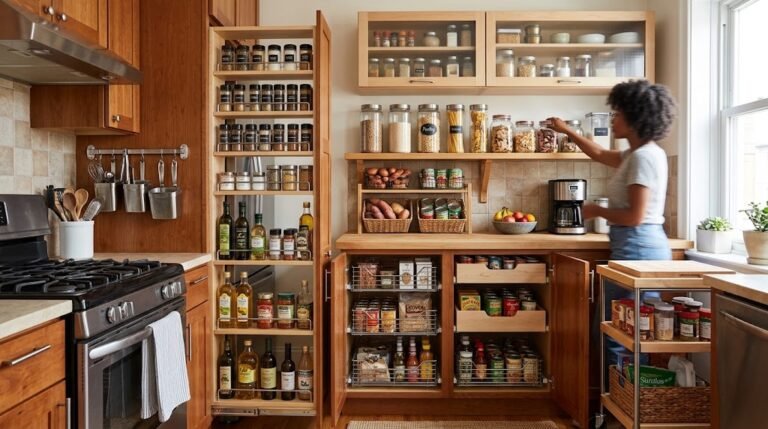
A small kitchen can quickly become cluttered when there is no dedicated pantry. Food packets end up on countertops, cans get pushed to the back of cabinets, and everyday ingredients become difficult to find. Fortunately, you do not need a walk-in pantry to create an organized food storage system.
The best pantry ideas for small kitchen spaces focus on using the storage you already have. A regular cabinet, narrow rolling cart, wall shelf, or unused corner can become a practical pantry with a little planning.
Whether you rent an apartment or own a compact home, these solutions can help you store groceries neatly without expensive renovations. Most ideas are simple enough to complete yourself using affordable organizers and basic supplies.
11 Pantry Ideas for Small Kitchen Spaces
1. Turn an Existing Cabinet Into a Mini Pantry
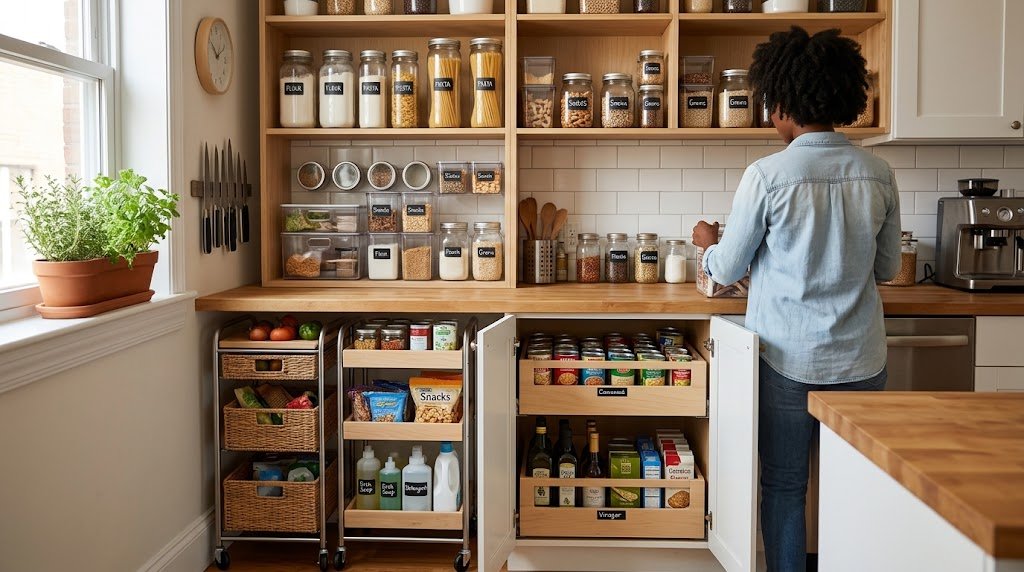
One of the easiest solutions is to dedicate a kitchen cabinet to food storage. Instead of mixing groceries with cookware, give dry goods, canned foods, snacks, and baking ingredients their own sections.
Use stackable bins, shelf risers, or small baskets to create separate levels. Clear containers can help you see what you have, while labels make it easier for everyone to return items to the correct place.
DIY tip: Empty one cabinet, measure its shelves, and add organizers that fit the available height and width. You may not need to buy a new cabinet at all.
2. Create a DIY Pantry With a Rolling Cart
A rolling cart is useful when cabinet space is limited. Choose a narrow model with two or three shelves that can fit beside a refrigerator, against a wall, or in an unused corner.
Use the top shelf for frequently used ingredients, the middle shelf for snacks and packets, and the bottom shelf for heavier items such as cans. Lockable wheels can help keep the cart stable when it is parked.
This is one of the most flexible DIY pantry ideas for small kitchens because you can move the cart when cleaning or preparing food.
Before buying one, measure the available floor space and check that doors and drawers can still open comfortably.
3. Install Wall-Mounted Shelves
Walls can provide extra storage without taking up valuable floor space. Install sturdy shelves on an unused wall, in a suitable corner, or above a work area where they will not interfere with cooking.
Use shelves for lightweight jars, dry ingredients, tea, coffee, and packaged snacks. Matching containers can make open storage look tidy, while labels help you identify ingredients quickly.
If you rent your home, consider freestanding shelving or approved removable storage solutions rather than drilling into walls.
Keep shelves away from direct heat, moisture, and areas where food could be exposed to splashes.
4. Use the Inside of Cabinet Doors
The inside of a cabinet door often provides overlooked storage space. Depending on the door design, you may be able to attach a slim rack for spice packets, small seasoning containers, or lightweight kitchen supplies.
Choose an organizer that does not prevent the door from closing. Check the shelf depth and the position of hinges before installation.
Avoid storing heavy jars in a door-mounted rack unless the organizer and cabinet are designed to support their weight.
5. Add Pull-Out Bins to Deep Cabinets
Deep cabinets can waste space when ingredients are stored in several rows. Items at the back become difficult to reach, so older groceries may remain hidden until they expire.
Pull-out bins or sliding trays make it easier to see and access everything. Group similar products together, such as canned vegetables, pasta, rice, and baking supplies.
If you do not want to install permanent hardware, use removable bins with handles. You can pull out a complete category, select what you need, and slide it back into place.
6. Build a Narrow DIY Pantry Shelf
A narrow shelving unit can turn an unused gap into useful food storage. Look for a suitable space beside a refrigerator or at the end of a cabinet run.
Measure the gap carefully before choosing or building a shelf. The unit should be stable, easy to clean, and deep enough to hold the items you plan to store.
Use the shelves for cans, jars, packets, or other suitable pantry staples. Keep heavier items on lower shelves and lighter products above them.
Do not block ventilation around appliances or place food where it may be exposed to excessive heat.
7. Use Stackable Containers to Maximize Space
Stackable containers help make better use of vertical space inside cupboards. They are especially helpful for dry foods such as rice, flour, pasta, cereal, lentils, and baking ingredients.
Choose containers that fit your shelves instead of buying a large set first. Square or rectangular containers often make efficient use of shelf space, but the best shape depends on your cabinet dimensions.
Label each container clearly and include the product name. For freshness and food safety, use clean, food-safe containers with secure lids, and follow the storage instructions for each ingredient.
When transferring food from its original package, keep relevant expiration dates or batch information available when needed.
8. Organize Groceries With Baskets
Baskets are an easy way to create pantry categories without installing shelves or drawers. Place one basket for snacks, another for breakfast foods, and another for unopened packets or cooking ingredients.
Handles make baskets easier to pull from deep shelves. Labels also help prevent family members from mixing unrelated items together.
Avoid overfilling baskets because heavy containers can become difficult to lift. Store heavier groceries lower down and keep frequently used products within easy reach.
For open shelving, choose baskets that are easy to wipe clean and do not trap crumbs.
9. Make Use of a Freestanding Pantry Cabinet
If your kitchen has a little floor space but few cupboards, a freestanding pantry cabinet may be a practical investment. It can provide enclosed storage without requiring a built-in renovation.
Choose a tall, narrow cabinet with adjustable shelves to accommodate different package sizes. A model with doors can keep groceries out of sight and reduce the appearance of clutter.
Measure the cabinet’s footprint and height before purchasing. Make sure it does not obstruct walkways, appliance doors, or access to other cabinets.
Secure tall furniture according to the manufacturer’s instructions, especially in homes with children.
10. Create a Pantry Zone Outside the Kitchen
Sometimes the kitchen simply has no room for additional storage. In that case, a nearby utility cupboard or suitable closet shelf may provide space for overflow groceries.
Keep this area dry, clean, and away from chemicals, cleaning products, and household pests. Store food in sealed packaging or suitable containers and follow label instructions for temperature and humidity.
Use the main kitchen cabinet for everyday ingredients and the secondary area for unopened extras. This reduces countertop clutter while keeping essential items close at hand.
11. Use the Space Above Existing Cabinets
If there is a safe, accessible gap above your upper cabinets, you may be able to use it for lightweight items stored in closed containers or baskets.
This area is generally better for occasional-use supplies than products you need every day. Check the space for heat, grease, dust, and moisture before storing anything there.
Avoid placing heavy containers overhead or storing food near heat-producing appliances. If the area is difficult to reach or clean, another storage solution may be more practical.
Best Pantry Storage Solutions for Small Kitchens
Use this table to compare common options before deciding which setup fits your kitchen.
| Storage Solution | Best For | Cost Level | Main Benefit |
|---|---|---|---|
| Existing cabinet | Small kitchens with spare cupboard space | Low | Uses storage you already own |
| Rolling cart | Renters and flexible layouts | Low to medium | Easy to move |
| Wall shelves | Unused wall space | Low to medium | Frees up floor space |
| Cabinet-door rack | Small packets and seasonings | Low | Uses overlooked space |
| Pull-out bins | Deep cabinets | Low to medium | Easier access to groceries |
| Narrow pantry shelf | Unused gaps | Medium | Adds vertical storage |
| Freestanding cabinet | Kitchens needing extra capacity | Medium to high | Provides enclosed storage |
| Stackable containers | Dry food organization | Low to medium | Makes shelves easier to organize |
Costs depend on size, material, installation, and the products available in your area.
How to Organize a Small Pantry Step by Step
Step 1: Measure and Declutter
Remove groceries from the area you plan to organize. Check expiration dates, discard spoiled food safely, and group similar ingredients together.
Measure shelves, drawers, and unused gaps before purchasing storage products.
Step 2: Create Simple Categories
Arrange ingredients into practical groups, such as:
- Breakfast foods and snacks
- Rice, pasta, and grains
- Canned and packaged foods
- Baking ingredients
- Spices and seasonings
- Extra or unopened supplies
Use only the categories that suit your household. Too many tiny sections can make a small pantry harder to maintain.
Step 3: Store Everyday Items Within Reach
Keep frequently used ingredients at eye level or in an easy-to-reach drawer. Place occasional-use items higher up, and store heavier products on lower shelves.
Put older products toward the front so they are easier to use first.
Step 4: Maintain the System
Check your pantry before shopping to avoid buying duplicate items. Return groceries to their assigned sections after unpacking, and do a quick weekly review to remove empty packets and reorganize misplaced products.
For more inspiration, explore our guides to small pantry organization ideas and pantry organization ideas.
Common Mistakes to Avoid
- Buying organizers before measuring: Containers that do not fit can waste valuable space.
- Overloading shelves: Too much weight can damage shelving or make items difficult to reach.
- Keeping everything on the countertop: Store only frequently used items outside cabinets.
- Ignoring expiration dates: Review groceries regularly and rotate older products forward.
- Choosing style over function: A storage system should be easy to clean and use every day.
- Storing food near heat or moisture: Keep pantry staples in suitable conditions and follow package instructions.
Frequently Asked Questions
How do I create a pantry in a small kitchen without a pantry?
Dedicate an existing cabinet to groceries, add stackable bins, or use a narrow rolling cart. Wall shelves and freestanding cabinets can also provide extra storage when placed safely.
What are the best DIY pantry ideas for small kitchens?
Practical options include converting a cabinet, adding removable shelf risers, using baskets, installing suitable wall shelves, and creating a pantry with a rolling cart.
How can I store food without using countertop space?
Use vertical shelves, cabinet-door organizers, pull-out bins, or a narrow pantry cabinet. Keep the countertop clear except for items you use regularly.
Are rolling carts good for small kitchens?
Yes. A narrow rolling cart can provide extra storage without requiring permanent installation. Choose a stable model that fits your layout and does not block walkways.
What should I store in a small kitchen pantry?
Store suitable dry goods, canned foods, snacks, baking ingredients, and frequently used cooking staples. Keep cleaning products separate from food and follow storage instructions for each item.
Conclusion
You do not need a walk-in pantry to keep a small kitchen organized. The most useful pantry ideas for small kitchen spaces focus on making existing cabinets more efficient, using vertical storage, adding rolling carts, and organizing groceries into simple categories.
Start with one cabinet or unused corner, measure the available space, and choose storage solutions that fit your daily routine. By keeping essentials accessible and maintaining a regular restocking system, you can create a practical pantry without an expensive renovation.
