

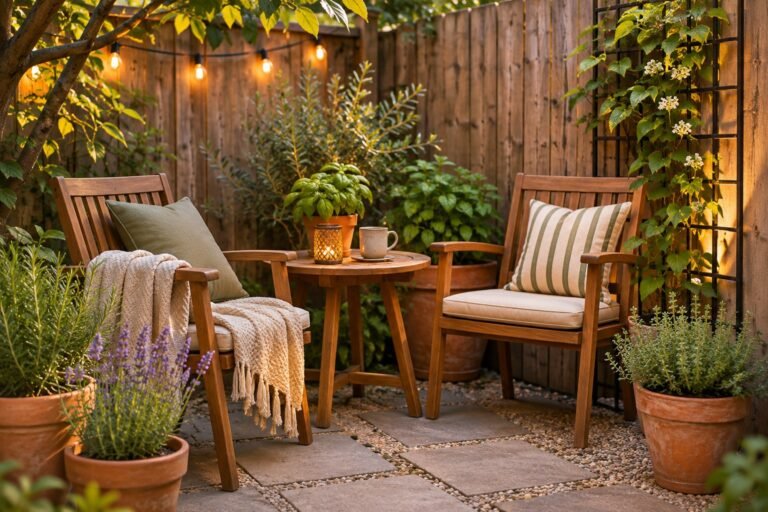
The best ideas for small backyard spaces solve the problem that stops you enjoying the yard. That problem might be an exposed sitting area, strong afternoon sun, scattered play equipment, or furniture that blocks the door.
Start by naming the difficulty before choosing a feature. A privacy screen will not solve uncomfortable heat, and a larger dining table will not improve a crowded layout. Matching the solution to the problem makes your spending more useful.
This guide organizes practical options around privacy, shade, play, and entertaining, so you can improve one clear need without overloading a compact yard.
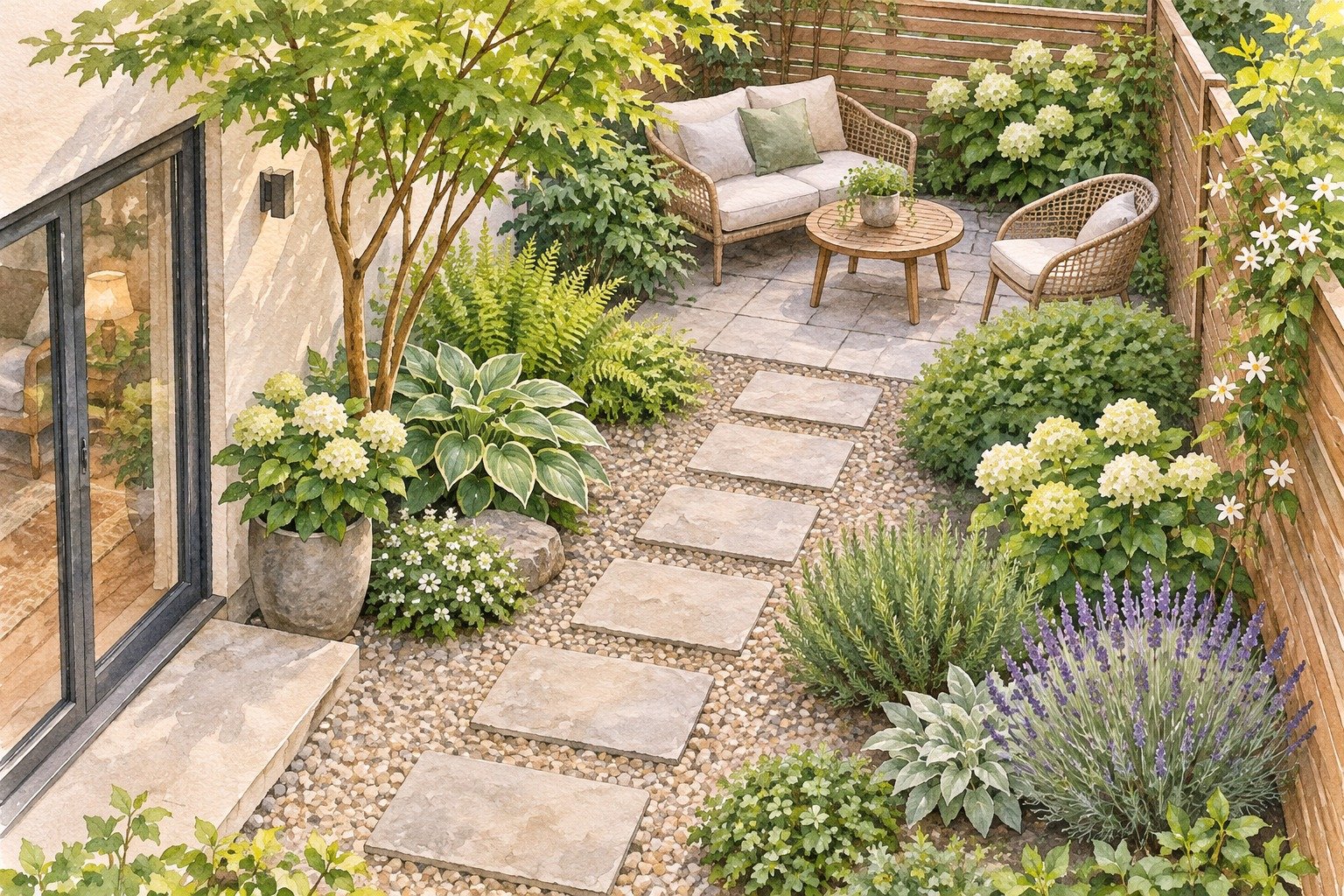
Choose Ideas For Small Backyard Spaces by Priority
Write down what you want to do outside and what currently prevents it. Include daily access, storage, and maintenance as well as relaxation. Rank the problems before planning improvements.
Measure the yard, doors, gates, existing furniture, and fixed features. Observe sunlight and note where rainwater collects. Those details determine which solutions are realistic.
Useful ideas for small backyard projects leave room for the tasks already happening there. Preserve a route for taking bins out, moving equipment, and reaching anything that needs regular inspection or service.
Fix One Problem Before Adding Another Feature
Choose the improvement with the greatest effect on daily comfort. If nobody sits outside because the afternoon sun is intense, test a shade solution before buying decorative planters.
If the yard feels crowded, remove or rearrange furniture first. You may discover that the space needs fewer objects rather than a new layout or a larger spending budget.
Solve Privacy Where You Actually Sit
Targeted ideas for small backyard privacy usually work better than screening every boundary. Sit in your usual chair and identify the exact sightline that feels exposed.
A well-positioned screen, suitable shrub, or trellis can interrupt that view while keeping other areas open. Test the height and position with a temporary marker before installation.
Check local restrictions, boundary responsibilities, and structural requirements before adding fencing or tall screening. A decorative panel also needs a stable support system appropriate to the wind exposure at your site.
Use Planting With Realistic Expectations
Plants can soften a view, but they need appropriate light, soil, and growing space. Check mature width as well as height. A large shrub can consume a narrow yard even if it provides excellent screening.
Avoid choosing a fast-growing plant without considering pruning and local invasive status. Allow maintenance access to fences and leave space around gates, drainage features, and equipment.
Add Shade Based on the Sun’s Path
The most useful ideas for small backyard shade start with observation. Record when the sitting area becomes uncomfortable and where the sun is positioned at that time.
A movable umbrella may suit occasional use, while a professionally designed fixed structure may suit a more permanent need. Compare base size, stability, storage, and wind restrictions before choosing.
Use the manufacturer’s guidance for any shade product. Shade sails require correctly designed anchors and tensioning; they should not simply be attached to an unsuitable fence or lightweight decorative post.
Try a Temporary Arrangement First
Before building permanent shade, move your chairs to another part of the yard. A location that feels hot at midday may be comfortable in the early evening.
If a tree is part of the long-term plan, consider mature canopy and root space. A young tree will not immediately provide the shade shown in an established garden photograph.
Keep Play Space Flexible
Family-friendly ideas for small backyard use should allow movement without filling the whole area with permanent equipment. A clear central zone can support several activities at different times.
Choose play items appropriate to the users and available space. Follow equipment instructions for installation, impact surfacing, and surrounding clearance. Do not assume a compact product needs no clear area around it.
Store loose toys in a suitable weather-resistant container after use. Keep it accessible without blocking the route from the house or creating a climbing opportunity beside an unsafe boundary.
Separate Play From Working Areas
Keep play routes away from grills, garden tools, chemical storage, and fragile containers. Avoid placing hard planter corners directly beside a running route.
Landscaping ideas for small yards should also consider supervision. Test the view from the house and sitting area before introducing tall planting or screens that hide the space where children play.
Make Entertaining Fit the Available Room
Practical ideas for small backyard entertaining begin with the number of people you usually host. A small table used weekly may be more valuable than a large dining set reserved for rare occasions.
Measure furniture when occupied. Chairs need room to pull out, and guests need a route past seated people. Test the setup with actual furniture rather than relying on a catalog layout.
These small patio ideas can help you compare seating arrangements while preserving the space needed for doors, gates, and everyday movement.
Choose Furniture With More Than One Use
A suitable bench may offer seating along an edge, while folding chairs can support occasional guests. Check comfort, weather resistance, storage space, and stability before purchasing.
Keep portable tables and extra chairs in a designated place when unused. Flexible furniture only saves space if it does not become another pile blocking the shed or garden path.
Compare Solutions Before Spending
Different ideas for small backyard improvement involve different maintenance and space commitments. This comparison helps you choose a response to the problem rather than a feature chosen only for appearance.
| Main problem | Practical option | Space advantage | Check first |
|---|---|---|---|
| Exposed seating | Targeted screen or suitable planting | Limits screening to one sightline | Wind, permissions, mature plant size |
| Hot afternoon sun | Correctly sized umbrella | Can move or be stored | Stable base and wind instructions |
| Scattered play items | Flexible open zone and toy storage | Supports several activities | Equipment clearances and supervision |
| Crowded dining | Smaller table and folding extras | Frees everyday circulation | Chair movement when occupied |
| Little greenery | One border or a container group | Keeps planting coherent | Sunlight, roots, watering, drainage |
Add Greenery Without Blocking Access
Planting-based ideas for small backyard spaces work best when they respect mature dimensions. Put low plants near paths and give taller selections enough room away from doors and seating.
Group plants with similar water and light needs. A few suitable varieties repeated through a border are often easier to care for than many individual plants needing different treatment.
For wider layout inspiration, explore these small backyard landscaping ideas. Use the examples to improve your own priorities rather than replacing a working arrangement unnecessarily.
Use Containers for Changeable Corners
Container-based landscape ideas for small backyards can help renters or households testing a new arrangement. Choose stable pots with drainage holes and adequate root volume for the selected plants.
Leave enough room to water and inspect each container. Do not crowd pots against timber or place them where drainage creates slippery walking areas or sends water toward the house.
Keep Maintenance and Drainage in the Plan
Lasting ideas for small backyard enjoyment should fit the time you can spend outside. Account for watering, leaf collection, pruning, furniture storage, and surface cleaning before choosing features.
Observe runoff after rain before installing new surfaces. Permeable materials still depend on the complete surface and sub-base design, soil conditions, and appropriate drainage. Loose gravel alone does not solve every water problem.
The NC State landscape planning guide is a useful resource for relating site conditions, activities, and planting decisions. Address the site first, then add the finishing details.
Build a Small Improvement Plan
Affordable ideas for small backyard projects can be completed in stages. Begin with a free rearrangement, then test the feature that addresses the main problem.
For example, reposition chairs, mark a clear route, and trial shade before adding permanent screening. Keep notes about which times of day the arrangement feels comfortable.
Review the result before spending on another feature. A successful first improvement may remove the need for several purchases that initially seemed essential.
Test ideas for small backyard improvements with temporary markers first. Compare ideas for small backyard layouts while doors are open and chairs are occupied.
Frequently Asked Questions
Which ideas for small backyard spaces make the biggest difference?
Choose the improvement that removes your main frustration. Better shade, a clearer route, or smaller furniture may improve daily use more than several new decorative features.
What backyard landscaping ideas for small yards suit beginners?
Start with one manageable border, suitable containers, and a clear central area. Match plants to conditions and avoid structural projects until access, drainage, and installation requirements are understood.
Can a small yard support both play and entertaining?
Yes, when the layout is flexible and equipment fits safely. Use movable furniture, preserve required clearances, and store loose items so activities can change without obstructing the main route.
Conclusion
The most useful ideas for small backyard spaces solve specific problems. Identify whether you need privacy, shade, play space, or better entertaining room, then test a focused improvement. Keep access, drainage, and maintenance practical so the yard remains comfortable as your needs change.
