

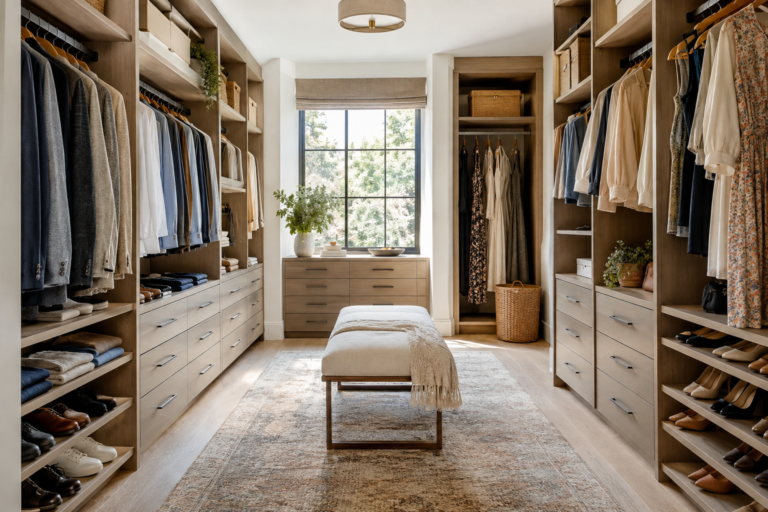
The best small closet organization ideas match storage to the clothes you own: hanging space for garments that need it, shallow shelves or drawers for folded items and a clear place for shoes. Measure first, divide long and short hanging, and use vertical space only where it remains accessible.
A tiny closet does not automatically need double rods or door pockets. Those additions help only when your clothing mix, closet depth and door movement allow them. Start with an inventory, then choose the arrangement that fits it.
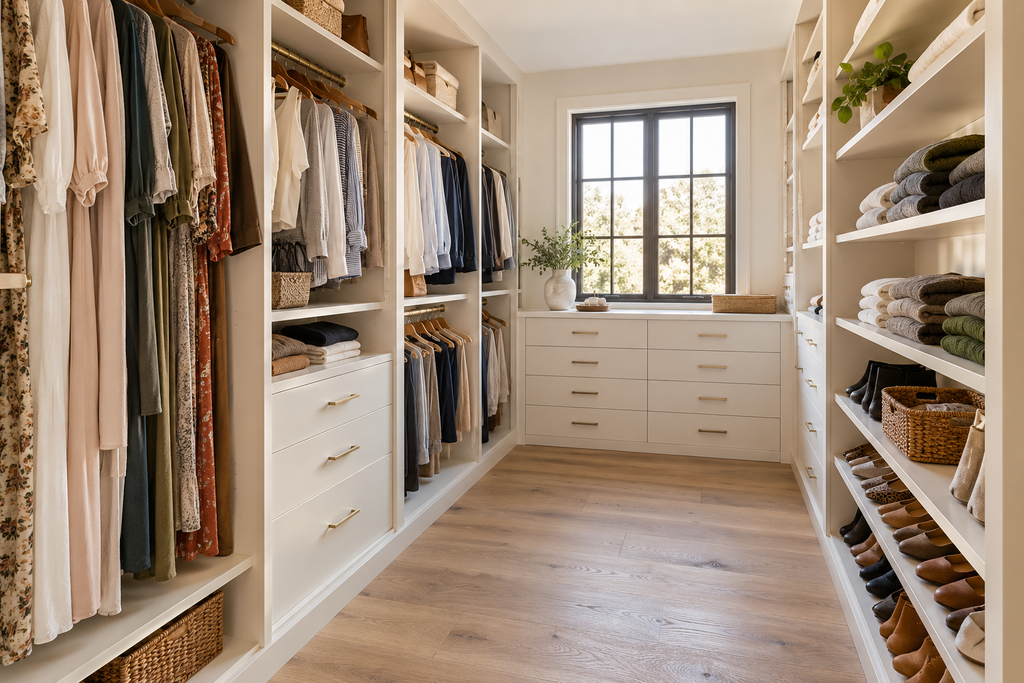
Small Closet Organization Ideas: Plan Around Your Wardrobe
1. Count hanging and folded categories
Separate long garments, short hanging, folded clothes, shoes and accessories. Your layout should reflect these categories rather than a standard organizer kit.
2. Measure the closet at its narrowest points
Record inside width, depth and height, then the usable opening. Note sloped ceilings, trim, tracks and anything that prevents full access.
3. Measure actual garments on hangers
Record the longest drop from hanger hook to hem. Use that measurement to set clear space under a rod; generic rod heights may not suit your clothes.
4. Test hanger depth with the door closed
Place a normal hanger and garment on the existing rod. Check whether sleeves or shoulders rub the door. A shallow closet may need a different storage approach rather than deeper bins.
5. Mock up the arrangement with tape
Mark proposed zones on the empty closet. Check reach and access before ordering a system or moving fittings.
Small Closet Organization Ideas for Hanging Space
6. Separate short and long hanging
Give shirts and folded-over trousers one bay, with dresses or coats in another. This avoids leaving the whole closet tall enough for only a few long items.
7. Use double hanging only for suitable clothes
Two rods can suit a wardrobe dominated by shorter garments. Calculate each garment drop and leave space between the upper hem and lower hanger; do not let upper clothes rest on the lower rod.
8. Keep a full-height section when needed
Reserve a narrow long-hang bay for the actual number of long garments. Double hanging throughout is unsuitable if those clothes have no other home.
9. Remove empty and unsuitable hangers
Keep only a modest spare supply in a defined spot. A large group of unused hangers can consume the space needed by clothes.
10. Choose hangers for garment shape
Use hangers that support the garment appropriately. Thin hangers may save some width, but are not a reason to use inadequate support for heavy or structured clothing.
11. Group hanging clothes by use
Separate work clothes, everyday items or another practical category. Return items to their group so the arrangement remains recognizable.
12. Keep a small gap for returning clothes
Do not pack the rod so tightly that removing one garment drags out several. A usable rod has space for a hand and a returning hanger.
Small Closet Organization Ideas for Folded Items and Shoes
13. Use shallow shelves for visible stacks
Choose a shelf depth that fits folded garments without burying a second row. Deep shelves are better with removable bins than hidden loose piles.
14. File-fold suitable clothes in drawers
Stand suitable folded items so you can see each one from above. If the fabric collapses, use small sections or stack it instead.
15. Divide unstable stacks
Use an appropriate divider between categories that slide into one another. Make sure it fits the shelf thickness and does not snag clothing.
16. Give knitwear suitable folded storage
Use folded shelves or drawers when hanging stretches or distorts a garment. Follow its care guidance; one storage method will not suit every material.
17. Put shoes in one visible row where possible
Set pairs side by side and measure their depth. If pairs have to face different directions to fit, test retrieval rather than forcing a symmetrical display.
18. Add a rated shoe shelf above unused floor space
A low rack can use space below shorter hanging clothes. Confirm hems clear it and that the rack does not obstruct the opening.
19. Group small accessories in removable sections
Use small containers for belts, ties or similar items. Keep the category accessible rather than assigning one large miscellaneous bin.
20. Store bulky bags without crushing them
Reserve a shelf or suitably sized bin for bags. Do not squeeze structured items under a low shelf merely to fill a gap.
Use the upper shelf and door with care
21. Put light occasional items overhead
Use labels visible from below. Keep heavier supplies at a comfortable low level and follow shelf load limits.
22. Rotate seasonal categories deliberately
Move infrequently used clothing into suitable labeled storage. Keep the current season easy to reach; do not relocate garments that you still use regularly.
23. Test door storage through its full movement
Check hinges, handles and the closed position. A pocket organizer is unsuitable if it rubs clothes or prevents the door closing.
24. Use reversible fittings where appropriate
Freestanding or suitable removable storage can help in rentals. Follow mounting instructions and obtain permission where necessary; a tension or adhesive fitting has its own limits.
25. Keep the opening clear
Do not fill the floor with loose overflow or place a dresser where it blocks access. CPSC recommends anchoring furniture such as dressers and bookcases to prevent tip-overs. Follow the furniture and anchoring instructions. [1]
Two sample layouts for a narrow closet
Short-hang wardrobe in a 48-inch-wide closet
An illustrative split uses a 30-inch double-hang bay and an 18-inch shelf bay. These are planning zones before panel thickness, fittings and installation tolerances. If short garments drop 34 inches from the hook, each bay needs more than that drop plus appropriate hanging and handling clearance. Set rods from the actual garments and system instructions.
Mixed wardrobe in the same width
Use an illustrative 18-inch long-hang bay and a 30-inch short-hang bay. Place suitable shoes below the shorter clothes. If long garments need more width, change the split; the number of garments matters more than preserving the drawing.
For either plan, measure hanger clearance through the closed door. A closet around 24 inches deep may offer a useful starting footprint for conventional hanging, but actual hanger size, garment bulk and door position determine whether it fits. These examples are not building specifications.
How to tell whether the arrangement works
Use the closet for a normal week. You should be able to identify today’s clothes, remove a pair of shoes without unloading a pile and return laundry without compressing everything. If one zone overflows, change its size or contents before adding another organizer.
For a closet you can enter, the walk-in layout guide explains aisle calculations and corners. If linens share the space, the linen storage plan helps keep bedding separate from clothes.
FAQs
Is double hanging suitable for every small closet?
No. It works best for shorter garments that fit both hanging levels. Measure actual garment drops and keep a full-height section for dresses, coats or other long items that would otherwise have no suitable home.
How can I add storage in a shallow closet?
Check the closed-door clearance with real hangers and garments first. Shallow folded storage, removable bins or suitable door storage may work better than deeper fittings. Any addition must leave the door and opening usable.
How do I decide how much space to give shoes and folded clothes?
Count and measure those categories before allocating shelf width. Prioritize the items used most often and adjust the layout if one zone repeatedly overflows. Use the clothing mix rather than equal sections to set the split.
Conclusion
The most useful small closet organization ideas give hanging, folded clothing and shoes the right kind of storage. Measure your garments and the door clearance, then choose only the fittings that improve access. Leave room to return clean clothes and revise overloaded zones. Capacity is useful when the wardrobe remains visible, reachable and easy to maintain.
