

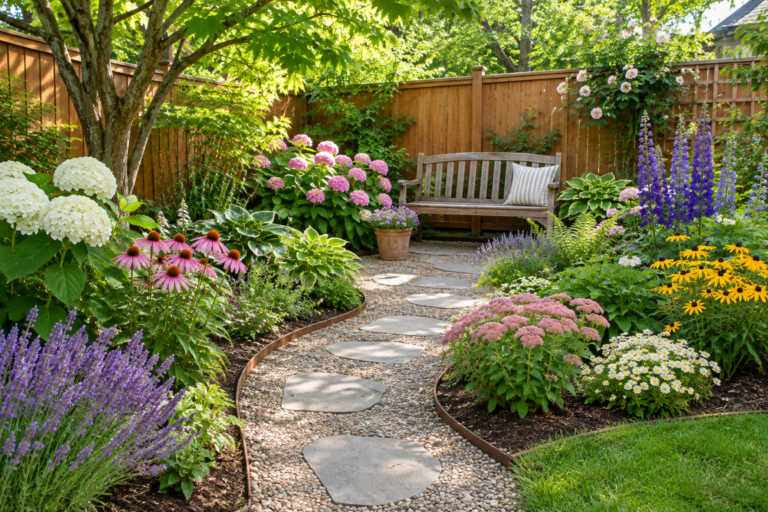
A successful small backyard garden design gives plants enough space while keeping the yard comfortable to use. Instead of fitting a large patio around a few leftover flowerbeds, begin with the growing conditions and the garden you want to enjoy through the seasons.
That approach can support flowers, foliage, herbs, vegetables. The important part is choosing a clear planting structure and connecting it with useful walking space.
This guide explains a garden-first layout, including measured beds, simple circulation, seasonal color, and a maintenance routine that fits a compact yard.
Begin Small Backyard Garden Design With Light
Observe sunlight in the morning, around midday, and later in the afternoon. Record which sections receive direct light and which remain shaded by buildings, trees, or fences.
Repeat these observations when seasonal conditions change. A sunny patch in spring may become shaded after nearby trees develop leaves. Reflected heat from walls can also affect planting near a paved boundary.
A practical small backyard garden design matches each planting area to its conditions. Before buying plants, check soil drainage, existing roots, water access, and the mature dimensions of anything you plan to keep.
Decide What the Garden Should Provide
Choose two or three priorities. You might want flowers visible from the kitchen, herbs near the door, and a quiet seat beside the planting. Listing these needs helps prevent unnecessary features from taking over.
Keep the priorities specific. “More greenery” is difficult to measure, while “a border that flowers across three seasons” gives you a useful buying plan. Leave room for everyday tasks, including reaching the gate and carrying garden waste outside.
Draw the Planting Before Choosing Furniture
Useful small backyard garden design starts with a measured outline. Add the house, doors, gates, downpipes, drains, existing trees, and anything that must remain accessible.
Next, draw the main planting areas and a continuous route between important destinations. A bed should be reachable for weeding, watering, and pruning without repeatedly stepping onto soil.
The University of Florida’s plant selection guidance explains the importance of matching plants to site conditions and the function of the space. Use that principle when deciding which beds belong in sun, shade, or sheltered locations.
Keep the Main Route Obvious
A small backyard garden design becomes frustrating when every task requires squeezing around a pot or moving a chair. Keep the route direct enough for normal use, with room where people turn or pass furniture.
Test proposed edges with a hose or temporary markers. Carry your usual watering equipment along the route. Open gates and doors fully. Adjust the outline before installing edging or placing heavy containers.
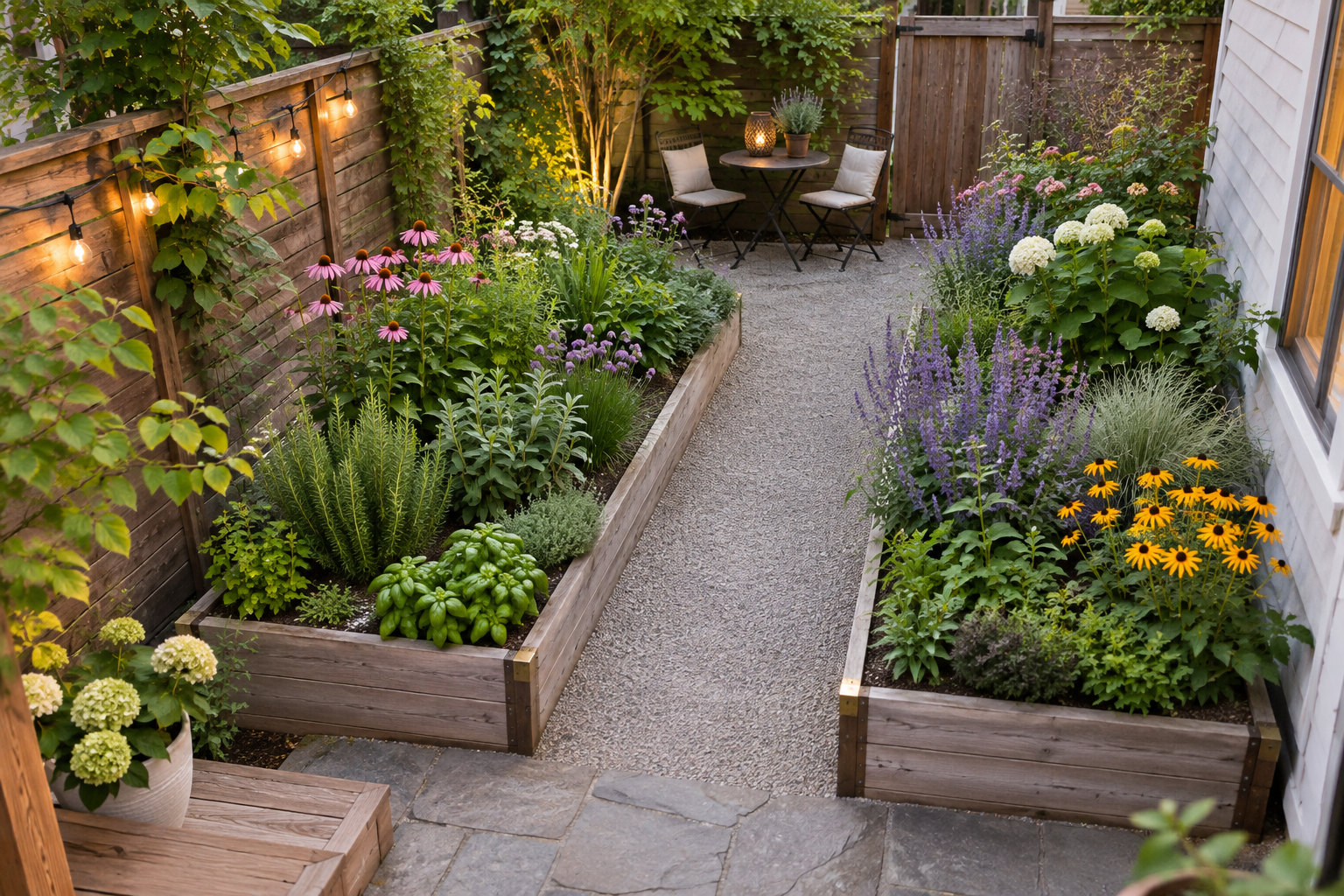
Example: A Twelve-by-Eighteen-Foot Garden
This small backyard garden design uses a hypothetical level rectangle measuring twelve feet across and eighteen feet deep. It illustrates space allocation, not building specifications. Existing structures, drainage, and required clearances may change the arrangement.
Place the house along the front edge and the gate toward the rear. Keep a three-foot route on one side, then divide the remaining area between planting and a small working or sitting landing.
| Area | Example dimensions | Purpose |
|---|---|---|
| Side route | Three by eighteen feet | Connect house and rear gate |
| Rear border | Nine by three feet | Repeated structural planting |
| Side border | Three by eleven feet | Flowers, herbs, or foliage |
| Front landing | Nine by four feet | Temporary work space or compact seat |
| Central growing area | Six by eleven feet | Additional reachable planting zones |
The areas total 216 square feet without overlap. Divide the central growing area further if necessary so you can maintain it from adjacent surfaces.
Adapt the Landing to Real Furniture
In this small backyard garden design, the front landing is deliberately modest. Test the actual furniture footprint before calling it a dining area. A small seat or movable worktable may be more appropriate than a full table and chairs.
For furniture and paving inspiration, browse these small patio ideas. Keep the planting priorities intact rather than expanding the patio until the garden becomes a narrow decorative fringe.
Build a Simple Planting Framework
A strong small backyard garden design needs structure after flowers finish. Choose a limited number of suitable plants that provide lasting shape, foliage, or seasonal stems.
Place taller growth where it will not block windows, crowd the route, or shade sun-loving plants unexpectedly. Repeat lower planting along selected edges to connect the beds visually.
For the wider relationship between planting, boundaries, and outdoor use, these small backyard landscaping ideas offer useful context. Use the ideas selectively so your garden remains focused on growing space.
Plan Around Mature Spread
In small backyard garden design, a young plant’s nursery size can be misleading. Mark circles on your drawing using the expected mature spread, allowing for the particular variety and local growing conditions.
Avoid filling every gap with another permanent shrub. Temporary annuals or suitable mulch can make new beds look cared for while longer-lived plants establish. Keep root zones away from incompatible structures and leave access for inspecting fences or maintaining equipment.
Spread Color Across the Seasons
Seasonal planning makes small backyard garden design more rewarding than buying everything in flower on one shopping trip. Write down when each candidate plant contributes flowers, foliage, fruit, stems, or useful structure.
Aim for interest during the months you spend most time outside. Include some quieter planting that supports the whole arrangement rather than making every plant compete for attention.
Choose locally appropriate species and varieties. Growing zones provide a useful starting point for cold tolerance, but sunlight, soil, heat, moisture, and mature size still determine whether a plant fits.
Use a Simple Seasonal Checklist
Review the plan for early growth, summer interest, later flowers, and winter structure. You do not need every bed to perform equally in every season.
A balanced small backyard garden design can let one area rest while another becomes the focus. Repeat one or two colors to connect separate beds, and use foliage texture to provide interest between flowering periods. Check local invasive-plant guidance before choosing vigorous groundcovers or climbers.
Add Food Growing Without Crowding Flowers
A mixed small backyard garden design can include herbs, leafy crops, or compact vegetables where conditions suit them. Put frequently harvested plants where you can reach them easily without leaning across delicate flowers.
Keep spreading herbs in suitable containers when necessary. Plan supports before climbing crops become large, and make sure the support remains stable without obstructing circulation.
Match watering needs within each growing area. Plants that need very different moisture conditions are harder to maintain when squeezed into the same small bed.
Leave Space for Harvesting
A productive bed needs working space around it. Consider where you will stand while cutting herbs, picking vegetables, or replacing a finished crop. Keep harvesting baskets and watering equipment off the main route.
Do not judge capacity only by the number of plants that fit at planting time. Leaves expand, supports take space, and crops may need regular attention. Start with fewer plants and use the first season to learn what your garden comfortably supports.
Make Watering and Maintenance Easy
Good small backyard garden design includes the work required after planting. Decide where a hose runs, where tools live, and how you will remove weeds, fallen leaves, or pruning waste.
Water according to the plants and conditions rather than following one fixed schedule throughout the year. Containers generally need separate attention because their soil volume and exposure differ from in-ground beds.
Keep existing drains accessible and observe where runoff travels. Do not raise beds against the house or assume decorative gravel will correct a drainage problem beneath the surface.
Establish the Garden in Stages
Start with the main route and one well-prepared bed. Plant the structural framework, then add seasonal layers after you see how the space performs.
This staged approach to small backyard garden design spreads spending and reduces rushed purchases. Photograph the garden from the same viewpoint every few months. Record which plants thrive, where watering becomes awkward, and which areas need clearer edges. Use those observations to guide the next stage.
Frequently Asked Questions
What should come first: beds or a patio?
For a garden-first layout, establish growing priorities and circulation before sizing the sitting area. Furniture still needs a realistic footprint, but it should not consume the space intended for planting.
Can this work in a small city garden?
Yes. Check shade, reflected heat, access, and available soil carefully. Containers or small beds can support a useful garden when plants match the conditions and maintenance remains manageable.
How many plant varieties should I use?
There is no universal number. Begin with a restrained palette, repeat useful plants, and add variety only when it contributes something missing. Too many unrelated plants can make a compact garden harder to maintain.
Conclusion
A thoughtful small backyard garden design balances generous planting with easy movement and realistic care. Map the light, measure the beds, choose plants by mature size, and spread interest across the seasons. Start with a clear framework, then improve the garden through observation rather than filling every space immediately.
