

Bathroom closet organization ideas begin with separating dry towels, active toiletries and unopened backups, then placing everyday categories at a comfortable reach. Reserve higher shelves for light occasional supplies and lower shelves for suitable bulky items. Medicines need storage that follows their labels; a humid bathroom closet is often the wrong place.
The most useful bathroom closet organization ideas make shortages visible and prevent one category spreading across every shelf. Start with what the household actually uses rather than a fixed number of matching baskets.
Bathroom Closet Organization Ideas: Empty and Sort
Remove everything and sort it into towels, daily toiletries, occasional products, refills and items that belong elsewhere. Separate cleaning supplies from personal-care categories. If you cannot provide secure cleaner storage, choose another suitable location.
Count what remains before buying containers. Retire linens that no longer serve a useful purpose, relocate bedding if it crowds out bathroom supplies and remove unopened products nobody intends to use. Dispose of products according to applicable instructions; do not assume all liquids can go down the drain.
Measure shelf width, usable depth, spacing and the door opening. Note whether the door hits a basket or a high shelf is inaccessible without climbing. Plan around the user’s reach, not just the amount of empty space.
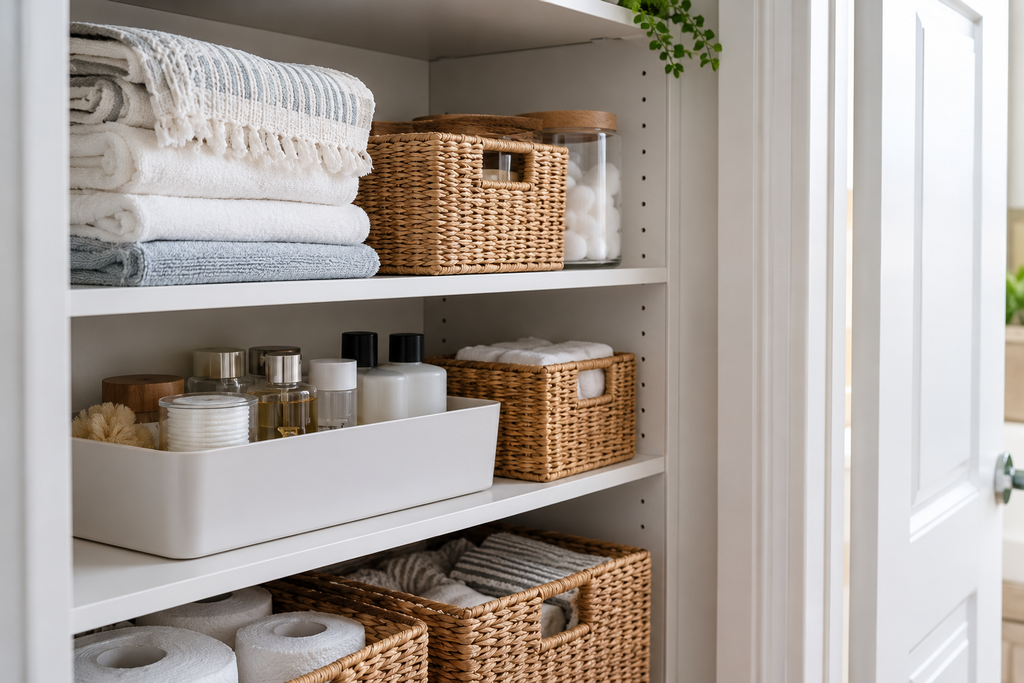
Bathroom Closet Organization Ideas: 5 Shelf Zones
Top shelf for light occasional supplies
Store light guest linens or seasonal items in labeled containers. Avoid placing heavy products overhead. If the shelf is difficult to reach, reserve it for things you rarely retrieve; do not make daily routines depend on it.
Comfortable reach for clean dry towels
Make towel storage easy for the people using it. Place the active stack near the front and fold each towel to the shelf depth. Leave enough space to remove one without disturbing every stack. Return only fully dry towels to enclosed storage.
A separate shelf for toiletries
Group products by task or person in washable, removable bins. Keep caps and labels visible. One shared category for routine supplies is often enough; individual caddies can help when household routines differ substantially.
A refill shelf below the active supplies
Keep unopened duplicates together and place older stock at the front when labels and condition permit continued use. Mark a simple category limit: for example, one bin for bathroom refills. If it fills, check the inventory before buying more.
A lower shelf for suitable bulky dry items
Use it for spare toilet paper or a manageable linen basket if the area stays dry. Keep the floor clear enough to clean and allow the door to close. A lower shelf is not safe cleaner storage merely because products are in a basket.
This shelf map is a starting arrangement. Swap categories if your reach, shelf strength or household needs require it. Follow the shelving system’s load instructions and avoid concentrating heavy supplies on unsupported spans.
A measured example for a small closet
For a shelf 24 inches wide and 14 inches deep, two containers with outside widths of 10 inches leave 4 inches of width for fitting and removal. A container 12 inches deep leaves 2 inches behind it, although the door position may reduce usable depth. Measure handles and lids as part of the outside size.
Use those numbers to test a layout, not as a shopping prescription. If towels occupy one half of the shelf, one refill bin may be enough on the other half. If shelving is adjustable, leave space above bottles to grip and lift them without scraping the next shelf.
For small bathroom closet organization, start with narrower categories and fewer backups. A deep shelf can use a front active bin and a rear occasional bin, but label the rear one and make it removable. Avoid storing daily products behind a towel stack.
Decide where medicine and cleaning products belong
MedlinePlus notes that bathroom heat and moisture can damage medicines. Choose storage that follows each label and pharmacist advice, with secure placement away from children. Do not use an attractive basket as a substitute for suitable conditions or restricted access.
Cleaning supplies need their original labeled containers and secure storage separate from personal-care items. Poison Control recommends keeping household cleaners away from medications and in cabinets with child-resistant latches. If the bathroom closet cannot provide appropriate separation and security, move the cleaners elsewhere.
Make restocking a visible process
Put a small inventory list inside the door with categories and quantities to replenish. When an active product runs out, move its replacement into use and update the list. Avoid keeping an open bottle on the counter and a second open bottle in the closet without a reason.
Choose labels people can understand without instructions: towels, hair care, guest supplies and refills. Labels should help return items, not force a category to stay in the wrong place.
Use a short reset routine
During a regular laundry or cleaning cycle, straighten towel stacks, return misplaced products, check the refill bin and inspect for spills or damp items. Less often, review unused stock and whether the zones still match your routines. No rigid reset interval is needed; use the point at which the shelf becomes difficult to navigate.
If bedding is taking over, follow the linen closet plan. If daily products crowd the sink, use a simpler counter arrangement. The bathroom organization hub ties the closet to drawers and cabinet storage, while the under-sink guide helps move suitable refills without obstructing pipes.
FAQs
How should bathroom closet shelves be arranged?
Keep clean dry towels and active toiletries at a comfortable reach, unopened refills in a separate zone and light occasional supplies higher up. Adapt the order to the people using the closet and the shelves available.
How can I organize a very small bathroom closet?
Reduce duplicates, define narrower categories and test container footprints before buying. Keep one visible row where possible. Use removable rear bins only for occasional items that can still be identified and reached.
Should medicines be kept in a bathroom closet?
Only where their required storage conditions can be met. Bathroom heat and moisture may make the location unsuitable. Follow each label, ask a pharmacist when uncertain and keep medicines secure against access by children.
Conclusion
Effective bathroom closet organization ideas give each shelf a clear job and keep the most-used categories within comfortable reach. Separate towels, active products and backups so shortages are visible and clean laundry has a predictable home. Revisit the layout when routines change or a category overflows. A short restocking check can keep the shelves useful without repeatedly emptying the entire closet.
