

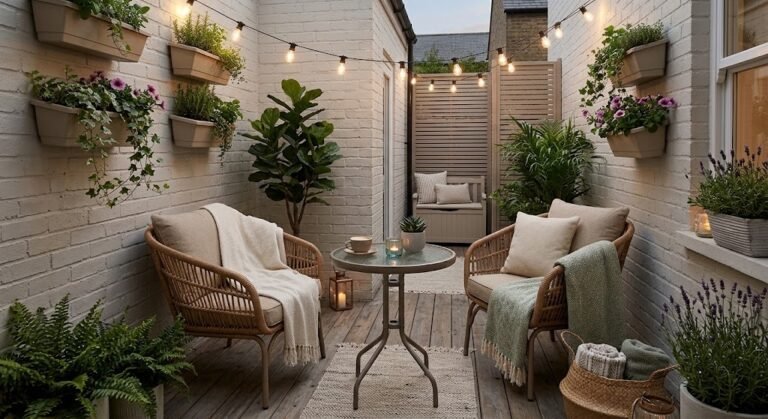
A small patio can become one of the most enjoyable areas of your home with the right design. Even if you have limited outdoor space, you can create a comfortable place to relax, enjoy morning coffee, entertain guests, or grow your favorite plants.
The secret is to choose furniture that fits, use vertical space, select practical flooring, and avoid overcrowding the area. The best small patio ideas focus on making every inch useful without sacrificing comfort or style.
Whether you have a tiny concrete patio, a narrow backyard, a small apartment terrace, or a compact garden corner, there are plenty of ways to improve it. This guide shares 27 practical designs, furniture tips, layout suggestions, and decorating ideas to help you create a beautiful outdoor living space.
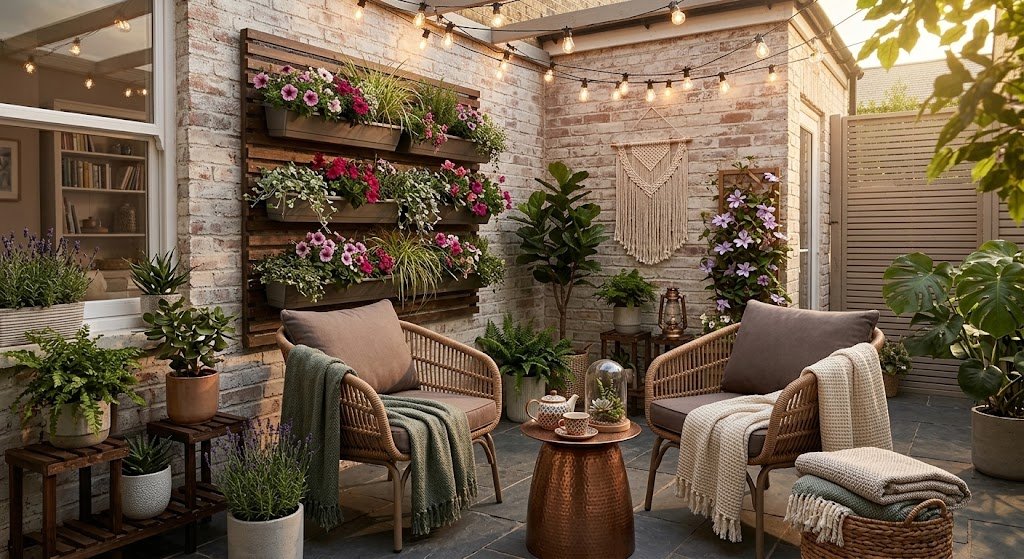
How to Plan a Small Patio
Before buying furniture or decorating your patio, measure the available space and decide how you want to use it.
1. Measure the Available Area
Measure the patio’s length and width. Note doors, steps, drains, outdoor taps, and any other features that could affect the layout.
For example, a 6-by-8-foot patio provides 48 square feet of space. It may accommodate two compact chairs and a small side table, but a large dining set could make it feel crowded.
2. Choose One Main Purpose
Decide whether your patio will primarily be used for:
- Morning coffee and relaxation
- Outdoor dining for two
- Reading and quiet time
- Gardening and growing plants
- Entertaining a few guests
You can combine activities, but choose one primary purpose to guide your furniture and layout decisions.
3. Keep Walking Space Clear
Leave a comfortable route between the house entrance and the seating area. Where possible, aim for approximately 30–36 inches of clear walking space on main routes, adjusting to your available area and accessibility needs.
Do not block doors, drains, steps, or emergency exits.
27 Small Patio Ideas for Stylish Outdoor Living
These designs cover furniture, layouts, flooring, greenery, shade, and lighting. You can combine several ideas, but start with the changes that make the biggest difference to your space.
Furniture and Layout Ideas
1. Choose a Compact Bistro Set
A small bistro set is one of the most practical small outdoor patio ideas for homeowners who want somewhere to eat or enjoy coffee.
Choose a round table around 24–30 inches wide with two compact chairs. Check the dimensions of the chairs when pulled out, not just when pushed under the table.
This setup works well on apartment patios, small concrete areas, and narrow garden terraces.
2. Use Foldable Outdoor Furniture
Foldable chairs and tables provide flexibility when your patio serves multiple purposes.
You can open the furniture when guests arrive and fold it away when you need more room. Look for lightweight materials that are easy to store and suitable for outdoor conditions.
A foldable dining table can also work as a temporary workspace on pleasant days.
3. Create an L-Shaped Seating Corner
An L-shaped bench can make efficient use of a corner that might otherwise remain empty.
Choose a compact bench designed for outdoor use, or have one built to fit the available dimensions. Add a small table in front and weather-resistant cushions for comfort.
Keep the bench shallow enough to preserve walking space and avoid placing it where it blocks a door.
4. Install a Built-In Bench
Built-in seating can create a clean, organized appearance and reduce the need for several separate chairs.
A bench approximately 16–18 inches high and 16–20 inches deep can provide a useful starting point for comfortable seating, although the ideal dimensions depend on the design and users.
If you are planning a permanent installation, consider drainage, weather exposure, maintenance, and access to nearby walls or utilities.
5. Select Furniture With Slim Profiles
Bulky furniture can overwhelm a compact patio. Instead, look for narrow frames, open sides, and lightweight designs.
Metal chairs, slim wooden benches, and compact tables can provide seating without making the space feel visually heavy.
Measure the furniture before purchasing it and leave enough room to pull chairs out comfortably.
6. Use a Storage Bench
A storage bench offers two useful functions: seating and storage.
Use it to keep outdoor cushions, small gardening tools, or other suitable accessories organized. Choose a weather-resistant model with ventilation where needed, and store items according to the manufacturer’s recommendations.
This option is especially useful when your patio has no nearby shed or outdoor storage area.
7. Arrange Furniture Along the Edges
Placing furniture along the patio’s perimeter can create a more open center.
For example, position a bench against one wall and a small table near the opposite side. This arrangement can make it easier to move around than placing chairs randomly in the middle.
Make sure furniture does not block doors, windows, access points, or drainage channels.
8. Use a Round Table
A round table has no corners, which can make movement easier in tight spaces.
Choose a compact model that provides enough surface area for your needs without dominating the patio. A small round table can work particularly well between two chairs.
For very narrow patios, compare its total footprint with that of a slim rectangular table before making a decision.
9. Create a Two-Person Dining Area
You do not need a large outdoor dining set to enjoy meals outside.
A small table with two chairs can create a practical dining area for breakfast, lunch, or evening snacks. Choose stackable or foldable chairs if you need extra floor space at other times.
Keep serving items simple and use a compact tray to carry food and drinks indoors when needed.
10. Add a Small Side Table
If you already have comfortable seating, a side table may be all you need.
A narrow table provides space for drinks, books, phones, and small planters without taking up as much room as a full dining table.
Look for a stable, weather-resistant design that fits beside your chairs.
Flooring and Surface Ideas
11. Refresh the Existing Concrete
If your patio has plain or worn concrete, improving the existing surface may be more affordable than replacing it.
After checking the condition of the concrete, clean it thoroughly and use an appropriate exterior coating or concrete stain if suitable. Follow the product’s preparation, drying, and weather requirements.
Repair significant cracks or drainage problems before adding decorative finishes.
12. Use Outdoor Tiles
Outdoor-rated tiles can create a more finished appearance.
Choose tiles specifically intended for exterior use, with suitable slip resistance and weather performance for your climate. Make sure the underlying surface is stable and properly prepared.
For rented properties, removable floor coverings may be a more suitable alternative to permanent tile installation.
13. Add a Weather-Resistant Outdoor Rug
An outdoor rug can define the seating area and introduce color or texture.
Choose a size that fits beneath the main furniture without covering drains or creating a tripping hazard. Materials designed for outdoor use are generally better suited to changing weather conditions.
Clean and dry the rug regularly to help prevent mold and mildew.
14. Create a Small Gravel Patio
Gravel can provide an affordable ground-cover option for a suitable garden area.
Use appropriate edging to keep the material contained and prepare the base to support drainage and stable furniture placement. Choose a gravel size that is comfortable to walk on and practical for your intended use.
Gravel is less suitable for some wheeled furniture and may not provide a firm surface for every type of chair or table.
15. Use Deck Tiles
Interlocking deck tiles can refresh certain existing patio surfaces without requiring a full deck construction project.
Choose tiles rated for outdoor use and confirm that the surface underneath is suitable. Some systems need specific drainage gaps or installation conditions.
Before purchasing, measure the area and check whether the tiles can be trimmed to fit around corners or obstacles.
Shade and Privacy Ideas
16. Add a Compact Patio Umbrella
A small outdoor umbrella can provide shade without requiring a permanent roof.
Select a size that covers the seating area while leaving enough clearance around doors and walkways. Use a stable base suitable for the umbrella’s dimensions and local wind conditions.
Close and secure the umbrella when it is not in use, especially during strong winds.
17. Install a Wall-Mounted Awning
A wall-mounted awning can create shade while keeping the patio floor free of extra supports.
Choose a design that suits your wall structure and expected weather conditions. Some installations require professional fitting, particularly when the awning is large or motorized.
Check whether the awning will interfere with windows, doors, gutters, or neighboring properties.
18. Use a Small Pergola
A compact pergola can add structure and define the outdoor seating area.
For a small patio, a simple design with slim posts may be less visually overwhelming than a large, elaborate structure. Climbing plants or outdoor fabric may add shade, depending on the pergola’s design and the manufacturer’s guidance.
Confirm local building requirements before installing a permanent structure.
19. Add a Privacy Screen
A privacy screen can help make a patio feel more comfortable when it faces neighboring homes or a shared outdoor area.
Options include freestanding screens, outdoor-rated panels, or suitable trellises. Choose a design that allows adequate airflow and does not block essential access.
Secure freestanding screens properly so they do not tip over in windy conditions.
20. Grow Climbing Plants on a Trellis
A trellis can provide greenery without taking up much floor space.
Attach it securely to an appropriate support and choose climbing plants suited to your climate and sunlight conditions. Consider mature plant size, watering needs, and whether the roots or stems could damage nearby structures.
Avoid letting vines cover ventilation openings, gutters, or areas that need regular maintenance.
Greenery and Decoration Ideas
21. Use Vertical Planters
Vertical planters help you add greenery while preserving the floor area.
Wall-mounted pots, tiered plant stands, and suitable hanging planters can work well for herbs, flowers, and compact foliage plants.
Check the weight of containers when wet and make sure the mounting system can safely support them.
22. Group Plants in Odd Numbers
A simple grouping of three or five containers can create a more balanced display than placing pots randomly around the patio.
Mix different heights and leaf textures, but keep the arrangement compact. Use plant varieties with similar sunlight and watering needs where possible.
Leave enough room to move around and maintain the plants comfortably.
23. Add a Small Herb Garden
A patio herb garden can be decorative and useful.
Grow suitable herbs such as mint, basil, parsley, or rosemary in containers that match their growing requirements. Some herbs need more sunlight or different watering schedules, so check the needs of each variety.
Place the containers where you can easily reach them for watering, pruning, and harvesting.
24. Use One Statement Planter
Instead of filling a small patio with many pots, select one attractive planter as a focal point.
A taller container near a corner can add height and visual interest without occupying the entire space. Choose a plant that suits the available light and does not grow too large for the location.
Keep the planter stable and ensure excess water can drain safely.
Lighting and Finishing Touches
25. Hang Outdoor String Lights
String lights can make a patio feel warm and inviting after sunset.
Use lights specifically rated for outdoor conditions and install them according to the manufacturer’s instructions. Secure the supports properly and keep cords away from walking routes, standing water, and places where they could be damaged.
For rented properties, consider removable mounting solutions that are safe for the surface.
26. Add Solar Pathway Lights
Solar lights can illuminate the patio entrance, garden path, or steps without requiring a wired electrical connection.
Place them where they receive adequate sunlight during the day. Check the expected brightness and battery performance before purchasing.
Keep lights positioned so they do not create glare or obstruct movement around furniture.
27. Choose a Simple Color Scheme
A coordinated color scheme can make a small patio look more organized.
Choose two or three main colors for cushions, planters, rugs, and accessories. Neutral shades can create a calm background, while a small amount of a brighter color can add personality.
Avoid using too many large decorative objects. A few carefully chosen items usually work better in a compact outdoor area.
Small Patio Layouts and Dimensions
The best layout depends on the size and shape of your patio. These examples are starting points rather than strict design rules.
| Patio Size | Suggested Layout | Furniture to Consider | Main Design Tip |
|---|---|---|---|
| 4 × 6 feet | Compact seating corner | One chair and a small side table | Keep the entrance clear |
| 6 × 8 feet | Two-person seating area | Two chairs and a compact table | Use furniture with slim profiles |
| 8 × 10 feet | Small dining or lounge zone | Bistro set or compact bench | Keep a clear walking route |
| 10 × 12 feet | Flexible outdoor living area | Small sofa, table, and planters | Separate seating from dining if possible |
These examples do not guarantee that every furniture combination will fit. Measure the full furniture footprint, including pulled-out chairs, and account for doors, steps, and required access.
How to Make a Very Small Patio Look Bigger
If your outdoor area is extremely limited, a few design choices can make it feel more open.
Use Light Colors
Light-colored flooring, cushions, and walls can help reflect light and create a brighter atmosphere. Add darker accents sparingly to provide contrast.
Keep the Floor Visible
Too many pots, stools, and storage boxes can make the patio feel crowded. Use wall-mounted planters and foldable furniture to preserve floor space.
Create a Clear Focal Point
Choose one main feature, such as a small bistro set, a statement planter, or a compact bench. A clear focal point helps the design feel intentional.
Use Mirrors Carefully
An outdoor-rated mirror may add a sense of depth to a sheltered patio. Secure it properly and position it to avoid glare or reflected sunlight that could create a fire hazard.
Common Small Patio Design Mistakes to Avoid
Even attractive furniture and decorations can make a patio less functional if the layout is poorly planned.
- Buying furniture before measuring: Check the full dimensions of every item before purchasing.
- Using too many plants: Leave room for movement, seating, and maintenance.
- Ignoring shade: Consider the direction of sunlight throughout the day.
- Choosing unsuitable flooring: Exterior surfaces should be appropriate for weather, drainage, and slip resistance.
- Blocking doors or drains: Keep access routes and drainage points clear.
- Overdecorating: Too many colors and accessories can make a compact space feel busy.
- Ignoring weather conditions: Secure umbrellas, screens, and lightweight furniture during strong winds.
Frequently Asked Questions
1. What are the best small patio ideas on a budget?
Start with furniture you already own, add a compact outdoor rug, and use inexpensive planters or solar lights. Refreshing an existing surface may also cost less than installing new flooring.
2. How do I design a very small patio?
Measure the space, choose one main purpose, and use compact or foldable furniture. Keep the center and main walking route as clear as possible.
3. What furniture is best for a small outdoor patio?
Bistro sets, folding chairs, slim benches, nesting tables, and storage benches are useful options. The best choice depends on the patio dimensions and how you plan to use the space.
4. How can I make my patio look bigger?
Use a simple color palette, keep the floor visible, choose furniture with slim profiles, and use vertical planters instead of filling the ground with pots.
5. What is the best flooring for a small patio?
Suitable options include existing concrete, exterior-rated tiles, outdoor rugs, gravel, and interlocking deck tiles. Consider drainage, slip resistance, maintenance, and the condition of the underlying surface.
6. How can I add privacy to a small patio?
Try a suitable privacy screen, trellis with climbing plants, or carefully positioned containers. Make sure the installation is secure and does not block airflow or access.
7. How can I shade a small patio?
A compact umbrella, wall-mounted awning, or appropriately designed pergola can provide shade. Choose an option that fits the available space and can be secured safely in local weather conditions.
8. Which plants work well on a small patio?
Compact herbs, small shrubs, and container-friendly flowers can work well, depending on sunlight and climate. Vertical planters can help maximize growing space.
9. How do I light a small patio?
Outdoor-rated string lights and solar pathway lights can provide useful illumination. Keep cables secure, walkways clear, and electrical equipment protected from weather.
10. Can I decorate a small patio without making it look crowded?
Yes. Focus on a few useful pieces, one or two statement accessories, and a consistent color scheme. Vertical decoration can add interest without using much floor space.
Conclusion
A small outdoor area can become a comfortable and attractive extension of your home with thoughtful planning. These small patio ideas show how compact furniture, practical flooring, smart layouts, shade, greenery, and lighting can help you make the most of limited space.
Start by measuring your patio and deciding how you want to use it. Then select furniture that fits, keep walking routes clear, and add plants or decorative details gradually. You do not need to complete every improvement at once.
Whether you have a narrow terrace, a compact backyard patio, or a tiny apartment outdoor area, the right combination of practical features can create a space that feels welcoming and works for everyday living.
The most successful patio design is not necessarily the biggest or most expensive. It is the one that fits your space, suits your needs, and remains comfortable to use throughout the year.
