

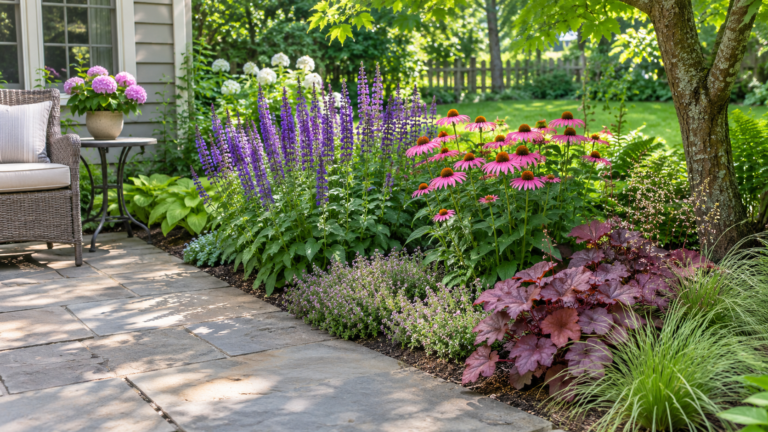
The most reliable planting ideas for small gardens begin with the conditions outside your door. Sunlight, winter temperatures, soil, and mature plant size matter more than copying a beautiful photograph.
A compact garden can still offer flowers, foliage, and seasonal interest. The key is choosing a few compatible plants and giving them enough room to grow. That approach reduces replacement costs and the need for constant pruning.
Keep planting ideas for small gardens suitable for your conditions.
This guide explains how to assess your site, compare suitable plants, and create simple borders or containers. Use the examples as starting points, then confirm local suitability before buying.
Plan Planting Ideas for Small Gardens Around Sunlight
Watch your garden at several points during the day. Record when direct sun reaches each planting area and how long it remains there. Repeat observations when seasonal shade changes are important.
As a general guide, full sun means at least six hours of direct sunlight. Part shade commonly means roughly three to six hours. Plant labels may use slightly different descriptions, so check the requirements of each selection.
Useful planting ideas for small gardens also consider the timing of sunlight. A spot receiving gentle morning sun can behave differently from one exposed to intense afternoon heat.
Make a Simple Light Map
Draw your borders, containers, buildings, and nearby trees. Mark sunny, partly shaded, and shaded areas. Note any reflected heat from paving or walls.
Do not assume the whole yard has the same conditions. A short border can contain a dry sunny end and a shaded section that stays moist much longer.
Use Your USDA Zone as a Starting Point
For perennial planting ideas for small gardens, check the USDA Plant Hardiness Zone Map. It helps assess winter cold suitability using average annual extreme minimum temperatures.
Your zone does not describe every growing condition. Summer heat, humidity, drainage, wind, and local frost pockets still affect performance. A plant matching your zone may struggle in the wrong soil or exposure.
Treat a zone range as one filter. Next, confirm light requirements, mature dimensions, and moisture needs using the plant label and a reliable regional source.
Check Container Hardiness Separately
Container roots experience different temperature conditions from roots in the ground. A plant that survives locally in a border may need additional winter protection in a pot.
Before choosing permanent container plants, ask your local extension service or nursery about overwintering. Moving a heavy planted container after cold weather arrives may be difficult.
Match Plants to Soil and Moisture
Practical planting ideas for small gardens work with the soil you have. Observe whether water drains freely, lingers after rain, or runs off a compacted surface.
A soil test can help identify pH and nutrient needs. Use the results to guide amendments rather than adding fertilizer automatically. Avoid working wet soil, which can damage its structure.
Group plants with similar moisture needs. Putting a dry-soil plant beside one needing consistent moisture makes watering harder and may leave both performing poorly.
Use Containers Where Conditions Differ
Containers let you provide a suitable growing mix where the surrounding soil is unsuitable. They still need drainage holes, adequate root space, and a realistic watering routine.
Choose a few appropriately sized pots instead of many tiny ones. Small containers can dry quickly and create more individual watering jobs than you expect.
Compare Plants Before Building Your Palette
The following planting ideas for small gardens use examples to research rather than a universal shopping list. Sizes and zone ranges vary by cultivar and growing conditions.
| Site condition | Plant to investigate | Alternative to investigate | Main selection check |
|---|---|---|---|
| Sunny, well-drained border | Compact woodland sage | Compact coneflower | Exact cultivar size and local hardiness |
| Partly shaded border | American alumroot | Locally suitable woodland sedge | Soil moisture and summer heat |
| Dry shaded edge | Pennsylvania sedge | Regional dry-shade groundcover | Spread, climate, and traffic exposure |
| Sunny seasonal container | Basil | Compact annual flowers | Frost timing and watering needs |
| Moist shaded pocket | Suitable shade perennial | Moisture-tolerant regional native | Drainage and mature width |
Check regional invasive plant lists before introducing unfamiliar species. Native status also depends on location; a plant native to one part of the country may not be native to yours.
Sunny Border: Repeat a Few Compact Plants
Sunny planting ideas for small gardens benefit from a clear structure. Choose one main flowering perennial and repeat it in groups, with a lower plant along the edge.
Woodland sage is worth investigating for suitable well-drained sites. Coneflower can provide a different flower shape, but choose a compact cultivar if the border cannot hold the taller species.
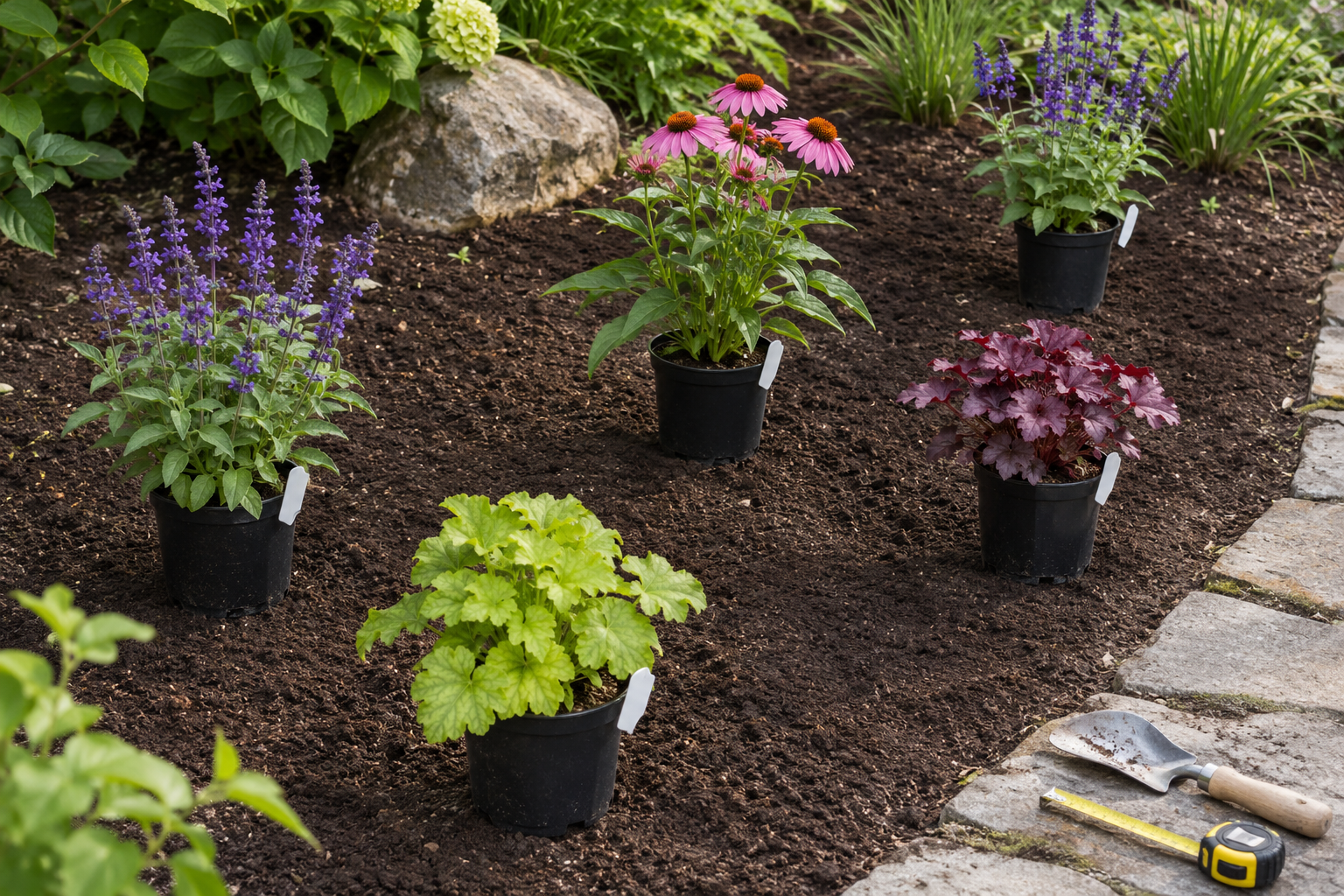
Place pots on the ground before planting and check the layout from indoors. Leave spacing for mature growth instead of arranging plants only for their current nursery size.
Shaded Border: Let Foliage Do More Work
Shaded planting ideas for small gardens can focus on leaf shape and texture. American alumroot offers mounded foliage, while a suitable sedge can provide a finer, grasslike contrast.
Pennsylvania sedge is an option to research for appropriate shaded sites, particularly within its regional range. It is not a substitute for a path or a heavily used play surface.
Check individual species needs in the NC State Plant Toolbox. Common names can cover plants with different requirements, so confirm the botanical name before purchasing.
Build a Simple Planting Layout
The easiest planting ideas for small gardens use a small number of layers. Put low plants near paths, medium plants in the middle, and taller accents where their mature growth will fit.
For an illustrative six-by-four-foot border, begin with one modest focal group and repeat a lower edge plant. Calculate quantities using actual mature widths; the bed dimensions alone do not determine how many plants belong there.
These small backyard landscaping ideas can help you position the border within the wider yard.
Keep Planting Clear of Everyday Routes
Leave comfortable space for walking, watering, and opening gates. Avoid sharp, sprawling, or heavily scented plants immediately beside narrow routes if they would make using the area unpleasant.
For containers near seating, review these small patio design ideas. Check chair movement and door clearance before placing the largest pot.
Plan Interest Across More Than One Season
Balanced planting ideas for small gardens include more than a single burst of flowers. Combine useful foliage with plants flowering at different times, while keeping their growing requirements compatible.
Spring bulbs can add early interest between suitable perennials. Later flowers or attractive seedheads can extend the display. Leave room for plants to emerge without disturbing neighboring roots.
Avoid buying every attractive plant you see at the nursery on one visit. That often produces a garden that peaks briefly and looks empty during the rest of the year.
Make Establishment and Maintenance Manageable
Affordable planting ideas for small gardens start with a small area planted well. Clear persistent weeds, prepare the site appropriately, and buy healthy plants with labels you can keep.
Water according to soil moisture, weather, and plant needs. Newly planted perennials require attention while roots establish, even when described as drought tolerant once established.
Keep mulch clear of crowns and stems. Inspect plants regularly for stress, and identify the cause before applying products. Sometimes the solution is a better location rather than extra fertilizer.
When comparing small flower garden layout ideas, sketch the plants at their expected mature widths. This reveals crowded corners before you spend money. Good garden plans for small yards also show access points, container positions, and the space needed to water comfortably. A balanced small outdoor garden design can include both planted areas and open ground for moving around.
Test planting ideas for small gardens by setting the nursery pots in position and viewing them from your main window. Check that shorter plants will remain visible once taller neighbors fill out. Then remove the pots, mark the planting locations, and confirm spacing again. This simple rehearsal is especially useful beside patios, where a spreading plant can gradually take over the space you originally reserved for comfortable outdoor seating.
Frequently Asked Questions
Which planting ideas for small gardens suit beginners?
Start with one manageable border or a few containers. Match plants to the existing sunlight and soil, choose modest mature sizes, and repeat a small number of reliable selections.
Can I choose plants using my USDA zone alone?
No. The zone helps assess winter cold suitability, but you must also consider light, summer conditions, drainage, moisture, and space. Check the exact species or cultivar rather than relying on a broad common name.
How can I avoid overcrowding a small border?
Read mature width measurements and mark plant positions before digging. Leave room between groups for maintenance. Use temporary seasonal color if needed instead of squeezing in extra permanent plants.
Conclusion
Successful planting ideas for small gardens begin with observation. Map sunlight, check your zone, understand the soil, and choose plants by mature size. Build a simple palette, allow space for growth, and add seasonal interest gradually. A well-matched planting scheme becomes easier to enjoy and maintain.
