

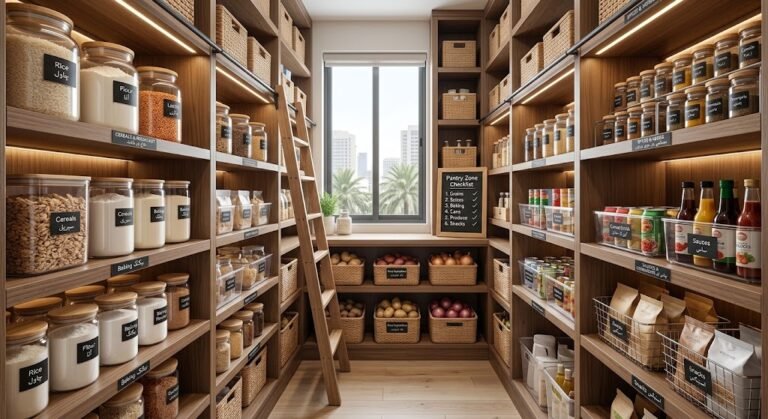
A cluttered pantry can make everyday cooking more stressful. When ingredients are mixed together, snacks are difficult to find, and duplicate products fill your shelves, even preparing a simple meal can take longer than necessary.
Learning how to organize your pantry by category makes your kitchen easier to use, helps you see what you already own, and can reduce unnecessary grocery purchases. Instead of placing items wherever they fit, you create specific areas for different types of food.
The best part is that you do not need a large pantry or expensive storage containers. A small cupboard, a narrow cabinet, or a walk-in pantry can all benefit from a simple zoning system.
If you need more inspiration for limited storage space, explore these small pantry organization ideas. In this guide, you will learn how to create seven practical pantry zones, arrange products efficiently, use a pantry categories list, and maintain your system with an easy checklist.
How to Organize Your Pantry by Category?
Organizing food by category means keeping similar products together in designated areas. For example, breakfast cereal belongs with other breakfast foods, while flour, sugar, and baking powder belong in a baking zone.
This method makes your pantry more predictable. Once each category has a home, everyone in your household can find items and return them to the correct place.
Here are the main benefits:
- Save time: Find ingredients quickly when cooking or preparing meals.
- Reduce food waste: Notice products approaching their expiration or best-before dates.
- Avoid duplicate purchases: Check your existing supplies before shopping.
- Use space more efficiently: Assign shelves and containers according to product size and frequency of use.
- Make restocking easier: Put new groceries directly into their designated zones.
- Improve visibility: Keep everyday ingredients accessible instead of hiding them behind rarely used products.
You do not need to create seven separate shelves. Your zones can be small sections of a cabinet, labeled baskets, or separate areas within a single shelf.
The 7 Pantry Zones: A Simple Pantry Categories List
The easiest way to start is by dividing your pantry into seven main categories: breakfast, baking, snacks, canned and jarred foods, grains and pasta, cooking essentials, and backstock.
Adjust these categories to match the foods your household actually uses.
1. Breakfast Zone
Keep breakfast items together so busy mornings become easier.
Items to store here:
- Cereal and oatmeal
- Pancake and waffle mixes
- Granola and breakfast bars
- Coffee and tea, if you prefer them near breakfast supplies
- Honey, jam, and other breakfast spreads
- Shelf-stable breakfast drinks
Place frequently used items at eye level or in an easy-to-reach basket. If children prepare their own breakfast, consider placing appropriate items on a lower shelf.
2. Baking Zone
Create a dedicated area for ingredients used in cakes, cookies, bread, and other baked foods.
Items to store here:
- Flour and sugar
- Baking powder and baking soda
- Cocoa powder and chocolate chips
- Vanilla extract and food coloring
- Sprinkles and baking decorations
- Cake mixes and frosting
- Nuts and baking-specific ingredients
Keep small packets together in a labeled container. Store flour and sugar in clean, airtight containers when appropriate, and label them clearly to avoid confusion.
If you bake only occasionally, use one basket for your baking supplies instead of dedicating an entire shelf.
3. Snacks Zone
A snack zone prevents packets, bars, and small treats from spreading across the pantry.
Items to store here:
- Crackers and biscuits
- Chips and popcorn
- Nuts and dried fruit
- Granola bars
- Pretzels and other packaged snacks
- Individually packed treats
Use shallow baskets or bins to group similar snacks. Keep open packets sealed securely according to their packaging instructions.
For families, separate everyday snacks from occasional treats if that makes meal planning easier. Avoid placing heavy jars or cans above children’s reach.
4. Canned and Jarred Foods Zone
Cans and jars are often easy to stack, but they can quickly become difficult to manage when hidden behind other products.
Items to store here:
- Canned beans
- Tomatoes and vegetables
- Canned fruit
- Soups and broths
- Pasta sauces
- Pickles and other shelf-stable jars
- Canned fish
Arrange products in rows with labels facing forward. Group similar items together and place older products in front so they are used first.
Keep heavy cans on lower shelves when possible. Do not stack cans higher than feels stable or blocks your view of other items.
5. Grains, Rice, and Pasta Zone
This zone holds the staple ingredients you use for everyday meals.
Items to store here:
- Rice
- Pasta and noodles
- Lentils and dried beans
- Couscous and other grains
- Breadcrumbs
- Flour used for everyday cooking, if it is separate from baking supplies
Use airtight, food-safe containers when transferring dry goods from their original packaging. Include the product name and relevant date information on each label.
If you buy rice, lentils, or flour in bulk, keep only the amount you can comfortably access in the main pantry. Store additional supplies in a separate backstock area.
6. Cooking Essentials and Condiments Zone
Keep the ingredients you regularly reach for while preparing meals in one convenient location.
Items to store here:
- Salt and pepper
- Cooking oils
- Vinegar
- Everyday spices and seasoning mixes
- Shelf-stable sauces
- Stock cubes and dry soup mixes
- Marinades that do not require refrigeration before opening
Group spices in a small rack or shallow basket. Place frequently used seasonings toward the front.
Always follow product-label instructions for storage after opening. Many oils, sauces, and condiments have different requirements, so not every bottle belongs in the pantry.
7. Backstock and Extra Supplies Zone
Backstock includes unopened products purchased as replacements or in bulk.
Items to store here:
- Extra cereal and pasta
- Unopened cans
- Spare baking ingredients
- Additional cooking oil
- Backup snacks
- Bulk dry goods
Backstock should not compete with the space you need for everyday cooking. If your pantry is small, use a clearly labeled bin on a high shelf or store suitable extras in another dry, cool location.
Keep a simple inventory of bulk items so you do not purchase more than you can use before their quality declines.
Pantry Organization at a Glance
The following table provides a practical plan for assigning each category to a shelf or storage area.
| Pantry Zone | Examples | Best Storage Method | Suggested Location |
|---|---|---|---|
| Breakfast | Cereal, oatmeal, bars | Baskets or bins | Easy-to-reach shelf |
| Baking | Flour, sugar, baking powder | Airtight containers and small bins | Middle shelf |
| Snacks | Crackers, chips, nuts | Open-front baskets | Accessible shelf |
| Canned foods | Beans, vegetables, soups | Rows with labels facing forward | Strong, lower shelves |
| Grains and pasta | Rice, noodles, lentils | Labeled airtight containers | Middle or lower shelf |
| Cooking essentials | Oils, spices, sauces | Small trays and spice racks | Near food preparation area |
| Backstock | Extra cans and unopened packets | Labeled bins | Upper or separate storage area |
These locations are suggestions, not strict rules. Choose shelf positions based on your pantry layout, the weight of each item, and how often you use it.
How to Organize a Small Pantry
A small pantry needs a slightly different approach because every shelf has limited space.
For more practical storage inspiration, see these additional pantry organization ideas, including ways to make better use of shelves and available storage space.
Use Vertical Space
Add shelf risers, stackable bins, or an extra shelf when the structure allows it. This can make use of the space above short cans and jars.
Measure your shelves before buying organizers so they fit without blocking doors or making products difficult to remove.
Choose Bins for Small Packets
Small packets often become messy because they slide behind larger items. Place snack bars, seasoning packets, and baking decorations in separate bins.
Choose containers that are easy to pull out and return.
Store Only What You Can Use
Buying in bulk is not always the most economical choice if food expires, loses quality, or takes up valuable space.
Keep a manageable amount of each product in your main pantry. Move suitable unopened extras to a separate storage location if needed.
Avoid Too Many Containers
A pantry does not need matching jars to look organized. Original packaging is often practical, especially for products with important instructions or allergen information.
Start with the containers you already own and buy additional organizers only when you identify a specific problem.
Common Pantry Organization Mistakes to Avoid
Even a well-planned pantry can become cluttered if the system is difficult to maintain.
- Mixing unrelated items: Give each category a clear home instead of filling shelves randomly.
- Hiding older products: Keep older items in front and check dates regularly.
- Buying organizers too early: Measure the space and group the food before purchasing storage products.
- Overfilling shelves: Leave enough room to remove items without moving everything else.
- Ignoring storage instructions: Follow labels for refrigeration, temperature, and after-opening requirements.
- Creating too many categories: Seven zones are a starting point. Simplify them if your pantry is small.
- Forgetting backstock: Keep extra products separate from the supplies you use every day.
The best system is the one your household can maintain without spending too much time reorganizing.
Printable Pantry Category Checklist
Use this checklist when organizing your pantry. You can copy it into a document and print it for your kitchen.
Pantry Preparation
- Empty shelves or work on one section at a time.
- Clean shelves and let them dry.
- Check food condition and dates.
- Remove unsuitable or unwanted products.
- Group similar foods together.
Seven Pantry Zones
- Breakfast: cereal, oatmeal, bars, and spreads.
- Baking: flour, sugar, mixes, and decorations.
- Snacks: crackers, chips, nuts, and treats.
- Canned foods: beans, vegetables, soups, and jars.
- Grains and pasta: rice, noodles, lentils, and grains.
- Cooking essentials: spices, oils, sauces, and seasonings.
- Backstock: unopened extras and bulk supplies.
Setup and Maintenance
- Assign each category a shelf, bin, or section.
- Place heavy items on sturdy, lower shelves.
- Label containers where useful.
- Keep older products in front.
- Make a list of items that need replacing.
- Check the pantry weekly or before grocery shopping.
Frequently Asked Questions
1. How to organize my pantry by category?
Start by emptying and cleaning the pantry, then group similar foods together. Create zones for breakfast, baking, snacks, canned foods, grains and pasta, cooking essentials, and backstock. Assign each zone a shelf or bin based on your available space.
2. What are the seven pantry zones?
A practical seven-zone system includes breakfast, baking, snacks, canned and jarred foods, grains and pasta, cooking essentials and condiments, and backstock. You can adjust these categories to match your family’s eating habits.
3. What should be on the pantry categories list?
Include the main food groups you regularly store, such as cereal, baking ingredients, snacks, canned foods, pasta, rice, lentils, spices, cooking oils, sauces, and extra supplies. Add categories only when they help you find items more easily.
4. How do I organize a pantry with very little space?
Use vertical space, stackable bins, and clear labels. Keep everyday products within easy reach, store heavy items on lower shelves, and move suitable backup supplies to another cool, dry storage location. Combine related zones if necessary.
5. Should I use clear containers for every pantry item?
No. Clear containers are helpful for dry goods when they are food-safe, airtight, and easy to label. Original packaging can be more practical for products with cooking instructions, allergen information, or important storage directions.
Conclusion
Learning how to organize your pantry by category does not require an expensive makeover. A simple system of seven pantry zones can make your kitchen more efficient, reduce clutter, and help you keep track of ingredients.
Start by grouping similar foods, assigning each category a practical location, and using baskets or labels only where they improve access. Keep heavy items on sturdy lower shelves, store food according to its instructions, and separate everyday supplies from backstock.
Use the printable pantry category checklist to guide your setup and maintain the results. With a few minutes of regular upkeep, your pantry can stay organized and make everyday meal preparation easier.
