

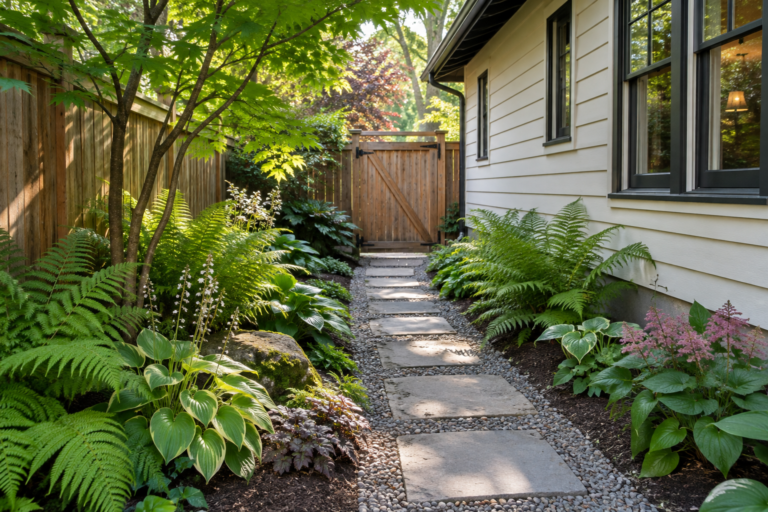
Good side garden designs make the narrow space beside a house useful, attractive, and easy to maintain. Before choosing flowers or paving, decide whether the passage must carry people, bins, bicycles, or gardening equipment. Those everyday jobs determine how much planting can fit comfortably.
The best result usually combines one clear route with a restrained planting scheme. You can soften a fence, introduce seasonal color, and improve the view from indoors without crowding doors or hiding important drainage features.
This guide explains how to plan the passage, choose suitable materials, and create a garden that remains practical after plants mature.
Start Side Garden Designs With a Measured Survey
Measure the passage at several points rather than recording one average width. Downpipes, window ledges, utility boxes, and gateposts can create narrow sections that control the whole layout.
Draw the house wall and boundary on graph paper. Mark doors, steps, vents, inspection covers, outdoor taps, and existing drains. Include anything that needs regular access, even when it looks unimportant in a photograph.
Useful side garden designs begin with these fixed details. If a planting bed prevents someone reaching a meter or opening a gate fully, revise the bed before selecting plants.
Test the Route With Real Equipment
Move your widest bin, bicycle, or wheelbarrow through the passage. Notice where handles turn and where your body needs extra room. A route that works while empty may become awkward when you carry shopping or garden waste.
Use temporary markers to outline proposed edges. Walk through them in both directions, including at night. Keep the arrangement generous enough for your actual household rather than copying a path width from somebody else’s garden.
Protect Drainage Before Adding Planting
Successful side garden designs respect how water already moves. Watch the area during rain and note puddles, downpipe discharge, soil movement, and damp patches against the house.
Do not raise soil against siding, cover vents, bury inspection covers, or direct runoff toward the foundation. Preserve required building clearances and existing drainage access. Persistent pooling needs investigation before decorative work begins.
The EPA’s permeable pavement guidance explains how suitable paving systems allow water through their surface. Permeability depends on the complete installation and underlying conditions, not simply the appearance of gravel joints.
Avoid Treating Gravel as a Drainage Repair
Gravel can provide a useful surface in an appropriate location, but spreading it over compacted, poorly drained ground does not automatically solve standing water. The water still needs somewhere suitable to go.
When comparing layouts, separate surface choice from drainage design. Ask a qualified local professional about persistent problems, uncertain levels, or proposed changes near the building. Keep access points visible and reachable after installation.
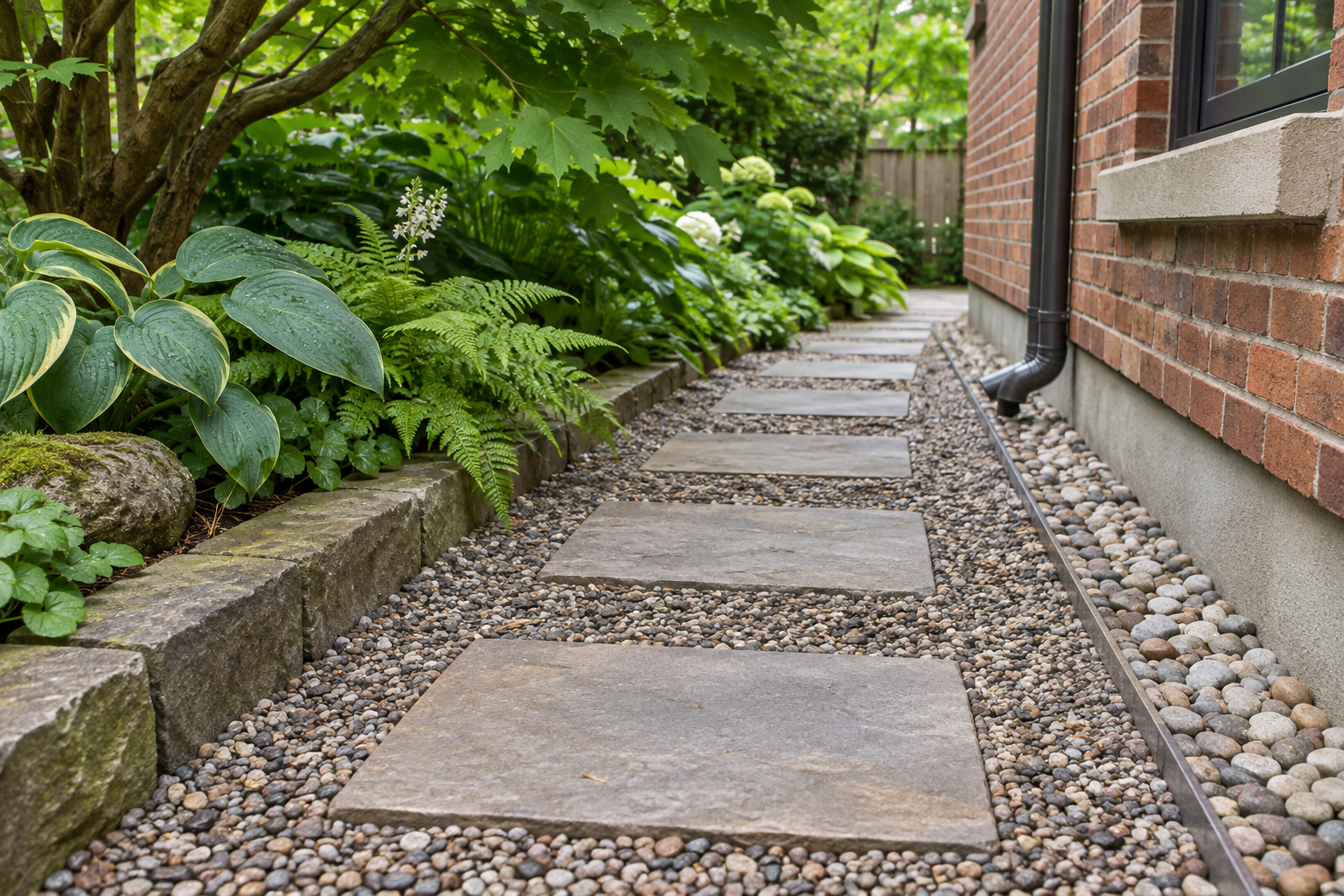
Compare Three Practical Layouts
Different side garden designs suit different widths and routines. These examples are planning concepts, not construction specifications or accessibility standards. Adjust them around your building, local requirements, and equipment.
| Layout | Illustrative footprint | Best use | Important check |
|---|---|---|---|
| Single border | Six-foot-wide passage | Regular access with planting on one side | Allow for mature plant spread |
| Central route | Eight-foot-wide passage | A planted corridor on both sides | Keep every drain accessible |
| Movable containers | Existing paved passage | Rental gardens or limited soil | Prevent pots narrowing pinch points |
Layout One: One Border and a Direct Path
For a six-foot-wide passage, sketch a four-foot route beside a two-foot planting strip as an initial space exercise. Required clearances may reduce the planting area further, so test the dimensions outside.
Among simple side garden designs, this arrangement is especially easy to understand. Put the border where plants receive suitable light, keep growth away from the route, and leave gaps wherever equipment needs access. Avoid adding a second narrow bed just for symmetry.
Layout Two: A Garden Corridor
An eight-foot-wide passage may accommodate a four-foot central route with two-foot borders. However, mature shrubs can quickly consume that space. Choose planting that fits the available width without constant cutting back.
These side garden designs work best when the route stays visually continuous. Repeat a small number of plants, use one edging material, and position any focal feature beyond the walking line. Keep corners open where gates swing or bins turn.
Layout Three: Containers on Existing Paving
Where excavation is unsuitable, use a few stable containers beside an existing clear route. Select pots with appropriate drainage and protect nearby building surfaces from repeated splashing or trapped moisture.
Container-based side garden designs are easy to adjust, but they still need careful placement. Group pots where the passage is widest, keep saucers from overflowing onto slippery paving, and make sure loaded containers remain manageable. A collection of tiny pots often creates more maintenance than one useful planter.
Match Plants to the Passage
Light can change sharply beside a house. One section may receive morning sun while another remains shaded by a wall or neighboring building. Check conditions at several times before buying plants.
Plant-led side garden designs should also consider soil, moisture, local climate, and mature dimensions. Choose plants for the actual conditions instead of assuming every narrow border is shady or dry.
For the broader connection between the passage and the main garden, explore these small backyard landscaping ideas. Repeat a few materials or plant colors to create a consistent transition.
Choose Shape Before Flower Color
Look for plants with a mature spread that stays within the bed. Upright growth can be helpful, but a plant described as narrow may still become too wide for your space.
Good side garden designs combine a simple framework with softer seasonal planting. Keep prickly, brittle, or strongly spreading growth away from frequent walking routes. Check local suitability and invasive status before choosing any climber or groundcover. Leave enough space to inspect fences and maintain supports.
Select a Surface You Can Maintain
Frequent bin traffic usually benefits from a stable, continuous surface rather than widely spaced stepping stones. Consider wet-weather grip, leaf buildup, cleaning, and whether wheels can move comfortably across joints.
Materials for side garden designs should match the conditions and workload. Loose gravel may migrate, while uneven slabs can create trip points. Compare the installed system, edging, base preparation, and maintenance requirements before choosing on appearance alone.
If the passage opens onto a sitting area, these small patio design ideas can help you coordinate paving and furniture without blocking circulation.
Add Lighting and Privacy Carefully
Lighting should reveal changes in level, gates, and turns. Position fixtures so they illuminate the route without shining directly into windows or neighboring properties. Keep cables and supports out of walking areas.
Privacy-focused side garden designs can use a suitable screen or independently supported trellis where space allows. Avoid attaching heavy features to an unsuitable fence or building surface. Check installation instructions and any relevant local restrictions before making permanent changes.
Keep the Routine Manageable
Low-maintenance side garden designs leave room for the maintenance itself. You should be able to remove leaves, inspect drains, reach taps, and trim plants without stepping through a crowded bed.
Check the passage after heavy rain and during seasonal plant growth. Sweep surfaces, remove fallen material, and correct loose edging promptly. Prune for access when appropriate, but replace plants that repeatedly outgrow their positions. Constant pruning usually signals that the original plant choice was too large.
Improve the Passage in Stages
Begin with cleaning, measuring, and correcting obvious access problems. Keep any sound existing paving while deciding whether replacement is necessary. Establish one border or container group first, then observe how it affects walking space and maintenance.
Photograph the passage from both ends before making further purchases. This helps you notice whether planting hides important features or makes the route feel crowded. Leave enough spare space to accommodate seasonal growth and occasional larger items moving through the gate.
Before ordering materials, compare the measured route with your normal weekly routine. Check where deliveries arrive, where garden waste leaves, and whether seasonal equipment needs extra turning room. Keep the final arrangement practical for everyone using the passage.
Frequently Asked Questions
What works best beside a narrow house passage?
Start with a clear route and one modest planting area. The most useful narrow side garden ideas preserve everyday movement before adding decorative features. Containers can help where digging is unsuitable, provided they do not obstruct access.
Can side garden designs include a rain garden?
Only where site conditions and suitable separation from structures make it appropriate. A narrow strip beside a foundation is not automatically a suitable location. Assess drainage, utilities, soil, and professional guidance before creating an infiltration feature.
How do I make the passage feel wider?
Use repeated planting, simple edges, and a continuous route. Avoid clutter, excessive material changes, and plants that spill across the path. Keeping sightlines open usually helps more than adding many small decorative objects.
Conclusion
The most effective side garden designs balance planting with movement, drainage, and maintenance. Measure the passage, protect building clearances, test the route, and choose plants by mature size. A simple layout that stays usable throughout the year will serve your home better than an overcrowded garden corridor.
