

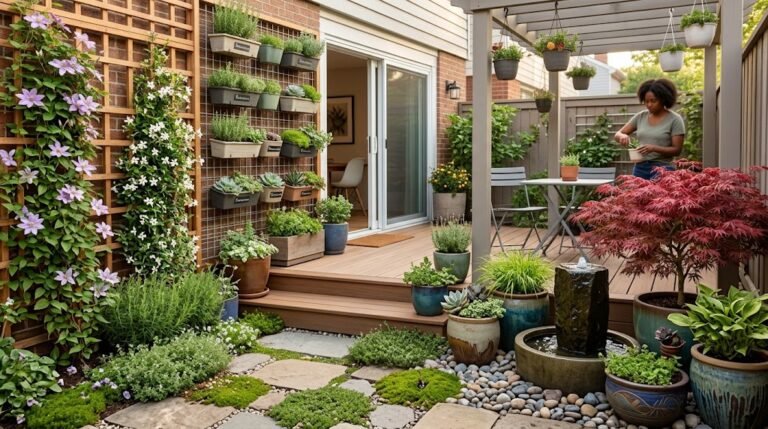
A small garden does not have to feel boring, crowded, or difficult to maintain. With the right layout, plants, and design choices, even a narrow side yard, awkward corner, or tiny courtyard can become an attractive outdoor space.
The secret to successful landscaping for small spaces is using every available area wisely. Instead of filling the garden with too many features, focus on practical arrangements that create a sense of space while providing greenery, comfort, and visual interest.
Whether you have a small backyard, a narrow garden strip, or a compact outdoor patio, these ideas can help you create a beautiful landscape without requiring a large budget.
Landscaping for Small Spaces: 10 Practical Design Ideas
Small gardens benefit from simple layouts and purposeful features. Here are ten practical ideas to make a limited outdoor area look more attractive and functional.
1. Create a Vertical Garden
When ground space is limited, use your walls and fences. Vertical gardens allow you to grow plants upward instead of spreading them across the ground.
You can install wall-mounted planters, hanging pots, shelves, or a simple trellis.
Good plants for vertical arrangements include:
- Pothos
- Ferns
- Herbs such as mint and basil
- Compact flowering plants
- Climbing jasmine
Choose plants according to sunlight, climate, and watering requirements. Keep the arrangement organized so the wall does not look overcrowded.
2. Use Raised Garden Beds
Raised beds help organize planting areas and make small gardens easier to maintain. They can also separate flowers, herbs, and vegetables from pathways.
Wooden, brick, or metal raised beds can work well, depending on your budget and preferred style.
For a small garden, consider a narrow raised bed along a fence or wall rather than placing several large beds in the center.
3. Design a Narrow Side Yard
Side yards are often overlooked because they are narrow and difficult to use. However, they can become attractive walking areas with a simple layout.
Use stepping stones, gravel, and slim planting beds to create a clean pathway. Add shade-tolerant plants if the area receives limited sunlight.
Avoid placing large pots or furniture along the entire path, as this can make movement difficult.
4. Add a Small Seating Area
A compact seating corner can make your garden more useful. You do not need a large outdoor sofa or dining set.
Consider:
- A small wooden bench
- Two folding chairs
- A compact bistro table
- A built-in corner seat
Place seating against a wall or fence to keep the central area open. Add a few planters nearby to create a relaxing atmosphere.
5. Choose Multi-Purpose Features
In a small landscape, every feature should serve a purpose. A bench with storage, a raised planter with a seating edge, or a narrow garden shelf can help save space.
Avoid adding decorative items that block pathways or reduce usable space.
6. Use Curved Garden Borders
Straight lines can make a small garden feel structured, but gentle curves can soften its appearance.
A curved planting border around a lawn or seating area can create visual interest. Keep the curves simple and avoid complicated shapes that take up too much room.
7. Add Gravel and Stepping Stones
Gravel is a practical alternative to covering every small outdoor area with grass. It can reduce maintenance and provide a neat surface for pathways or seating zones.
Use stepping stones to create a clear walking route through the garden.
Choose suitable landscaping gravel and install a stable base with appropriate edging to reduce spreading and weed growth.
8. Use Compact Plants and Dwarf Shrubs
Large trees and spreading shrubs can quickly overwhelm a small garden. Instead, choose compact varieties that fit the available space.
Good options may include dwarf shrubs, ornamental grasses, compact evergreens, and seasonal flowers.
Check the plant’s mature size before purchasing it. A plant that looks small in a nursery pot may grow much larger over time.
9. Create a Small Water Feature
A small fountain or container water feature can add movement and a relaxing sound without taking up much space.
Choose a compact design that fits into a corner or beside a seating area. Make sure the feature is easy to clean and maintain.
If children or pets use the garden, consider safety and water depth before installation.
10. Improve the Garden with Lighting
Outdoor lighting can make a small garden attractive after sunset. Solar pathway lights, wall lights, and low-voltage landscape lighting can highlight important areas.
Use lighting to illuminate steps, pathways, seating areas, and selected plants. Avoid installing too many bright lights, which can make the space feel cluttered.
Landscape Design Ideas for Small Spaces by Garden Type
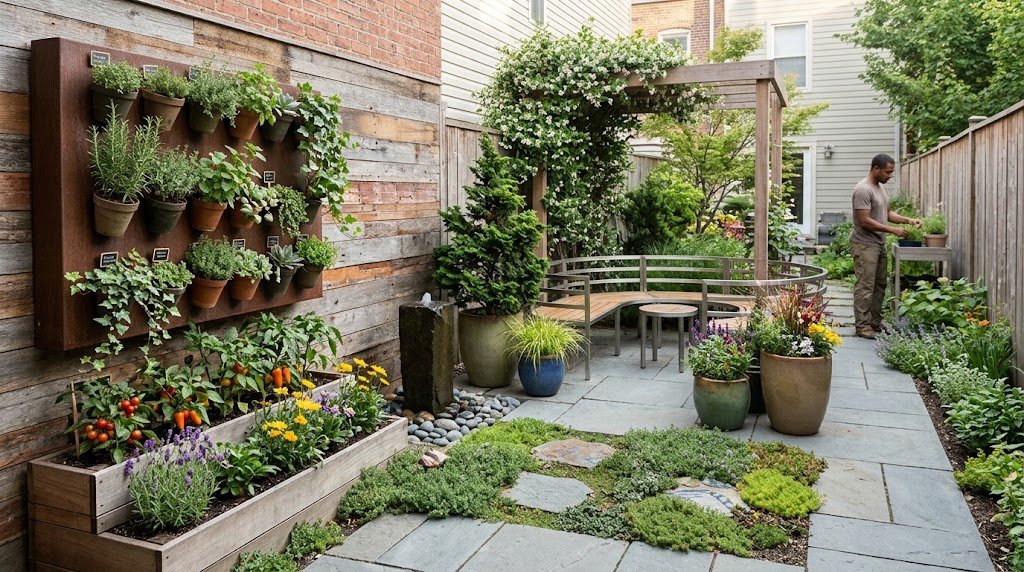
Different small outdoor spaces need different approaches. The best design depends on the shape, sunlight, and intended use of the area.
| Small Garden Type | Recommended Design | Useful Features |
|---|---|---|
| Narrow side yard | Linear layout | Stepping stones, slim planters |
| Tiny courtyard | Simple central feature | Bench, container plants |
| Small backyard | Divided functional zones | Seating, raised beds |
| Shaded corner | Shade-friendly planting | Ferns, hostas where suitable |
| Small patio | Container gardening | Pots, vertical planters |
| Awkward garden corner | Corner-focused layout | Trellis, compact shrubs |
Garden Designs for Small Spaces with Awkward Corners
Awkward corners can become useful design features rather than wasted areas.
Try placing a triangular planter, a compact bench, or a climbing plant on a trellis in the corner. You can also use a small group of containers with different heights to create a layered appearance.
Avoid placing too many unrelated decorations in one corner. A simple arrangement usually looks more intentional.
How to Make a Small Garden Look Bigger
A small garden can feel more spacious when the layout is open and visually balanced.
Use a Limited Plant Color Palette
Choose two or three main flower colors and repeat them throughout the garden. Too many different colors can make a small space look busy.
Green foliage, neutral paving, and a few seasonal flowers can create a balanced design.
Keep Pathways Clear
Avoid placing pots, furniture, and decorations in walking areas. Clear pathways make the garden easier to use and create a more open appearance.
Add Different Plant Heights
Use low-growing plants near pathways, medium-sized plants in borders, and taller plants near fences or walls. This creates depth without filling the entire garden.
Choose Furniture Carefully
Select furniture that matches the size of the garden. Folding chairs and compact tables are often more practical than bulky outdoor furniture.
Budget-Friendly Garden Landscape Ideas for Small Spaces
You do not need expensive landscaping materials to improve a small outdoor area.
Here are some affordable ways to update your garden:
- Reuse suitable containers as plant pots.
- Grow herbs in small planters.
- Use gravel for simple pathways.
- Propagate plants from healthy cuttings where appropriate.
- Refresh existing garden furniture with outdoor paint.
- Use inexpensive solar lights.
- Build a simple trellis for climbing plants.
Start with the most important improvement, such as organizing the layout or creating a planting border. Add decorative features later when your budget allows.
For more inspiration, explore these related guides:
Common Small Garden Landscaping Mistakes
Even attractive plants and materials can produce a poor result if the layout is not planned properly.
Avoid these common mistakes:
- Choosing oversized plants: Always check the mature height and spread before planting.
- Overcrowding the garden: Leave enough room for walking, seating, and plant growth.
- Ignoring sunlight: Match plants to the light conditions in each area.
- Using too many materials: Too many paving styles, colors, and decorations can look disorganized.
- Blocking drainage: Make sure paving, raised beds, and planters do not interfere with water drainage.
- Forgetting maintenance: Choose plants and features you can realistically care for.
Frequently Asked Questions
What is the best landscaping for small spaces?
The best approach combines vertical planting, compact plants, clear pathways, and multi-purpose features. A simple layout helps make the area look organized and useful.
How do I landscape a very small backyard?
Start by deciding how you want to use the space. Add a compact seating area, a narrow planting bed, and a clear pathway. Use vertical planters to save ground space.
Which plants are best for small gardens?
Compact shrubs, ornamental grasses, herbs, seasonal flowers, and suitable climbing plants are useful options. Select varieties based on your local climate, sunlight, and available growing space.
How can I make a narrow garden look wider?
Use simple paving, clear pathways, and planting borders along the sides. Avoid large objects that block the view. Repeating similar plants can also create a more organized appearance.
Is gravel good for small garden landscaping?
Yes. Gravel can create low-maintenance pathways and seating areas. It should be installed over a suitable base with edging and proper drainage.
How much does small garden landscaping cost?
Costs depend on the garden size, materials, plants, labor, and location. You can begin with affordable improvements such as containers, gravel, and solar lights, then add larger features gradually.
Conclusion
Creating an attractive small garden is about making smart use of limited space. Vertical gardens, raised beds, compact plants, simple pathways, and small seating areas can transform an awkward corner or narrow yard into a practical outdoor retreat.
The best landscaping for small spaces does not require filling every available area. Instead, choose features that suit your garden’s shape, sunlight, budget, and maintenance needs.
Start with a simple layout, keep pathways clear, and add plants that fit the space as they mature. With thoughtful planning, even the smallest outdoor area can become beautiful, comfortable, and easy to enjoy
