

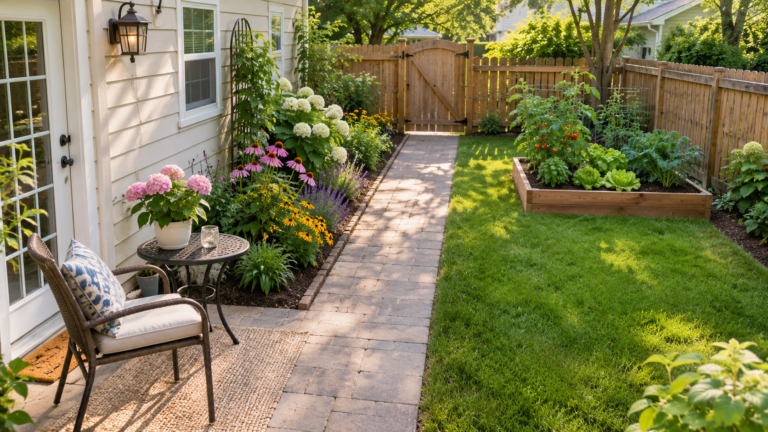
A small backyard garden can provide flowers, fresh herbs, and somewhere pleasant to sit without filling every available corner. The most useful plan starts with how you move through the yard and what you want to grow.
You do not need to complete the whole space at once. One well-placed bed or a few suitable containers can help you learn about sunlight, watering, and seasonal changes before expanding.
Keep your small backyard garden accessible, practical, and manageable.
This guide explains how to map a compact yard, choose a beginner-friendly layout, and keep planting manageable. The aim is a garden that supports everyday life as well as looking attractive.
Plan a Small Backyard Garden Around Daily Life
Write down the jobs your yard must handle. You may need space for a chair, a route to the gate, a dog, or access to storage. Rank those needs before adding decorative features.
Measure the usable area and sketch the house, doors, fence, existing trees, and paved surfaces. Mark utility covers and places that need regular maintenance access.
A thoughtfully planned backyard feels more comfortable when the main walking route stays clear. Watch how people already cross the space and avoid putting a bed directly in that natural path.
Choose One Main Growing Goal
Decide whether your priority is flowers, edible plants, or a mix. Each choice affects bed placement, watering, and how often you will visit the planting area.
Keep your first project modest. A manageable bed that you enjoy tending is more useful than several crowded growing areas that become difficult to maintain.
Map Light Before Buying Plants
Observe the small backyard garden in the morning, around midday, and later in the afternoon. Record how many hours of direct sun reach each possible growing area.
Trees, fences, and neighboring buildings can create very different conditions across a short distance. Remember that shade patterns change as trees leaf out and the seasons move on.
Use these observations to choose plants rather than forcing a sunny planting scheme into shade. Also note exposed windy corners and places where paving reflects heat.
Put Edible Plants Where They Can Perform
Many fruiting vegetables need at least six hours of direct sunlight. Some leafy crops can grow with less, depending on the crop, season, and local conditions.
The NC State guide to growing vegetables in small spaces explains light needs and options for limited areas. Use it to narrow your crop list before purchasing seeds.
Compare Beginner-Friendly Garden Layouts
The best small backyard garden layout preserves access and suits the conditions already present. These arrangements offer different ways to balance growing space with daily use.
| Layout | Suitable situation | What it offers | Main limitation |
|---|---|---|---|
| Single border | Narrow rectangular yard | Simple planting and maintenance | Limited room for deep-rooted spreading plants |
| Corner bed | Mostly paved backyard | One clear growing area | Shade can collect in corners |
| Two beds with a path | Flower or vegetable growing | Organized access | Paths reduce total planting area |
| Container group | Rental or changeable layout | Flexible placement | Pots need regular moisture checks |
| Patio with one planted edge | Seating is the priority | Combines greenery and relaxation | Plant spread must clear furniture |
For wider design options, explore these small backyard landscaping ideas. Choose elements that support your needs instead of copying an entire layout.
Start With One Border
A single border is an easy small backyard garden project because it gives you one area to prepare and water. Position it where plants will receive suitable light and remain accessible.
Use a hose or rope to mark the edge. Walk past it with a watering can or garden tool before digging. Adjust the shape if it makes the remaining space awkward.
Try Two Narrow Beds With a Clear Path
For growers wanting more structure, two beds can divide the planting into manageable sections. Keep each bed narrow enough to reach without stepping into the soil.
Set the path width around the people and equipment using it. A garden cart, mobility aid, or two people passing require more room than a simple footpath.
Give Planting Zones Clear Roles
Organize a small backyard garden into a few simple zones. Put frequently picked herbs near the kitchen route, flowering plants where you can enjoy them, and tools near the work area.
Group plants by light and moisture needs. This reduces the chance of overwatering one plant while trying to satisfy another in the same bed.
Keep the most demanding growing area near a convenient water source. Carrying water across the yard repeatedly can make even a compact garden feel like hard work.
Choose Plants by Mature Size
A nursery pot does not show how much room a plant will eventually need. Read mature height and width measurements and leave suitable spacing.
Compact cultivars can help a small backyard garden stay manageable, but the word compact is relative. Check the actual dimensions and local growing requirements before buying.
Repeat a few suitable plants for a calmer appearance. Avoid collecting many unrelated species unless you are comfortable managing their different care needs.
Use Containers and Vertical Supports Carefully
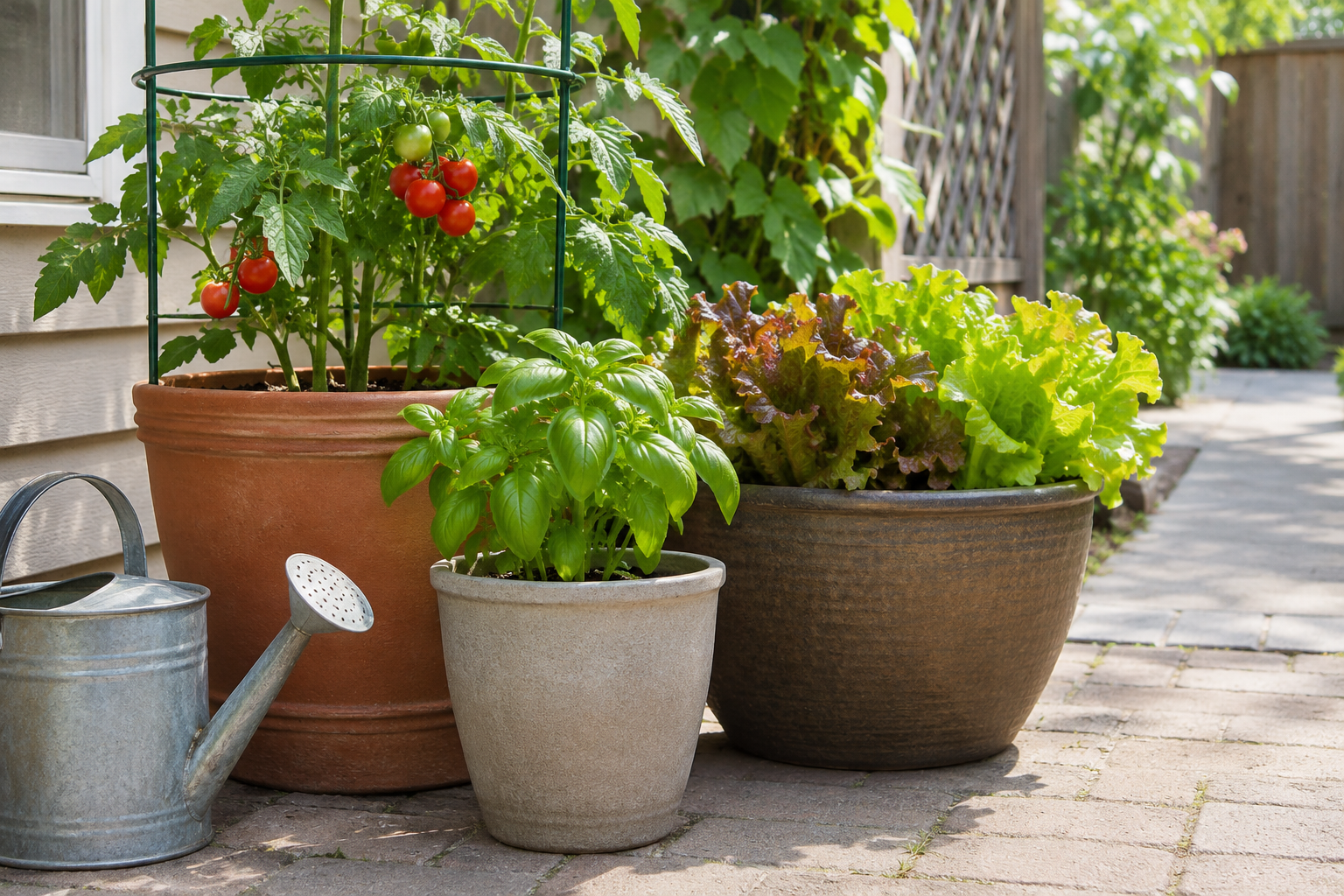
Containers are useful where digging is impractical or the soil is unsuitable. Choose pots with drainage holes and enough room for the plants’ roots. Use a suitable container growing mix.
A compact outdoor garden can gain growing space from a trellis, but the support must suit the mature plant and local weather. Position it so tall growth will not shade crops that need strong sun.
Keep supports away from gate openings and maintenance routes. Do not assume an existing fence can hold heavy containers or vigorous climbing plants.
Start With a Small Container Group
Place two or three pots together on a stable surface and check that water can drain away appropriately. Leave enough space to reach each pot without moving the others.
Choose crops or flowers suited to each container’s size. Avoid filling a small pot with a large plant simply because the young specimen fits at planting time.
Add Seating Without Crowding the Yard
A small backyard garden should offer somewhere to enjoy the results. One comfortable chair and a modest table may serve you better than a large outdoor dining set.
Test furniture positions before building beds around them. Allow space to pull chairs out, open doors, and walk past someone who is seated.
These small patio ideas can help you plan the sitting area. Keep nearby planting low enough that it does not spill into the space needed for everyday movement.
Prepare Soil and Water Sensibly
Before planting a small backyard garden, inspect the soil and check drainage after rain. Consider a soil test to understand pH and nutrient needs before adding amendments.
Do not bury drainage problems beneath fresh compost or a new raised bed. Identify persistent pooling and preserve appropriate drainage away from structures.
Water according to plant needs, soil moisture, and weather. Containers may need attention more often than in-ground beds, but checking the growing mix is more useful than following an automatic daily routine.
Keep the First Season Simple
A beginner’s small backyard garden benefits from a short plant list and a realistic maintenance routine. Buy fewer plants, space them correctly, and focus on helping them establish.
Keep a simple notebook of planting dates, sunlight observations, and watering issues. Photograph the garden occasionally so you can see which plants are spreading or leaving gaps.
Set aside time each week to remove weeds, inspect plants, and tidy paths. Regular small jobs are easier to handle than letting several problems build up together.
To design small backyard garden beds confidently, mark their full outlines before buying materials. Compare small backyard garden plans against your actual walking routes, rather than judging only their appearance on paper. The most comfortable small backyard gardens leave room for ordinary tasks, including carrying groceries, moving bins, and reaching the outdoor faucet. Check these movements with the whole household so the new layout supports everyone who uses the yard regularly.
Frequently Asked Questions
How do I start a small backyard garden cheaply?
Begin with one bed or a few containers, keep sound existing surfaces, and choose plants suited to your conditions. Spend first on healthy plants, suitable soil preparation, and convenient watering rather than decorations.
Can I grow vegetables in a partly shaded yard?
Some leafy crops tolerate less direct sun than fruiting vegetables. Choose according to the actual light and your local season. Expect results to vary, and start with a small trial planting.
Do I need raised beds in a compact backyard?
No. In-ground beds and containers can work well. Raised beds may help organize planting, but they require suitable materials, soil volume, access, and watering. Choose them to solve a specific problem rather than assuming they are essential.
Conclusion
A successful small backyard garden starts with clear priorities, suitable light, and room to move. Choose one manageable layout, select plants by mature size, and keep watering convenient. Observe the first season before expanding, and build a garden that fits both your space and your routine.
